Showing posts with label festival. Show all posts

Tuesday, April 20, 2010

Williamstown Literary Festival

I wouldn't normally post about what is for me a local festival, but this one may be of interest to readers here because it includes film and film-related events. I believe the Williamstown Literary Festival has been a regular event since 2005, but it's never been on my radar until now. I normally find out about it after the fact but this year one of my local bookshops sent out an email promoting it.

Festival guests include film directors Ana Kokkinos and Paul Cox (whose My First Wife will be screening along with a Q&A), actor William McInnes, Danny Katz, Waleed Aly (one of my favourite social commentators, a very eloquent speaker), Steve Bracks, Thomas Caldwell (one of my favourite film critics and bloggers), Marieke Hardy, Catherine Deveny, children's author Andy Griffiths (Zombie Butts from Uranus!) and many others who I'm sure those more in tune with the literary world will be more familiar with. In short, it's a damn impressive line-up, taking place mostly over the weekend of 1 & 2 May at Williamstown Town Hall [map]. And events cost a mere $7 ($5 concession) with some events free.

I'm going to take my son to some of the free kids events (he's a voracious reader and an Andy Griffiths fan) and I also want to attend the Paul Cox screening, hear Ana Kokkinos speak (with a panel) about "place and culture in film and literature", Steve Bracks and Waleed Aly talk about "life, politics" and more, and a few other events.

Check out the full program online or download the PDF. Check out the festival website.

Sunday, April 18, 2010

Cannes 2010 lineup

The following are the films and juries announced thus far for the Festival du Cannes 2010, running from 12 - 23 May. Any, in case you didn't know, that's Juliette Binoche featured in the official poster. For a serious festival, Robin Hood sounds like a joke as an opening night film but then, Cannes is all about controversy and commercialism as it is about art. There's a number of titles that interest me (all of them really, but some more than others) and at least this gives us a glimpse of what might appear at MIFF later in the year. The lists below are not final - the complete lists will be available a week prior to the festival's start.

Opening film
Robin Hood (Ridley SCOTT) - out of competition

Competition Section
Poetry
(Lee Chang-dong)
Fair Game
(Doug Liman)
Un homme qui crie (A Screaming Man, Mahamat-Saleh Haroun)
Another Year
(Mike Leigh)
Biutiful
(Alejandro González Iñárritu)
Tournée
(Mathieu Amalric)
Copie conforme (Certified Copy, Abbas Kiarostami)
The Housemaid (Im Sang-soo)
Long Boonmee raleuk chat (Uncle Boonmee Who Can Recall His Past Lives, Apichatpong Weerasethakul)
Utomlyonnye Solntsem 2 (Burnt by the Sun, Nikita Mikhalkov)
Des hommes et des dieux (Of Gods and Men, Xavier Beauvois)
Outrage (Takeshi Kitano)
Hors la loi (Outside the Law, Rachid Bouchareb)
La princesse de Monpensier (The Princess of Montpensier, Bertrand Tavernier)
My Joy (Sergei Loznitsa)
La Nostra Vita (Daniele Luchetti)

Jury
Tim BURTON – Director / USA (PRESIDENT)
Kate BECKINSALE – Actress / United Kingdom
Giovanna MEZZOGIORNO – Actress / Italy
Alberto BARBERA – Director of the National Museum of Cinema / Italy
Emmanuel CARRERE – Author – Screenwriter – Director / France
Benicio DEL TORO – Actor / Porto Rico
Victor ERICE – Director/ Spain
Shekhar KAPUR – Director – Actor – Producer / India

Un Certain Regard Section
Adrienn Pál (Ágnes Kocsis)
Blue Valentine* (Derek Cianfrance)
Udaan* (Vikramaditya Motwane)
Octubre* (Daniel Vega & Diego Vega)
Filme socialisme (Jean-Luc Godard)
Chatroom (Hideo Nakata)
Rizhao Chongqing (Chongqing Blues, Xiaoshuai Wang)
Ha Ha Ha (Hong Sang-soo)
Aurora (Cristi Puiu)
Rebecca H. (Return to the Dogs) (Lodge Kerrigan)
O estranho caso de Angélica (Angelica, Manoel de Oliveira)
Les amours imaginaires (Heartbeats, Xavier Dolan)
Life Above All (Oliver Schmitz)
Los labios (The Lips, Iván Fund & Santiago Loza)
R U There (David Verbeek)
Simon Werner a disparu... (Simon Werner Disappeared…*, Fabrice Gobert)
Marti, dupa craciun (Tuesday, After Christmas, Radu Muntean)
Unter dir die Stadt (The City Below, Christoph Hochhäusler)
* 1st film

Jury
Claire DENIS - Director / France (PRESIDENT)

Out of Competition
Wall Street: Money Never Sleeps (Oliver Stone)
You Will Meet a Tall Dark Stranger (Woody Allen)
Tamara Drewe (Stephen Frears)

Midnight Screenings
Kaboom (Greg Arraki)
L'autre monde (Black Heaven, Gilles Marchand)

Special Screenings
Inside Job
(Charles Ferguson)
Over Your Cities Grass Will Grow (Sophie Fiennes)
Nostalgia de la luz (Nostalgia for the Light, Patricio Guzman)
Draquila - l'Italia che trema (Sabina Guzzanti)
Chantrapas (Otar Iosseliani)
Abel* (Diego Luna)
5 x favela por nos mesmos (Manaira Carneiro, Wagner Novais, Rodrigo Felha, Cacau Amaral, Luciano Vidigal, Cadu Barcelos, Luciana Bezerra)

Cinéfondation and Short Film Jury
Atom EGOYAN - Director/Canada (PRESIDENT)
Emmanuelle DEVOS - Actress/France
Dinara DROUKAROVA - Actress/Russia
Carlos DIEGUES - Director/Brazil
Marc RECHA - Director/Spain

Saturday, April 17, 2010

Festival of German Films - Festival Guests

As an addendum to my FoGF 2010 Preview, I thought I'd cut and paste a media release regarding the festival's guests:
Famed Director SÖNKE WORTMANN & Acclaimed Feminist Writer ERICA FISCHER in Oz for AUDI FESTIVAL OF GERMAN FILMS 2010

Now celebrating its 9th year, the AUDI FESTIVAL OF GERMAN FILMS returns in late April with its most dynamic line-up to date. Boasting more than 30 new movies – most of which have never before been screened in Australia, the Festival will commence in Sydney on April 21 and tour Melbourne, Brisbane, Adelaide and Perth until May 9 Our 2010 guests include renowned German Director Sönke Wortmann (THE MIRACLE OF BERN, MAYBE, MAYBE NOT, ALONE AMONG WOMEN) and noted feminist author, Erica Fischer, who both speak excellent English.

Wortmann will introduce screenings of his latest film, POPE JOAN, starring Johanna Wokalek (THE BAADER MEINHOF COMPLEX), David Wenham and John Goodman, whilst Fischer will present special screenings of the classic 1999 feature AIMÉE & JAGUAR, based on her best-selling 1994 novel, Aimée & Jaguar: A Love Story.

SÖNKE WORTMANN (In Melbourne Tuesday 27 April & Sydney on Thursday 29 April)
Sönke Wortmann is one of Germany’s most successful directors and producers, who has shaped German cinema since the 1990s. Wortmann has received numerous awards, including the Bambi for MAYBE, MAYBE NOT (Der bewegte Mann), the Bayerischer Filmpreis for THE MIRACLE OF BERN (Das Wunder von Bern) as well as the Bambi and the Adolf-Grimme-Preis for his documentary of the FIFA World Cup 2006: DEUTSCHLAND. EIN SOMMERMÄRCHEN. His second big passion is: Soccer – a topic he has very successfully brought to the big screen. His international blockbuster POPE JOAN (Die Päpstin), was a major box-office success in Germany in 2009 and will have its Australian premiere during the Festival.

ERICA FISCHER (Available now in Sydney and in Melbourne on Friday 23 April) Erica Fischer was born in England, where her Jewish- Austrian parents found exile during WW2. She was a founding member of the New Women’s Movement in Vienna, participating as activist, theorist and speaker in various events and demonstrations and co-founded the feminist magazine AUF – Eine Frauenzeitschrift (A Woman’s Magazine) as well as the women’s bookstore Frauenzimmer. Fischer is the author of more than 12 books, among them Aimée & Jaguar - a real-life love story of two women in war-troubled Germany. Published in 1994, it was a major success and has since been translated into 20 languages and in 1998 was made into a major film, which screens in the Festival. Erica Fischer presently lives in Berlin and works as a freelance author, interpreter and journalist.

Friday, April 16, 2010

Festival of German Films 2010 - Preview

The Festival of German Films 2010 opens with Fatih Akin's new comedy Soul Kitchen at the Como cinema on Thursday 22 April. The FoGF has gradually increased on popularity, and more by serious programming rather than populist. In fact, I suspect this has had an influence on the French Film Festival, which has until recently had too much of a focus (in my opinion) on popular mainstream cinema. Don't get me wrong, the FoGF is showcasing films that audiences will find appealing; it's just that the festival doesn't shy away from edgier themes.

I spoke briefly to festival director, Klaus Krischok from the Goethe Institute, about his criteria for selecting films for the festival. This year for the first time, there are different streams. He acknowledged my suggestion that the Culinary Comedies was chosen largely because of Akin's new film. (Akin is, of course, well-known for his sublime serious dramatic films like The Edge of Heaven and Head On.) Not only have other comedies been selected with a culinary theme, but film-goers will have a rare opportunity to see earlier films by Akin: Crossing the Bridge - The Sound of Istanbul, a documentary from 2005, and Short Sharp Shock, an inter-cultural drama from 1998 (These are both top of my list of films I want to see at the festival).

Another stream is 'Berlin Based', films focusing on Berlin. I've seen the first episode of The Wolves of Berlin, reviewed below, and hope to see the remaining two episodes during the festival. In answer to my question about his criteria for the 'German Currents' films, Klaus said that history and politics are strong themes that he feels that make German cinema distinctive. His three top recommendations for the festival are: When We Leave, Soul Kitchen and My Words, My Lies - My Love.

Of the following films that I've previewed, my pick are The White Ribbon as 'must-see', and Whisky with Vodka, Vision, Storm and The Wolves of Berlin as 'worth-seeing'.

In addition to screenings of 33 films, there will be panel discussions for Storm and The White Ribbon, and Sönke Wortmann, who has three films screening at the festival, and feminist author Erica Fischer, author of Aimée & Jaguar, will also be in attendance.

  • Die Tür (The Door, Anno Saul, Germany, 2009)
  • Die Standesbeamtin (Will You Marry Us?, Micha Lewinsky, Switzerland, 2009)
  • John Rabe (Florian Gallenberger, France/China/Germany, 2009)
  • Schwerkraft (Gravity, Maximilian Erlenwein, Germany, 2009)
  • Whisky mit Wodka (Whisky with Vodka, Andreas Dresen, Germany, 2009)
  • Die Wölfe: Nichts kann uns trennen (The Wolves of Berlin: Part One - Nothing Can Part Us, Friedemann Fromm, Germany, 2009)
  • Sturm (Storm, Hans-Christian Schmid, Germany/Denmark/Netherlands, 2009)
  • Vision - Aus dem Leben der Hildegard von Bingen (Vision, Margarethe von Trotta, Germany/France, 2009)
  • Das Weiße Band (The White Ribbon, Michael Haneke, Austria, 2009)
The Door
An artist loses his young daughter and gets another chance at making things right when he finds a doorway that takes him to another place. I suppose this paranormal thriller has parallels with films like The Terminator or Donnie Darko (without the sci-fi or special effects), with ideas that could have been used more effectively than they are here. On a micro-level, the acting is generally proficient, and the film looks nice enough. The problem is in the difficulty that a discerning audience will have in suspending disbelief at certain key moments, and it's the writing that is the weak point. Ultimately, the film should be entertaining for a mainstream audience but disappointing for cinephiles.

Will You Marry Us?
A civil celebrant is having marital problems and is asked by an old love interest to perform his marriage ceremony. This Swiss film is more romantic than comedy, though the film's premise and English title certainly suggests romantic comedy. The nature of markets, I suppose, means that distributors or film programming requires that genre labels be applied. All the contrived devices and predictable trajectory of the rom-com are employed. Yet the film remains a touch above the Hollywood standard by slightly understating the narrative and keeping the humour to a minimum. The visuals are lovely and there's a deliberate production theme using yellow primarily and the occasional use of the other primary colours. Anyone who enjoys romantic comedies shouldn't be disappointed with this.

John Rabe
This is a big studio film, a kind of cross between two Steven Spielberg films - Empire of the Sun and Schindler's List. It certainly looks good, depicting John Rabe, a German industrialist living in Nangking when it was invaded by the Japanese in 1937. He is credited with the saving of some 200,000 Chinese lives through his part in creating a safe zone. The 'Rape of Nangking' is a contentious issue between China and Japan. Japan has yet to fully acknowledge the extent of its wartime atrocities which include pillage, rape and mass murder - some 300,000 are estimated to have been killed in 6 weeks.

The film certainly works well cinematically if you're looking for a Spielberg-like war film. The more brutal aspects are largely sanitised for the big screen, though we do see glimpses of beheadings and mass executions, but very little is hinted at about the extent of rape.

I've never been particularly cognisant of this chapter in history, and it seems that Rabe has been an under-appreciated hero, despite his Nazi-party affiliations. Mind you, he hadn't lived in Germany for some thirty years prior and after his return to his homeland, he was silenced by the Nazis, had his diaries confiscated, and died a pauper in 1950. However, he remains a well-known hero in China.

The film benefits from an international cast, many of whom I recognised in films from their respective countries. Much of the dialogue is in English. I'm in no position to judge the film's historical accuracy, but it succeeded in prompting me to do some cursory research on its content. John Rabe's wins include best film and best actor at the German Film Awards.

Gravity
This is a strange film, strange as in I can't quite work out what the director is trying to achieve. A sociopathic bank loans officer experiences an existential crisis after a customer blows out his brains during a meeting with him, and takes to part-time crime with a former associate, while simultaneously trying to reignite an old relationship with a woman who he's been stalking.

The film looks nice enough, the acting is certainly adequate, but the story is just weird. It plays out mostly as drama and thriller but it doesn't quite cut it as either genre because there's a strong level of unreality (largely due to massive implausibilities), and one senses there's an attempt at black comedy, perhaps styled on the Coen brothers. The film is clearly aimed at a young, hip audience, evidenced by the music choices and other visual elements but there's still something not quite right. Comedy works best when it's based on fundamental reality but this film seems to ignore human psychology with characters, reactions and scenarios not feeling quite real.

The film makes some social commentary in passing, like equating business with crime, but is never - to it's credit - didactic. I think to enjoy it, one has to really suspend disbelief to a degree that some might find difficult. It will probably appeal to the target audience of The Girl With the Dragon Tattoo. Like that film, for me this feels better suited for television. It's OK for a debut feature, and it'll be interesting to see what
Erlenwein does next.

Whisky with Vodka
This is quite an endearing film about film-making that is like a cross between Catherine Breillat's Sex is Comedy and Mia Hansen-Løve's Father of My Children. Like Breillat's film, the film depicts the difficulty a director (and indeed, the whole film crew) experiences dealing with actors. And like Father of My Children, the film depicts the difficulties for the producer.

In Whisky with Vodka which, despite its description as a comedy is more drama with just a touch of wry comedy, a film's completion is threatened when it's aging and popular lead actor can't control his fondness for alcohol. The producers insist on two shoots, one with the original actor, Otto Kullberg (Henry Hübchen), and one with the possible replacement, a younger Arno Runge (Markus Hering).

The director Martin Telleck (Sylvester Groth) objects to this scenario, insisting he's "not a bucket for everyone to shit in". The film manages to both entertain without falling into parody (which it easily could have done) and remain thought-provoking. There are a number of good lines in which characters describe their craft. The film also gives a glimpse at how one person's ego can cause grief to dozens of others, and how dysfunctional an environment a film set can be. The characterisations and scenarios are very good. I found the film quietly satisfying.

The Wolves of Berlin: Part One - Nothing Can Part Us
The Wolves of Berlin is a three-part made-for-TV miniseries that centres on life in Berlin at three important points in time: 1948, 1961 and 1989. I've only seen the first episode, but I can say that it's well put together and looks good on the big screen. I hope to see the remaining episodes during the festival.

The story follows a group of teenagers in post-war Berlin, struggling for survival and who make a pact to stick together. The film focuses on the personal impact of the changes that were taking place at the time, as Berlin was divided into four sectors and blockaded.

The film has a clever visual style - sometimes black and white, sometimes slightly tinted and other times muted colour. Inserted from time to time is historical footage, also of varying qualities, which appears organic to the rest of the film. It lends an authentic and pleasing feel to the film. Because the film opens in the present, in a tense situation, we know there's bad blood, some of which will be divulged in later episodes. Recommended viewing.


Storm

This political thriller by German director, Hans-Christian Schmid, illustrates some of the difficulties in bringing war criminals to justice. Here, a former Serbian officer is accused of atrocities against Bosnian civilians. With an international cast, the predominant language is English and centres on a Hague prosecutor Hannah Maynard (Kerry Fox) in her oft-thwarted attempts to collect evidence. It also features Anamaria Marinca (4 Months, 3 Weeks and 2 Days) in a convincing role as a surviving witness.

Storm has a social-realist feel to it, underscored by lots of hand-held camera (slightly more shaky than required, but not fatally so) and has a feel to it more akin to films of this genre from Latin America than Europe. The film's arc is quite relevant, especially given recent attempts to bring an alleged war criminal to trial from Australia. One problem the film points out is that such people are often considered war heroes in their native lands. This is a solid film without being showy.

Vision
Margarethe von Trotta has had some hits (The Lost Honor of Katharina Blum, 1975) and misses (I Am the Other Woman, 2006). This latest film, an historical biopic, falls more into the camp of the former. It's beautifully photographed, depicting the life of a twelfth century Christian mystic and prominent author, Hildegarde of Bingem. Tithed to a monastery at the age of eight, she eventually became the leader of her nun community and went on to found two other monasteries.

Vision underscores for me how much suffering the Christian church (and religion in general) has forced upon humanity. It's not really religion to blame per se, but human nature, which uses religion as an excuse for inexcusable behaviour - and not much has changed over the millennia.

Different schools of Christianity developed over time that speculated or concocted their own brands of the central teachings. Some (as depicted in this film) felt it a virtue to punish themselves by flagellation, "to suffer as Christ did". Others focused on theological or intellectual studies while others became involved in dastardly Inquisitorial 'activities'.

Hildegarde was very fortunate to escape the latter, after her revelation of mystic visions. Many thousands of others perished throughout the Middle Ages (from around Hildegarde's time, and especially during the reign of Pope Gregory IX, 1227-1241). Perhaps what saved her was her noble background and the support she had from prominent members of the Church.

Von Trotta does a good job of telling the story, though a bit of restraint in pointing out the obvious would have been welcome. Other than The White Ribbon, this has the best visuals of any film that I've previewed from the festival.

The White Ribbon

This Haneke film was my favourite at MIFF last year and also made it into my list of top films of the year. It's simply stunning and demonstrates a master film-maker at the peak of his game. I love how Haneke creates a riveting human story which is about what it appears to be about, and yet there is so much important sub-text which doesn't consume or overwhelm the primary story. It may well be that Haneke's underlying themes are more important to him than the apparent story, but it's never didactic. This is in direct contrast with Lioret's recent Welcome. Here are my original comments about the film, posted during MIFF last year:
The White Ribbon is perhaps Michael Haneke's most mature and entrancing film. That's quite some claim, given the awesome body of work he has created (in my mind, there is no such thing as a bad Haneke film). It encompasses or flirts with a number of themes and genres already covered in his earlier films (such as social realism, horror, crime, thriller, supernatural), perhaps playing with our expectations and yet subverting them, but never in a cheap, contrived manner. Haneke plays it straight with the audience, but you never really know where he's going. What's important with this film is to focus not on the destination, but the journey.

This is a film in which you really need to concentrate, take note of who is who (and there's a lot of people to keep a track of) and which children belong to who. There's also a lot of children, who play some stunning roles. Some of them may be victims, some of them innocent bystanders and some of them something more sinister. If evil exists, can you blame the children? Or the often well-meant but deluded parents. Some of the imagery used is amazing, in particular the chastised boy with the simple cross on the wall behind him. Many times the camera takes a point of view shot to very good effect. The characterisations, period detail and reproduction of mannerisms and social mores are all at the very highest levels of achievement and it's not hard to see why this film was awarded Cannes' highest honour.

The story is superficially much more conventional than one associates with Haneke. At first it seems a slightly rambling, rustic, rural tale. A subversion of expectations? Maybe.

Eventually, like Hidden, the film has something to say about politics, and more besides. There are broadsides at religion and society in general. At the outset of the start of World War I, Haneke seems to suggest that the brutality of the next two wars over thirty years could perhaps be traced to the cruel ways that humans treat each other on the micro level: within villages, communities and families. The film is shot in black and white, a bold choice by Haneke, but it works very well. It resembles a Carl Dreyer film (think Gertrude) or even Bergman.
The Festival of German Films screens in Melbourne at the Kino and Como cinemas from 22 April to 2 May.

Cross-posted on Club Troppo

Sunday, April 11, 2010

The Week in Review - 11/4/10

I can't believe I saw ten films this week. I'm not working at present and had four days where I saw 2 films each day. This was also partly due to Easter and partly because of the Festival of German Films preview screenings (I'm posting separately about these).

The stand-out of the week is Animal Kingdom, which will definitely make my top 10 of the year. This film is going to sweep the AFI awards this year and is as good a film as Samson and Delilah. The only other new release so far this year that is every bit as good is Jacques Audiard's A Prophet/Un prophète. It seems that Madman are trying some new strategies in their marketing and invited a small number of reviewers - mostly bloggers and those with a web presence - to a screening ahead of the media preview. The film has lingered and consumed me more than any film has for a long time. I'll post my review on it separately in a day or two.

La Mirada ended, and I attended the final screening, not realising it was the closing night film. It cost me $24, and I didn't stay for the after-party - ouch! But The Swindlers (part of Almodóvar Presents) is a lot of fun and it was great to see this film, screened for the first time in Australia.

FILMS:
  • Atraco a las tres (Robbery at 3 O'Clock, José María Forqué, Spain, 1962)
  • Welcome (Philippe Lioret, France, 2009)
  • The Eclipse (Conor McPherson, Ireland, 2009)
  • Figuring Landscapes: Enactment (Patricia Piccinini, Ben Rivers, Margaret Tait, George Barber, Tammy Honey, UK/Australia, 2008)
  • Animal Kingdom (David Michôd, Australia, 2010)
  • Kick-Ass (Matthew Vaughn, USA/UK, 2010)
  • Whisky mit Wodka (Whisky with Vodka, Andreas Dresen, Germany, 2009)
  • Die Wölfe: Nichts kann uns trennen (The Wolves of Berlin: Part One - Nothing Can Part Us, Friedemann Fromm, Germany, 2009)
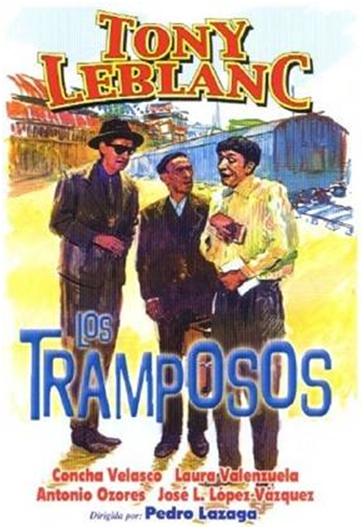
  • Los tramposos (The Swindlers, Pedro Lazaga, Spain, 1959)
DVD:
  • Schwerkraft (Gravity, Maximilian Erlenwein, Germany, 2009)

Robbery at 3 O'Clock
The Spanish academic who introduced this film mentioned it is widely regarded as the best Spanish comedy ever. Well, claims like that are always debatable, aren't they? It's largely a matter of taste. I don't know if I'd put it on such a high pedestal, but I can understand why historically it might be considered with high regard. After all, a film needs to be considered in the context of when it was made, something that described in the introduction.

Spain in 1962 was a pretty dark place. It was more than twenty years into a dictatorship that capped off a long and devastating civil war. This film gave the Spanish some ray of light, some joy and it is a lot of fun to follow a rag-tag bunch of bank employees plot to rob the branch they work in. The film's opening sequence makes clear what its influences are with a dialogue-free sequence that is pure Charlie Chaplin farce.

I imagine the film would be more enjoyable for a Spanish speaker, who would better understand the nuances of the language - apparently some of the dialogue was absorbed into popular Spanish culture at the time. The film makes a slight swipe at the government at the start of the film but is otherwise largely apolitical. We were told that this was the film's Australian premiere and was part of Almodóvar Presents at La Mirada.

Welcome
There's something distinctly unsatisfying about this film, and it nagged me most of the way throughout its length. It's one of the films from the French Film Festival 2010 that I decided (fortunately) to wait for its theatrical release. I've heard mixed things about it, and I'm definitely in the camp of the disappointed.

I was similarly disappointed with Lioret's previous Je vais bien, ne t'en fais pas/Don't Worry, I'm Fine which at least had the benefit of a quietly simmering performance by the wonderful Mélanie Laurent. Both films tend towards earnestness, overly so. They both have an arthouse aesthetic, both with human issues, but the issues are too overt - especially in Welcome.

Welcome, I'm sure you're aware, is about a young Iraqi who has found his way to France and is wanting to get to England to join his girlfriend. Failing to cross by truck, he meets up with a swim coach, learns to swim and plans to swim the English Channel. On the one hand, the film draws attention to the far-right neo-fascist policies of Nicolas Sarkozy, that would have been adored by John Howard, that criminalise any citizens that assist refugees in any way. I agree with the left-leaning (ie, social/humanist) policies the film is endorsing, but I don't need it thrust down my throat so overtly. Michael Winterbottom did it much more successfully (and seriously) with his In This World (2002), a much more timely film.

Lioret's film is much safer, clearly designed to appeal to a more mainstream audience - not that there's anything wrong that per se. It's just that with an added element of a domestic story, it all feels more than a little contrived, melodramatic and overtly appealing to our heart strings (especially with the use of music). It's the sort of film that probably did well at the French Film Festival or, post-festival, with the prime Palace demographic.

Another problem for me is Vincent Lindon in the main role of swim coach. Maybe it's my prejudice, but I don't like his looks for a role like this. He often plays a Mr. Everyman, which is what's asked for here. The trouble is, he doesn't come across as a Mr. Everyman. His acting is quite wooden, his face is largely expressionless and he has too narrow a range to effectively portray his character in this film. About the only roles I find him effective in are as a criminal. Otherwise, I normally see the actor and not the character.

For me, a film that exemplifies a much more satisfying depiction of an 'issue' is Michael Haneke's Caché/Hidden in which an Algerian massacre in France takes backseat to a contemporary story filled with ambiguity. Haneke assumes his audience will 'get it' without being preached to like Lioret's film does.

The Eclipse
This is quite a decent and thought-provoking film from the Republic of Ireland, set and filmed in Cobh, Cork County. Michael (Ciarán Hinds) is a single father grieving for his deceased wife. Hinds' is perfect for the role and his performance is spot on. He has a melancholy presence that conveys a repressed emotional burden. All is not perfect in his world, and a ghostly presence seems to be lingering. Is it his wife? Has Michael not let go of her? Or is it his elderly father-in-law, still alive, but on the precipice?

The film is not conventional horror - which is largely puerile, aiming at a teenage demographic. It's not really an adult ghost story, either. It crosses genres and really stands up predominantly as drama. The supernatural elements take up a small proportion of the film's screen time, but add an ever-present ambiance that looms in the background. The naturalistic lighting, tending towards darkish, accentuates the sombreness.

Michael is a regular volunteer at the local writers festival, during which he finds himself driving around the celebrated English author of The Eclipse, a book about ghostly experiences by the attractive author Lena Morelle (Iben Hjelje). Michael has the perfect opportunity to talk about the disturbing phenomena in his house, but is reluctant to completely open up. This scenario is perfect for a slow burn drama as various intertwining relationships unfold, involving another celebrated writer, Nicholas Holden (Aidan Quinn).

The performances of the lead characters are all strong all and the story is multi-layered, covering various themes, including grief, lettting to, celebrity and human relationships in general. If anything, it could be accused of being slightly over-ambitious to its detriment, but this is a minor complaint.

Michael's role as driver gives the film the opportunity to display the Irish countryside and townships, and these visuals of the architecture and scenery are just superb, without being postcard cliches. It's one of the things I love about world cinema, experiencing other places in some small way.

The supernatural element is used with restraint for the most part - The Others comes to mind, but that film was much more ghost-orientated. So horror film buffs might be disappointed. The Eclipse really aims at a more conventional arthouse audience with its solid dramatic themes, with the supernatural more an interesting variance on the genre.

As an aside, for me ghosts are a given, something I've experienced for as far back as my memory allows (at least since age two). I've never seen ghosts depicted in cinema quite as I've experienced them, but that's because I've never seen them physically but rather sensed them, or 'seen' them by my 'third eye'.

It's hard to convey, but there was a ghost that regularly visited me in my dreams all throughout my childhood. In my sleep, he assumed a form like a wolf and would breathe up close onto my dream body's face - a sort of dream within a dream. His breath stank like fish and hearing him would scare me. If, within my dream, I realised that my dream body was not real and it was just a dream, eventually he would go away. Mostly though, he would fool me and if my dream self woke up, them my real self would also wake up and I would have wet the bed. This continued until around age ten.

I was living interstate at age 23 when this same entity visited me again, when I was travelling away from home. I instantly recognised him when he appeared in my dream and, without waking up, I threatened him and he quickly disappeared. I later learned that there is no need for threats because ghosts are very insecure and will leave if asked to. Since that time, on the rare occasions when I've senses another entity, I've done just and they have always left without incident.

Actually, when I was nineteen years old, I was attacked by a ghost when I was sleeping under the stars along the Nullabor Plain. I was just drifting into sleep when I saw shooting stars which, according to Indian belief, are a bad omen. Fear gripped me at a vulnerable time and the next thing I knew, an entity was choking me. I warded it off mentally and it disappeared, leaving me a little traumatised.

I still sometimes sense entities around at night when I'm going to bed and often do a mental visualisation to protect myself. This involves asking all uninvited guests to please leave and any well-wishers may remain. Call them guardian angels if you like, but I have seen them while wide awake. I understand those without similar experiences may find this kooky or superstitious; for me it's just a innate part of my understanding and contributes to my perspective of life and death, something I alluded to in my post 'A Change of Plans'.

For the best part of thirty years, I've been left pretty much alone by ghosts or entities. I don't really call them ghosts, which implies they're a different type of being to us. The term 'entity' seems more appropriate - I see them as being people like you or I, but unembodied for whatever reason). I attribute my being left alone to my coming into my own power, understanding them and understanding myself relative to them.

Figuring Landscapes: Enactment
What can I say - experimental/conceptual art cinema usually does nothing for me. I thought I'd give this a go, but it was the same. So far, I haven't been able to penetrate that space.

Kick-Ass
A lot has been written about this very entertaining film. Some of the superlatives have been over the top, but it definitely is one of the best in its class. It's certainly not what the marketing of the film would have you believe it is. While the writing is very good, I think the film's success is the amazing performance and sneering charisma of the then eleven year old Chloe Moretz as Hit Girl. She steals the show and it wouldn't be the same without her. And even Nicholas Cage gives a decent performance (something he hasn't done since Adaptation and Bringing Out the Dead).

The Swindlers
This is a nice little vintage gem from the vaults of Spanish cinema, beautifully rendered in colour. Pedro Almodóvar selected this film for La Mirada and I can see how its "sardonic humour" (as festival director Rocio Garcia described it) would be right up his alley. It's right up mine, too. Three friends collude to con people out of money by any means they can but go straight to win the affections of a girl. The script is sharp, the performances good and the ending is just great.

Wednesday, March 31, 2010

Festival of German Films

I had a quick look at the films screening at this year's Festival of German Films, and two titles stood out straight away: Michael Haneke's The White Ribbon and Fatih Akin's Soul Kitchen. I saw The White Ribbon at MIFF last year and have been wondering when this magnificent film will get a release. I'm a big fan of Haneke and The White Ribbon is perhaps his most mature and complex film to date. It looks like cinephiles will have another opportunity to see it before a still unconfirmed theatrical release.

Fatih Akin is one of my favourite German directors. I only discovered him with The Edge of Heaven, which had me in tears multiple times. In fact my 9 year old son also loved it and it had him in tears, too, to my surprise. Soul Kitchen has a confirmed release date of 6 May, just after the end of the festival.

[Edit: it now looks like The White Ribbon also has a 6 May theatrical release]

Monday, March 08, 2010

A call for suggestions at MQFF

I've attended a number of sessions at the Melbourne Queer Film Festival in past years, though not recent ones. Perhaps I didn't research sufficiently and got put off by some of the fairly camp or grotesque excesses. I never liked the caricature that TV's Melrose Place became, nor the gay somewhat equivalent, Queer as Folk. It's not the sexual orientation that bothers me, but what I might snobbishly call the quality of what's on offer.

Now, I noticed that last year MQFF screened François Ozon's A Time to Leave, about a gay photographer who has a terminal disease and finds his own way to say goodbye to those he loves. For me, this is universal cinema, and the sort of film I'm happy to see at MQFF. I had a look at this year's extensive program - I believe there's 100 sessions - and there's no way I can properly research that volume of films. I've tried to make it easier by only looking at sessions that I can fit into my schedule and eliminating the genres that don't interest me in the slightest. The difficult part now is to separate the wheat from the chaff of those remaining.

My question is, are you going to MQFF? And if you are, have you looked at the programme and have any suggestions? If so, I'd love to see them.

Tuesday, September 01, 2009

Life Imitating Art Imitating Life

Reading this article today in The Age reminded me of one of my favourite films at MIFF this year, Dogtooth. Like Jaycee Lee Dugard and her two daughters, the virtual prisoners in Dogtooth also had the opportunity to escape but didn't, but that doesn't lessen the severity of the crimes of the parents. I found Dogtooth a disturbing and impressive film, and the unfolding of recent true events underscores the poignancy of its story.

As I mentioned in my short MIFF review of the film:
We've read stories in the paper of parents who have locked their children up for years, decades even. How do they get away with it, we ask ourselves. This film explores that scenario...
Dogtooth is screening at the Greek Film Festival, which opens tomorrow. It's a surprisingly gritty film for the festival and I highly recommend it. It's two screenings (at the Como) are Friday 4 September 9pm and Thursday 10 September 9pm.

[UPDATE 2/9/09]: Another curious (pun not intended) connection between fact and fiction is the presence of cats. Compare the collection of cats by Dugard and her daughters in their squalid conditions, as reported by ABC News online, and the treatment of cats in Dogtooth, where they are believed to be dangerous creatures to be killed or avoided.

Links: Festival Website / Download Melbourne Program (PDF)

Sunday, August 30, 2009

The Week in Review - 30/9/09

FILMS
  • Inglourious Basterds (Quentin Tarantino, USA/Germany, 2009)
  • Viaggio in Italia (Voyage to Italy, Roberto Rossellini, Italy/France, 1953)
  • Gake no ue no Ponyo (Ponyo, Hayao Mizayaki, Japan, 2008)
  • Eli & Ben (Ori Ravid, Israel, 2008)

Inglourious Basterds
It's not often I see a film more than once, but after reading various articles and interviews with Tarantino, etc, I decided to give this one another go. Other Tarantino films I've seen more than once on the big screen are Pulp Fiction and Death Proof. I didn't enjoy the film more on second viewing, but I noticed and appreciated things more. Things that bothered me on first viewing either bothered me less or not at all. This is Hollywood film-making that we don't see enough of and will probably make it into my top-10 releases of the year. Tremendously entertaining!

Voyage to Italy
This is my second Rossellini film, so I have a long way to get through his oeuvre, but I'm liking what I'm seeing. I was surprised to find Voyage to Italy almost entirely in English. I was also surprised at how much like her mother Isabella Rossellini looks.

The film depicts a marriage in downward spiral. From the Senses of Cinema Annotations, I expected to find a heartless husband (George Sanders) and his long-suffering wife (Ingrid Bergman). Rossellini is clearly more enlightened a film-maker than I expected and there is a great deal of subtlety and balance than the annotations led me to believe.

Ponyo
The small Nova Cinema 7 was full, and it wasn't just children. I was surprised to see, in addition to the young families, teenagers, 20-somethings and older. All for a film that appears to be aimed at a domestic (Japanese) audience aged 4-9 years old. It's a tribute to the film-maker that he can create a world that appeals largely outside its target audience.

I really enjoyed Mizayaki's Spirited Away, though most of his films since seem to have been made with a Western audience in mind and have become increasingly formulaic. No so with Ponyo. If anything, it seems to be going backwards in time. Japan is famous for it's cultural ambiguity. It is one of the most technologically advanced societies on Earth and yet strangely bound to traditions that go back to the Middle Ages. Ponyo's style eschews all the advances in animation and more than ever displays an old-fashioned hand-painted look. Rather than detract from the film, it works well and differentiates the film from the competition (not that Mizayaki has any real contenders).

So, how does Ponyo stack up? Well, don't see the Hollywood dubbed version. I haven't seen it, but it would just destroy the very Japanese look and feel of the film. The magical world that Mizayaki conjures really is endearing. I'd have thought it was aimed at a pre-school to early primary school demographic, but my 8 year old loved it. I found it enjoyable, but I wouldn't go unless I was accompanying a child.

Eli & Ben
This film screened at the Israeli Film Festival, for which one must be over 18 years of age to legally gain entry. Yet, it seems to be aimed squarely at a teenage market. Basically, it's a telemovie (or appears to be), like an extended version of Neighbours, and I thought it was just stupid, stupid, stupid. I could tell this from the opening scene and it didn't get any better. I have nothing else I want to say about it.

Thursday, July 30, 2009

Other than MIFF

With a full-on schedule booked for MIFF (some 40 films), it's easy to forget that there's other things on (all film-related, of course). I had booked myself in for United Red Army at the Forum this morning but, at 190 minutes, figured I'd take some time out, and hence this post.

Having given Balibo a whopping 5 stars (and I don't know how that's justified), I'm a little bemused by Jim Schembri's 1/2 star for Jim Jarmusch's The Limits of Control and, furthermore, his description of the film in today's Age as a 'blockbuster':
Harry Potter and the Half-Blood Prince enjoyed a second weekend at No.1 with a massive haul of $6.46 million across 510 screens for a total of $29.6 million. This was despite the opening of the new Jim Jarmusch blockbuster The Limits of Control, which managed $28,999 on five screens.
[p.18 in the Arts section under 'Box office' - as yet not online; emphasis is mine]

Now, though I loved The Limits of Control (which you may have gleaned from my review), I'd hardly call it a blockbuster. It really is a niche film and Jarmusch is a niche director. That the film is showing on a measly five screen pretty much confirms that. And how can a film screening on five arthouse screens take a dent out of a mainstream blockbuster screening on over one hundred times the number of screens, largely the big multiplexes?

Opening on the eve of MIFF was always going to hurt the film's box office in Melbourne, because the target audience is largely focused on the mega-circus that is MIFF. It's a pity, because it's a better film than anything I've seen yet at MIFF (13 films to date).

...

Cedar Boys
This new Australian film by Serhat Caradee opens on limited release today and my preoccupation with MIFF has prevented me from reviewing it in more detail. It depicts the struggle of immigrant families in contemporary society. I often connect with this subject, though Australian films tackling these themes in recent years have usually failed to have the authenticity and dramatic tension that Cedar Boys achieves.

The film is nicely photographed and well-acted. The dialogue in particular is excellent, very real. Hopefully Cedar Boys will find an audience. The lack of marketing and the timing (mid-MIFF) isn't working in its favour, so if you're steering clear of the MIFF crowds, this is one to look out for - just be quick; it may not be around for long. Check out the official website.

...

Lake Mungo, another Australian film, opens today. There's a Q&A session with the cast and crew 6.30pm tonight at the George cinema.

...

Post-MIFF
For your post-MIFF fix, you may want to put the following into your calendars:

Sunday, July 12, 2009

Bayside Film Festival

T is for Teacher (Rohan Spong, Australia/USA, 2009)

T is for Teacher documents the experiences of four transgender males as they make the transition to females in their roles as high school teachers in the United States. It was directed by Rohan Spong, a Melbournian who lived in the US for some time. Apparently the film is doing the festival circuit and screened at the Melbourne Queer Film Festival last March, though I think it's a good film to be screened in schools to raise awareness of gender issues.

Gender is a subject I have a keen interest in, a subject that is very complex and is difficult to do justice to in a few words on a blog like this. I'll do my best within the confines I find myself in, one of which is time.

Human society likes to label its members. It likes to keep things simple and well-defined. It makes things easier to deal with. But it doesn't cater for the natural diversity we find in society. I'm not even talking about so-called alternative gender here. When I went to school, if you wore anything other than black, grey or navy socks, you were considered a poof. If you wore colourful clothes, were into poetry, dancing or were different from the macho norm in any way, your sexuality - indeed your whole identity - was considered suspect. I mentioned some of this in a post last year about my experience of being a 'heterosexual pooftah', that is, a heterosexual person who was bastardised for being 'different'.

People often think of sexuality in terms of heterosexual and homosexual, but that's just way too simplistic. I have a friend I've known for nearly thirty years. About fifteen years ago he became openly transvestite. We sometimes went to gay nightclubs and danced together, he as a woman (and a very convincing one at that) and me a man. But neither of us is gay, nor interested in sex with a man. He has since married (a woman) and has lost interest in cross-dressing. My point is that sexuality is not black and white, and hence the use of the rainbow ribbon by the gay movement - life is full of diversity.

What could be more difficult than having an established identity as a male teacher in a school, and turning up for work one day in a dress and make-up? Same person - different gender. Not only do you have your family's reactions to deal with, but you've got your employer, your colleagues, students, parents, church community and probably others.

Spong interviews these various stakeholders, gathering their views and responses and the differences between the different teachers is quite striking. For some, it was very positive and enriching, for others it was soul-destroying. It seemed quite clear to me that the outcomes were largely proportional to the support from above. The most important factor for success seemed to be a teacher having the support of the principal, followed by appropriate processes being put in place for transition that involved all the stakeholders so that any concerns could be addressed and allayed.

T is for Teacher screens at Palace Brighton Bay at 7pm on Thursday 16 July, along with Beyond Our Shores by Rhys Graham, and will be followed by a Q&A session with Rohan Spong.

The Bayside Film Festival screens at Palace Brighton Bay from 15-18 July.

Saturday, May 30, 2009

St, Kilda Film Festival 2

IMAGES OF AGE:
These are a collection of local films screening in competition (in other sessions) at the festival that share a theme of old age. My pick of them is Fallen and Lover's Walk and the other two (both documentaries) did little for me. In fact, I allowed myself to doze off during Royboys, not necessarily a reflection of the film but rather, my disinterest in football and my lack of sleep.
  • Fallen (Mark Priems, 17’50”)
  • Lover's Walk (Abigail Hargrave,15’47”)
  • The People's Plot (Mikael Bones Olsen, 12’27”)
  • Royboys (Brett Swain, Michael Wannenmacher, 27’52”)

FRENCH SHORTS:
These films are a selection from the Clermont-Ferrand Short Film Festival.
  • Skhizein (Jérémy Clapin, 13'10")
  • Forbach (Claire Burger, 35’)
  • Dix (Bif, 7’)
  • Citizen Versus Cane (Severi Shun, 18’)
  • Lila (Broadcast Club, 12'30")
Skhizein is a clever and entertaining animated short that I really relate to. It's an exploration of the concept of matter and its occupation of time and space. When a meteor strikes Henry, his physicality is displaced by 91 cm and he must retrain himself to act in a parallel reality. As a film, it's visually compelling but its novelty belies the thoughtfulness of the concept. I remember as a teenager being amazed at how we fill a certain space at a certain time, and I used to imagine that space leaving a trail as I, for example, travelled in the 67 tram to school. It was all part of my life-long quest to understand consciousness and the nature of the universe, which this film also alludes to in a humorous way.

Forbach completely fooled me until the end. I truly thought it was a documentary about Samuel, a famous TV actor, returning to his small town, Forbach, to visit his family and to receive town honours. Things don't go well and we can see why Samuel doesn't visit often. His mother is an alcoholic and his brother has been in the wrong crowd. Very cleverly made.

Dix (literally, ten) also recalls something from my childhood, the fear of stepping on pavement lines. My mother used to tell me to watch out for the boogey man, and I often had nightmares about it. In this film, Marc has the same phobia, multiplied many times and has ghastly visions of the consequences that recall Vincenzo Natali's Cube.

Citizen Versus Cane has English actors speaking English but it's a French crew. It's a fairly formulaic comedy and OK, but nothing special. Lila is without dialogue, a visual compilation of people on summer vacation. Again, OK, but nothing special. The Clermont-Ferrand Short Film Festival is one of the most reputed short film festivals in the world, screening some 500 French films, and I find it hard to believe that some of these are among the pick of the festival.

Friday, May 29, 2009

St. Kilda Film Festival

I was blown away by the two sessions I attended this evening at the St. Kilda Film Festival. I originally intended to see just the German Shorts but was able to squeeze a session of the local films in competition also. As expected, the German session was stronger, being the best of the InterFilm Berlin Film Festival. The real surprise was how strong the Australian films are. The programming has really picked up since I last saw a local session, with less of the one-joke plots, more variety and documentaries being the strongest contenders.

The Australian shorts I saw (session 4) were:
  • Collide-A-Scope (Gregory Godhard, 3')
  • Birthday Girl (Angie Black, 6'30")
  • A Different Cut (Fahim Ahad, 9'30")
  • Home Away From Home (Riyadh Abdul Hussain, 18'37")
  • Multiple Choice (Michael Goode, 4'46")
  • One Shoe Short (Jackie van Beek, 8'17")
  • Wounded (Fiona Corke, 6'09")
  • Undressing Vanessa (Matthew Pond, 22'36")
My biggest belly laughs were with Undressing Vanessa, a documentary about Tobin Saunders, better known as drag queen/performer/social activist Vanessa Wagner. Now, I've had friends who were cross-dressers, but this cat is totally wild and over-the-top. She's an impressive character with a social and political conscience and was involved with the Pauline Pantsdown spoof of Pauline Hansen several years ago. He's also a man with HIV and the film charts his struggles to come to terms with that. If you ever get the chance, see this wonderful little gem.

I loved that several of the films in this session had a political and/or social element to them. Home Away From Home is a very moving account of a lovely Iraqi man who worked as a marketing manager at Al-Jazeera TV and now finds himself driving a taxi in Adelaide. I couldn't help but surmise that that is how the director met him and got talking about his life. So my two favourite Australian shorts are both documentaries.

Also very strong are A Different Cut, which addresses racial prejudice, and Wounded, a story based on true accounts of former shooters who have been traumatised by their experiences of killing animals. I exchanged a few words with the director, Fiona Corke, after the session to ask her intent. It wasn't vegetarianism (which she isn't) but rather, to point out how damaging violence can be, in ways that aren't foreseen.

Collida-A-Scope is an experimental film that did nothing for me. Birthday Girl is about a woman grieving the death of her child that is OK but perhaps a little derivative (reminding me of Juliette Binoche in Paris je t'aime). One Shoe Short would make a good companion piece to Samson and Delilah, depicting aboriginal children living in poverty in Alice Springs, and recalling Iranian cinema with its focus on children. Multiple Choice is the only film that came close to that one-joke formula that I have disdain for, but it was clever enough not to be too silly and being only the one, it was quite OK.

The German shorts were:
  • Pingu Q (Kun Jia, 1’)
  • The Pick Up Artist (Der Aufreißer, Steffen Weinert, 13’)
  • Robin (Hanno Olderdissen, 20'30")
  • Apple on a Tree (Astrid Rieger, Zeljko Vidovic, 4'50")
  • It's My Turn (Bende Sira, Ismet Ergün, 10'05")
  • Cuddling with Politicians (Christian 3 Roosen, 4'50")
  • Frozen Sea (Likas Miko, 27’)
  • Our Wonderful Nature (Tomer Eshed, 5'05")
Where to start? Frozen Sea is the clear stand-out and this Likas Miko should be a talent to watch. I predict that his name will become more prominent. The film looks gorgeous with a raw naturalistic look, set in winter. The film has a mysterious edge to it, and we gradually learn about family secrets and lies. Told from a child's viewpoint, we see his parents quarrelling and the father is often absent. Things come to a head at Christmas and we realise that things are not always what they seem.

Apple on a Tree is a real festival crowd-pleaser. Highly inventive, visually amazing and very funny. Basically it's a musical (lyrics in English), an absurd pantomime not unlike the inventive music videos of Michel Gondry (think Björk). It depicts a man who is an apple on a tree who becomes a human and realises that it's better being an apple. This description doesn't do it justice, you just have to see it.

It's My Turn screens without sub-titles, and that is its original intent, because it's not even in German. Unless you're Turkish, you won't understand the words, but that's part of the experience. This film so strongly uses the language of cinema that it doesn't matter and maybe it's a better film because of it. It's terribly moving and it had me in tears like I haven't been for a long time. It's a very simple story which also recalls Iranian cinema's preoccupation with children and would have been very much at home in the Chacun son cinéma collection of shorts, made for the 60th anniversay of the Cannes Film Festival, that are an ode to cinema itself. It depicts a group of young boys who find a way to enjoy the cinema vicariously. I loved it immensely.

Pingu Q is just a quick little animation that serves as a crowd warmer. The Pick Up Artist is a bit of a one-joke plot, but well done. Robin is a fairly gritty social tale that looks very Kieslowski-like but not in the same league (which is not a criticism because I don't think anyone else is in that league). Cuddling With Politicians is OK for variety (but not much else). I saw Our Wonderful Nature at the Festival of German Films recently and obviously so did many others in the audience because the laughs came long before a fresh audience would know to laugh. Basically it's a spoof of a nature documentary, about the mating behaviour of water shrew, using Pixar-quality animation. In fact, you'd almost swear it was a Pixar production.

My evening at the George cinema (where the festival is running until Sunday night) restores my faith in short film, which received a kick-start at the recent Thornton shorts. I'm planning to see the French ones tomorrow along with a local session, and one or two sessions on Sunday. Kudos to Paul Harris and I believe this is his 11th year at the helm of the festival.

Sunday, May 24, 2009

The Week in Review - 24/05/09

FILMS:
  • Chicago (Frank Urson, USA, 1927)
  • Thunderbolt (Josef von Sternberg, USA, 1929)
  • El ángel exterminador (The Exterminating Angel, Luis Buñuel, Mexico, 1962)
I don't have time right now to write about these, but am happy to discuss. Any thoughts?

Bits and Pieces

St. Kilda Short Film Festival
Generally, I'm not big on short films. Partly it's because the shortened format doesn't allow the development of a story in the way that a longer film does. And partly it's because I overdid it at the St. Kilda Film Festival ten years ago. At the time I was self-employed and managed to get to 13 of the 17 competition sessions. By the time the week was up, I was pretty much over it. The repetitiveness of many of the films really drove home that there's not a whole lot of originality out there.

But that was then, and seeing that number of sessions doesn't do justice to the medium. In moderation, and with more careful selection, short film can be a very rewarding experience. Take the Thornton shorts at the Nova on Thursday, for example. That's something I'd be happy to see again. Others I've seen relatively recently have also impressed, like Nash Edgerton's Lucky and Spider, and Julius Avery's Jerrycan.

I've since returned to the St. Kilda Short Film Festival on occasions, generally to see the touring programs. I don't write off the local competition sessions, but I think you need to be selective and don't over-do them. The touring programs - this year there's four of them - are usually the best of other festivals. The quality has been distilled and there's usually an awesome variety.

The festival is on this week and while I'd like to see the Mexican program, it conflicts with the Melbourne Cinémathèque start of the Japanese noir season, which takes precedence. Wednesday is also the Cinémathèque AGM (6.40pm), so if you have an interest in Melbourne Cinémathèque, come along.

I will, however, be making a point of seeing the German shorts (from the InterFilm Berlin Short Film Festival) screening this Friday at 7.30pm, the French shorts (from the Clermont-Ferrand Short Film Festival), screening Saturday at 6pm, and the Confrontations selection, international films against violence and intolerance from the 2008 InterFilm festival, screening Sunday at 4.30pm.

There's 100 local short films in competition, and other sessions as well. The festival runs from Tuesday 26 - Sun 31 May. It opens at the Palais theatre and other sessions are at the George cinema. Check the official website for more details.

Melbourne Cinémathèque
As mentioned above, this weeks sees the start of a three-week season of Japanese noir, kicking off with the much-anticipated (by me, at least) Takeshi Kitano debut, Violent Cop (1989) and Pale Flower (Masahiro Shinoda, 1964), continuing next week with Black River (Masaki Kobayashi, 1957) and Sun's Burial (Nagisa Oshima, 1960), and finishes with Pistol Opera (Seijun Suzuki, 2001) and I, the Executioner (Tai Kato, 1968).

MIFF Opening & Closing Night films announced
You've probably read that the MIFF bookend films have been announced. Both are MIFF Premiere Fund projects and these will be world premieres. Opening the festival will be Robert Connolly's Balibo, a story about five Australian journalists who were killed on the eve of the Indonesian invasion of East Timor. Closing the festival will be Rachel Perkins' Bran Nue Day, a musical. The Melbourne International Film Festival runs from July 24 to August 9.

Portable Film Festival
On the subject of MIFF, they have a new competition, and this is their information:
Portable Film Festival wants you to get a little critical. To celebrate the launch of the Melbourne International Film Festival 2009, Portable is launching the Everyone’s a Critic competition in association with MIFF!

What you need to do from now till July 6th 2009 is to create a 30 second clip involving the line “Everyone’s a critic.” There are no genre, format or production limitations- they just have to be your great ideas put into 30 seconds! Now get critiquing!
For more information; visit www.portablefilmfestival.com

ACMI First Look - Overlord
From ACMI:
ACMI Cinemas Presents
FIRST LOOK: Overlord (Stuart Cooper, 83mins, UK, 1975, 35mm, B&W Courtesy: Stuart Cooper & Janus Films)
Thursday 11 June - Sunday 14 June

“Unlike Saving Private Ryan and other dramatizations based on D-Day, Overlord is an intimate film, one that focuses closely on Tom Beddoes (Brian Stirner), who enters the British army, goes through basic training and is one of the first ashore on D-Day.

Beddoes is not a macho hero but a quiet, nice boy, who worries about his cocker spaniel and takes along David Copperfield when he goes off to war.” - Roger Ebert, Chicago Sun-Times

To coincide with the 65th anniversary of D-Day, the Australian Centre for the Moving Image (ACMI) is screening the restored 35mm print of Stuart Cooper’s critically acclaimed Overlord as part of First Look this June.

Originally released in 1975 and winner of Silver Bear at the Berlin Film Festival that year, Overlord remains an original meditation on war, standing apart from any other war film ever made. Shot by legendary cinematographer John Alcott (Barry Lyndon, The Shining), Overlord seamlessly combines a fictionalised narrative with startling documentary footage of one British soldier’s journey from basic training to the beaches of Normandy on D-Day, June 6, 1944.

ACMI Film Curator Kristy Matheson says “Watching Overlord for the first time was an absolute revelation. It is very exciting that Melbourne audiences will have the chance to revisit or discover this extraordinary cinema classic on the big screen at ACMI. It is the combination of Stuart Cooper’s seamless amalgamation of a fictional narrative and archival footage; John Alcott's spectacular cinematography; and Jonathan Gili's hypnotic editing that make Overlord one extraordinary cinema experience.”

Established film producer James Quinn conceived of creating a documentary whilst he was working as a Museum Trustee at the Imperial War Museum Film Archive in London in 1975. He proposed the project to rising star filmmaker Stuart Cooper, whose film Little Malcolm won the Silver Bear in 1974, and together they looked at 3,000 hours of archival footage from 20,000 feet of film stock in storage. Together Cooper and Quinn decided to change tacks and make a feature film that would interweave the fictional story of a young soldier, training to participate in the D-Day landings using footage from the War Museum archive.

Stanley Kubrick said the only problem with Overlord was that it was "an hour-and-half too short". Having more recently screened at Telluride Film Festival and Seattle International Film Festival to packed audiences lauding it as a lost masterpiece, Melbourne audiences will have the opportunity to experience this elegiac piece of cinema this June.

Overlord
screens daily at ACMI from Thursday 11 until Sunday 14 June
For more information www.acmi.net.au

“A war film like no other, a sublime and shattering cinematic experience” ICA
“A must-see classic” New York Magazine
“Critically hailed but rarely seen” Mike Snider, USA Today
**** Peter Bradshaw, The Guardian
**** "Overlord" combines its newsreel and fictional footage so effectively that it has a greater impact than all fiction, or all documentary, could have achieved”. Roger Ebert, Chicago Sun Times
“Overlord deserves to join the pantheon of essential World War II combat movies” A. O. Scott, New York Times

Official movie site: www.overlordthefilm.com
Further Reading: www.criterion.com/current/posts/478


Links: Melbourne Film Blog's film event calendar