Showing posts with label black comedy. Show all posts

Tuesday, April 27, 2010

Accidents Happen

Accidents Happen (Andrew Lancaster, Australia, 2009)
This film is quite an achievement, a very clever dysfunctional family black comedy. Its succeeds on at least two fronts. If you didn't know otherwise, there is almost nothing to suggest the film was made in Australia. It's set in Connecticut (as is the novel it is based on, by American-born author now living in Australia, Brian Carbee) and, other than Geena Davis in the lead role, most of the remaining cast are Australians. While it is relatively easy to recreate the American mid-west (cars, flag-poles, etc), it's the seamless use of accents that I found most impressive.

The Australian kitchen-sink dramas (KSDs) of recent years have usually not failed, but not succeeded either. They kind of sit in this nether region where they look nice, have good performances and handle worthy subjects, but never really get off the ground dramatically. Another success of Accidents Happen is that it has taken a genre that has been done to death, and injected pizzazz or oomph. It's got that wow-factor that US quirky indie comedies (QICs) aspire for, but have done to death as much as we've done our KSDs to death, but with a freshness and darkness the QICs lack. You could say that Accidents Happen takes the best of both KSD and QIC genres and leaves out what's hackneyed, and come up with a really fresh oddball film that works.

Davis plays the mother of an accident-prone family. She's bitter, foul-mouthed with wit and is perfect for the role. I've mentioned recently that English-language films don't seem to offer interesting roles for women - most of the interesting roles have fairly limited appeal and are usually chick-flicks. This character is a joy to behold and a gift to Davis (and vice versa), who injects the film with humour, energy and ultimately, warmth.

While the support cast (including Harry Cook and Joel Tobeck) are strong, special mention also goes to Harrison Gilbertson as the youngest son who is most prominent in the film. He's perfect for his role as the good but damaged and guilt-ridden son who parents the mother and puts up with the taunts of his brother (Cook). There's a pathos to the character that is both endearing and moving.

Like most good comedy, the story works because it has a foundation in reality. It's stylised, but underneath we can believe the scenarios presented. I know I can - I've been in multiple serious accidents (god only knows how I survived) and lost a child. The depictions of a family coming to terms with its various misfortunes ring true and are simultaneously funny and tragic.

The film's recurring theme song is terrific; in fact the music throughout is very good - perhaps unsurprising given the director has a musical background. The visuals are also excellent, with some lovely slo-mo shots of various accidents in close-up. The film has a dreamy look about it with the use of lighting and atmospherics. The whole production design has a lovely feel to it.

I noticed David Stratton on At the Movies questioning why an Australian film, made in Australian with mostly Australian actors should depict an American story. I think this is unnecessarily picky. It's not the first local film to do it. Virtually all of the scenes set in America in Mao's Last Dancer were shot in Sydney, for example. It's also not evident that Happy Feet is an Australian production. The Machinist (starring Christian Bale) and Planet 51 both appear to be American films, but are produced in Spain. For me, Accidents Happen showcases what we are capable of in terms of taking on the Americans at their own game and in our ability to adapt and diversify. Hey, we're doing something different and let's celebrate that!

I think the direction the local film industry is taking is a good thing. I've often said that what the industry needs is a steady number of runs on the board, and with Beneath Hill 60 also currently screening, that's two strong local films that local audiences should have no trouble connecting with and feeling good about what we produce. We need films like this, that audiences will go to because they want some good entertainment, and not because they're feeling charitable and a need to support the local industry. If we can continue to do this over a period of time, perhaps we can do what Germany has achieved over the last decade or so: lifted the percentage of local film attendances from around 5% to the current 25%. It's do-able.

Out of interest, I thought I'd peruse the multiplexes to see how widely the film is being screened. I was more than a little surprised to find that neither Hoyts, Greater Union nor Reading were screening it and Village has it on one screen only - the Rivoli (where I saw it), in their smallest cinema, which only has six rows of seats! I just don't get that at all. This seems to be a clear bias against Australian films, even though the casual viewer would have no idea it's not American and even though it's better than most films of the genre from America. There's clearly shit going down here and I'm not impressed with the distinct disregard of the big muscle players.

Sunday, April 18, 2010

The Week in Review - 18/4/10

Another week heavy with film - the stand-out is Man with a Movie Camera which screened at Melbourne Cinémathèque on Wednesday, an amazing film given it's place in history. Starting this week is a three-week season of films by (and one about) Jacques Demy, which I'm looking forward to - I've seen none of his work. My reviews of the two German films listed below can be found on my preview of the Festival of German Films.

FILMS:
  • Greenberg (Noah Baumbach, USA, 2010)
  • A Serious Man (Ethan Coen, Joel Coen, USA/UK/France, 2009)
  • Good Hair (Jeff Stilson, USA, 2009)
  • Madeo (Mother, Bong Joon-ho, South Korea, 2009)
  • Chelovek s kino-apparatom (Man with a Movie Camera, Dziga Vertov, USSR, 1929)
  • Aelita (Yakov Protazanov, USSR, 1924)
  • Le concert (The Concert, Radu Mihaileanu, France/Italy/Romania/Belgium, 2009)
DVD/BLU-RAY*:
  • Sturm (Storm, Hans-Christian Schmid, Germany/Denmark/Netherlands, 2009)
  • Vision - Aus dem Leben der Hildegard von Bingen (Vision, Margarethe von Trotta, Germany/France, 2009)
  • *Nikita (La Femme Nikita, Luc Besson, France/Italy, 1990)
  • In Bruges (Martin McDonagh, UK/USA, 2008)
Greenberg
I prefer this latest Baumbach film to his previous Margot at the Wedding (which I found a bit dull) but not as much as The Squid and the Whale, which I think more compellingly captured some home truths. This latest film seems to aspire in part with mumblecore, particularly with the character of Florence (played wonderfully by Greta Gerwig), the themes of adult lack of direction in life, and perhaps alluded to by the appearance of mumblecore wunderkind Mark Duplass. But it's not really mumblecore per se, as Greenberg (Ben Stiller in a solid and welcome serious role) is in his forties, as are his friends. And the heavy use of soundtrack music also gives it a different aesthetic.

I like that the film is nuanced and demonstrates Baumbach's eye for details within dysfunctional relationships. Given that the titular character has recently spent time in a psychiatric institution, it's not quite as universal a story as Baumbach's previous films. What is universal getting to a point in life and realising that things have not gone to plan, and of opportunities lost.

Baumbach is a thoughtful film-maker and has a take on life that for me is real. There's an underlying truthfulness to his films, one that many of his compatriots are not prepared to handle so frankly. Yet this film doesn't fully grab me. I would have preferred the film give more time to Gerwig's role. Stiller performs surprisingly convincingly, given the puerile material he normally works with, but his deliberately unlikeable character lacks something - there's a kind of monotony to it whereby he's going nowhere, though that seems to be the point of the role. This film will likely appeal mostly to fans of Baumbach, mumblecore and Stiller.

A Serious Man
This screened as part of double feature with Greenberg at Nova. I can see how they make good companion pieces, but I don't understand why (1) Greenberg is getting advance screenings as a double, (2) the advance screenings are over the course of a week and not just a weekend, (3) the film has no confirmed release date, and (4) it's screening only during the day (when most people are at work). Though I'd seen A Serious Man already and have it on Blu-ray, I decided to stay and see it again on the big screen.

I noticed a lot of small details that I missed on first screening, but otherwise, I don't think I gleaned much that I didn't on first viewing. The Yiddish story at the beginning remains my favourite part and the main story to me seems to be all about the Jewish identity, and the indefinable aspects of Jewish culture. I love that the Rabbis are very matter-of-fact as opposed to a false saintliness that their Christian counterparts often assume. I'll have to watch this again on the Blu-ray with the extras.

Good Hair
I wasn't going to see this documentary at ACMI, but changed my mind after the missus showed me the Chris Rock clip from YouTube below. It has nothing to do with Good Hair, but it demonstrated to me how intelligent and insightful Rock is.

Good Hair is about black American women's obsession with their hair and the lengths they go to in order to have "good hair", i.e., like Asian or European women's hair. Rock ensures the material is always entertaining without allowing his personality to shadow the material. It effectively presents information that should surprise audiences, for example, how much these women spend on hair products, how widespread their obsessions are, and what these products are made from and where they are sourced.

I've read criticisms that the film isn't balanced but I don't think a documentary necessarily has to have a counter view to be worthy. Rock presents various pieces of information, clearly has his own view, but leaves it to both his subjects and audience to make up their own mind. It's definitely worth a look.

The following clip is for my pleasure, and if you like it too, that's a bonus. Here's Chris Rock in full-flight stand-up.

..

Mother
There was a lot of buzz about this film coming out of MIFF last year and I was happy to catch it out of the pressure-cooker environment of a major festival, which gives one a bit more space to appreciate it. There's been comparisons to Hitchcock and others and they're all valid. The film looks nice, confounds expectations quite cleverly (but not too cleverly) and is definitely worth seeing. Like Bong's previous film, I like it, but not as much as others seem to. Kudos to the Nova cinema for giving it a chance to find a non-festival audience. The Nova has so many screenings these days that no-one else is supporting, so in support of diversity, it behooves us to support these small-run screenings so that Nova keeps putting them on.

Man with a Movie Camera
This is one of the most amazing silent-era films I've seen, a veritable masterpiece. I had no idea that cinema was so introspective and developed at such an early stage. Vertov sets out to prove that cinema is an art distinct from literature and theatre by proclaiming that this film includes no sets, no inter-titles and no actors (with a brief exception). The film is mostly documentary in form, but not entirely. It has elements that are socially anthropological and it is also self-reflexive, including elements that are about the process of making a film. The array of techniques on display is awesome and puts Paul Greengrass to shame (hand-held doesn't have to look like shit).

Watching it at Cinémathèque, I was frequently reminded of social realist and essay films such as the works of Agnès Varda, Chris Marker and others. I imagine this film would have been treasured by the early social realist movement in Australia, who were largely influenced by Soviet cinema and communism.

I was also amazed at how Russian society at that time looked almost indistinguishable from say American society, with all the trappings of bourgeois life - bikinis, hair salons, dressing up, art deco artwork and architecture, etc. Equally fascinating is Vertov's presumed intention of capturing the seemingly banal; he must have known that this would document a particular place and time. It's focus on machinery in action is reminiscent of Fritz Lang's Metropolis, made two years earlier. Of course, what may appear banal today, is not necessarily banal even in the near future. I thought this title was available from Criterion but can't find it online. I'd like to get this on DVD or (preferably) Blu-ray. If anyone can point me in the right direction, that'd be great.

Aelita
I was getting pretty tired by the time this first Russian sci-fi (silent) film screened at Cinémathèque. It's worth seeing if one has the chance, particularly on the big screen, but it didn't engage me anywhere near as much as Man with a Movie Camera. It's futuristic sets also remind one of Metropolis, but was made three years before.

The Concert
This comedic drama (or dramatic comedy) has a central conceit that is basically an impossible premise (though the director claims it is based partly on factual incidents). One's ability to enjoy the film is - initally, at least - dependent on one's ability to suspend disbelief, which shouldn't be a problem for the mainstream audience it targets. A former orchestra conductor for the Bolshoi Orchestra witholds an invitation by the Chantelet Theatre, and brings together all his old friends from the Soviet era to perform in Paris in place of the actual orchestra.

There is social and political parody of the Soviet era, which Mihaileanu allows the audience to absorb without feeling they're being preached to. The film's first third is largely slapstick and enjoyable enough, though a bit formulaic. The middle is a bit flat before the film really kicks into gear, when the luminous Mélanie Laurent charismatically consumes the screen (as she always does). Along with the wonderful musical element, the film surprisingly grabs the audience in a way I didn't expect, and it had me in tears. Mind you, Mihaileanu's more serious Live and Become also had a similar effect on me. This film is clearly aimed at the Palace demographic and I imagine it will be well-received. It's not must-see for cinephiles, but it's not bad fun either. It opens in cinemas on 29 April.

Nikita
I was pleasantly surprised to find that this Luc Besson film stands up quite well after twenty years. It was the first French film I saw that emulated Hollywood blockbusters and I thought it had an edginess that Hollywood lacks. On this second viewing, my observation was that the film shifts between cartoonish violence not so different to a good James Bond film (and it's been a long time since there's been a good one of those) and drama in which the character development and actor performances are just so real. Small details, like Nikita's torn nylons and bleeding leg for example, are a nice touch that Hollywood would normally gloss over. These elements give the film gravitas that one doesn't usually associate with the genre.

Like my recent viewing of Besson's Léon, I had a lot of fun watching this. The film introduces us to Victor (Jean Reno) who re-surfaces as Léon in a full-bodied role in Léon. Nikita was remade by Hollywood, with Bridget Fonda as the lead, but I couldn't bring myself to see it.

In Bruges
Looks good, good characters, good fun. And lots of profanity. Not much else to say. Except that it's nice to see Ralph Fiennes playing something other than a broody, whiny prick.

Sunday, April 11, 2010

The Week in Review - 11/4/10

I can't believe I saw ten films this week. I'm not working at present and had four days where I saw 2 films each day. This was also partly due to Easter and partly because of the Festival of German Films preview screenings (I'm posting separately about these).

The stand-out of the week is Animal Kingdom, which will definitely make my top 10 of the year. This film is going to sweep the AFI awards this year and is as good a film as Samson and Delilah. The only other new release so far this year that is every bit as good is Jacques Audiard's A Prophet/Un prophète. It seems that Madman are trying some new strategies in their marketing and invited a small number of reviewers - mostly bloggers and those with a web presence - to a screening ahead of the media preview. The film has lingered and consumed me more than any film has for a long time. I'll post my review on it separately in a day or two.

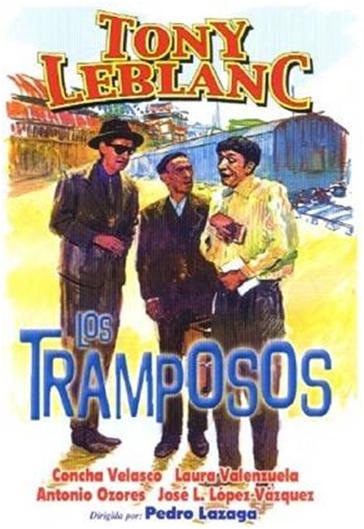
La Mirada ended, and I attended the final screening, not realising it was the closing night film. It cost me $24, and I didn't stay for the after-party - ouch! But The Swindlers (part of Almodóvar Presents) is a lot of fun and it was great to see this film, screened for the first time in Australia.

FILMS:
  • Atraco a las tres (Robbery at 3 O'Clock, José María Forqué, Spain, 1962)
  • Welcome (Philippe Lioret, France, 2009)
  • The Eclipse (Conor McPherson, Ireland, 2009)
  • Figuring Landscapes: Enactment (Patricia Piccinini, Ben Rivers, Margaret Tait, George Barber, Tammy Honey, UK/Australia, 2008)
  • Animal Kingdom (David Michôd, Australia, 2010)
  • Kick-Ass (Matthew Vaughn, USA/UK, 2010)
  • Whisky mit Wodka (Whisky with Vodka, Andreas Dresen, Germany, 2009)
  • Die Wölfe: Nichts kann uns trennen (The Wolves of Berlin: Part One - Nothing Can Part Us, Friedemann Fromm, Germany, 2009)
  • Los tramposos (The Swindlers, Pedro Lazaga, Spain, 1959)
DVD:
  • Schwerkraft (Gravity, Maximilian Erlenwein, Germany, 2009)

Robbery at 3 O'Clock
The Spanish academic who introduced this film mentioned it is widely regarded as the best Spanish comedy ever. Well, claims like that are always debatable, aren't they? It's largely a matter of taste. I don't know if I'd put it on such a high pedestal, but I can understand why historically it might be considered with high regard. After all, a film needs to be considered in the context of when it was made, something that described in the introduction.

Spain in 1962 was a pretty dark place. It was more than twenty years into a dictatorship that capped off a long and devastating civil war. This film gave the Spanish some ray of light, some joy and it is a lot of fun to follow a rag-tag bunch of bank employees plot to rob the branch they work in. The film's opening sequence makes clear what its influences are with a dialogue-free sequence that is pure Charlie Chaplin farce.

I imagine the film would be more enjoyable for a Spanish speaker, who would better understand the nuances of the language - apparently some of the dialogue was absorbed into popular Spanish culture at the time. The film makes a slight swipe at the government at the start of the film but is otherwise largely apolitical. We were told that this was the film's Australian premiere and was part of Almodóvar Presents at La Mirada.

Welcome
There's something distinctly unsatisfying about this film, and it nagged me most of the way throughout its length. It's one of the films from the French Film Festival 2010 that I decided (fortunately) to wait for its theatrical release. I've heard mixed things about it, and I'm definitely in the camp of the disappointed.

I was similarly disappointed with Lioret's previous Je vais bien, ne t'en fais pas/Don't Worry, I'm Fine which at least had the benefit of a quietly simmering performance by the wonderful Mélanie Laurent. Both films tend towards earnestness, overly so. They both have an arthouse aesthetic, both with human issues, but the issues are too overt - especially in Welcome.

Welcome, I'm sure you're aware, is about a young Iraqi who has found his way to France and is wanting to get to England to join his girlfriend. Failing to cross by truck, he meets up with a swim coach, learns to swim and plans to swim the English Channel. On the one hand, the film draws attention to the far-right neo-fascist policies of Nicolas Sarkozy, that would have been adored by John Howard, that criminalise any citizens that assist refugees in any way. I agree with the left-leaning (ie, social/humanist) policies the film is endorsing, but I don't need it thrust down my throat so overtly. Michael Winterbottom did it much more successfully (and seriously) with his In This World (2002), a much more timely film.

Lioret's film is much safer, clearly designed to appeal to a more mainstream audience - not that there's anything wrong that per se. It's just that with an added element of a domestic story, it all feels more than a little contrived, melodramatic and overtly appealing to our heart strings (especially with the use of music). It's the sort of film that probably did well at the French Film Festival or, post-festival, with the prime Palace demographic.

Another problem for me is Vincent Lindon in the main role of swim coach. Maybe it's my prejudice, but I don't like his looks for a role like this. He often plays a Mr. Everyman, which is what's asked for here. The trouble is, he doesn't come across as a Mr. Everyman. His acting is quite wooden, his face is largely expressionless and he has too narrow a range to effectively portray his character in this film. About the only roles I find him effective in are as a criminal. Otherwise, I normally see the actor and not the character.

For me, a film that exemplifies a much more satisfying depiction of an 'issue' is Michael Haneke's Caché/Hidden in which an Algerian massacre in France takes backseat to a contemporary story filled with ambiguity. Haneke assumes his audience will 'get it' without being preached to like Lioret's film does.

The Eclipse
This is quite a decent and thought-provoking film from the Republic of Ireland, set and filmed in Cobh, Cork County. Michael (Ciarán Hinds) is a single father grieving for his deceased wife. Hinds' is perfect for the role and his performance is spot on. He has a melancholy presence that conveys a repressed emotional burden. All is not perfect in his world, and a ghostly presence seems to be lingering. Is it his wife? Has Michael not let go of her? Or is it his elderly father-in-law, still alive, but on the precipice?

The film is not conventional horror - which is largely puerile, aiming at a teenage demographic. It's not really an adult ghost story, either. It crosses genres and really stands up predominantly as drama. The supernatural elements take up a small proportion of the film's screen time, but add an ever-present ambiance that looms in the background. The naturalistic lighting, tending towards darkish, accentuates the sombreness.

Michael is a regular volunteer at the local writers festival, during which he finds himself driving around the celebrated English author of The Eclipse, a book about ghostly experiences by the attractive author Lena Morelle (Iben Hjelje). Michael has the perfect opportunity to talk about the disturbing phenomena in his house, but is reluctant to completely open up. This scenario is perfect for a slow burn drama as various intertwining relationships unfold, involving another celebrated writer, Nicholas Holden (Aidan Quinn).

The performances of the lead characters are all strong all and the story is multi-layered, covering various themes, including grief, lettting to, celebrity and human relationships in general. If anything, it could be accused of being slightly over-ambitious to its detriment, but this is a minor complaint.

Michael's role as driver gives the film the opportunity to display the Irish countryside and townships, and these visuals of the architecture and scenery are just superb, without being postcard cliches. It's one of the things I love about world cinema, experiencing other places in some small way.

The supernatural element is used with restraint for the most part - The Others comes to mind, but that film was much more ghost-orientated. So horror film buffs might be disappointed. The Eclipse really aims at a more conventional arthouse audience with its solid dramatic themes, with the supernatural more an interesting variance on the genre.

As an aside, for me ghosts are a given, something I've experienced for as far back as my memory allows (at least since age two). I've never seen ghosts depicted in cinema quite as I've experienced them, but that's because I've never seen them physically but rather sensed them, or 'seen' them by my 'third eye'.

It's hard to convey, but there was a ghost that regularly visited me in my dreams all throughout my childhood. In my sleep, he assumed a form like a wolf and would breathe up close onto my dream body's face - a sort of dream within a dream. His breath stank like fish and hearing him would scare me. If, within my dream, I realised that my dream body was not real and it was just a dream, eventually he would go away. Mostly though, he would fool me and if my dream self woke up, them my real self would also wake up and I would have wet the bed. This continued until around age ten.

I was living interstate at age 23 when this same entity visited me again, when I was travelling away from home. I instantly recognised him when he appeared in my dream and, without waking up, I threatened him and he quickly disappeared. I later learned that there is no need for threats because ghosts are very insecure and will leave if asked to. Since that time, on the rare occasions when I've senses another entity, I've done just and they have always left without incident.

Actually, when I was nineteen years old, I was attacked by a ghost when I was sleeping under the stars along the Nullabor Plain. I was just drifting into sleep when I saw shooting stars which, according to Indian belief, are a bad omen. Fear gripped me at a vulnerable time and the next thing I knew, an entity was choking me. I warded it off mentally and it disappeared, leaving me a little traumatised.

I still sometimes sense entities around at night when I'm going to bed and often do a mental visualisation to protect myself. This involves asking all uninvited guests to please leave and any well-wishers may remain. Call them guardian angels if you like, but I have seen them while wide awake. I understand those without similar experiences may find this kooky or superstitious; for me it's just a innate part of my understanding and contributes to my perspective of life and death, something I alluded to in my post 'A Change of Plans'.

For the best part of thirty years, I've been left pretty much alone by ghosts or entities. I don't really call them ghosts, which implies they're a different type of being to us. The term 'entity' seems more appropriate - I see them as being people like you or I, but unembodied for whatever reason). I attribute my being left alone to my coming into my own power, understanding them and understanding myself relative to them.

Figuring Landscapes: Enactment
What can I say - experimental/conceptual art cinema usually does nothing for me. I thought I'd give this a go, but it was the same. So far, I haven't been able to penetrate that space.

Kick-Ass
A lot has been written about this very entertaining film. Some of the superlatives have been over the top, but it definitely is one of the best in its class. It's certainly not what the marketing of the film would have you believe it is. While the writing is very good, I think the film's success is the amazing performance and sneering charisma of the then eleven year old Chloe Moretz as Hit Girl. She steals the show and it wouldn't be the same without her. And even Nicholas Cage gives a decent performance (something he hasn't done since Adaptation and Bringing Out the Dead).

The Swindlers
This is a nice little vintage gem from the vaults of Spanish cinema, beautifully rendered in colour. Pedro Almodóvar selected this film for La Mirada and I can see how its "sardonic humour" (as festival director Rocio Garcia described it) would be right up his alley. It's right up mine, too. Three friends collude to con people out of money by any means they can but go straight to win the affections of a girl. The script is sharp, the performances good and the ending is just great.

Thursday, February 25, 2010

French Film Festival 2010 - 2

The French Film Festival open in Melbourne next week. In this post, I offer brief comments on five more films. My pick of them are the family-oriented films: OSS 177, Lost in Rio and First Snow.
  • OSS 117, Rio ne répond plus (OSS 117, Lost In Rio, Michel Hazanavicius, France, 2009)
  • Regrets (Les regrets, Cédric Kahn, France, 2009)
  • La journée de la jupe (Skirt Day, Jean-Paul Lilienfield, France/Belgium, 2009)
  • Le premier jour du reste de ta vie (The First Day of the Rest of Your Life, Rémi Bezançon, 2008)
  • La première étoile (First Snow/The First Star, Lucien Jean-Baptiste, 2009)
OSS 117, Lost in Rio
Michel Hazanavicius has reprised the role of Hubert Bonisseur de la Bath, agent OSS 177, again played charismatically by Jean Dujardin. He is perfect for the role, a caricature of James Bond in much the same vein as Maxwell Smart or Austin Powers. He has an egotistical, overstated view of his capabilities and sexual prowess, yet always gets his man (and woman, as you'd expect). Dujardin's ability to effortlessly depict charm and incompetence with his handsome Connery-like looks are really what keeps this film going. His comic timing ain't bad either.

OSS 117, Lost in Rio uses every cliche in the book, but that's a given and hardly a criticism. It's set in the 1960s, the Connery era and so plays with the style of that time - the technology, cars, clothing and social changes. It's all a lot of playful fun without adding much to the first film in what I presume will grow to become an OSS 177 franchise like James Bond.

I note that like most films screening at the festival, OSS 177 has an MA festival classification. Theoretically, you could take an accompanied child and - if you don't have a problem with children being exposed to women's naked breasts - children should enjoy this. It's a good family film with good old-fashioned humour.

Regrets
The first thing that occurred to me as I started watching this film is that not only does France seem to offer more opportunities for female directors to practice their craft (though this one is directed by the male of the species), but it also offers more opportunities to good actresses. But perhaps more importantly, French cinema seems to strong roles for women. Elsewhere in the world, particularly English-speaking countries, women - despite their obvious acting talents - are largely confined to support, side-kick, tokenistic and window-dressing-type roles. Jane Campion's films, including the recent Bright Star are rare exceptions. French cinema values and nurtures a style of film that gives rise to greater equality to the depiction of the sexes. Regrets is one such film.

Valeria Bruni Tedechi is a prolific actress, though unfortunately I've not seen much of her work. She seems a very credible and naturalistic actress and her performance in Regrets is strong and convincing. I know even less of Yvan Attal who in this film plays Mathieu, a Parisian architect crisis. His mother has suddenly fallen into a coma and he rushes to her provincial home to be by her side and her prognosis is not good. While in town, he chances across a college flame and they quickly fall into a passionate affair, despite both being married.

I had problems with the film, which possibly says more about me than it. I found the descent of this couple into crazy and unsustainable situations very disturbing. Mathieu in particular is depicted in a very clumsy manner. That's not a critique of the film or the story as the film accurately depicts how a person can totally lose it. I found him embarrassing and though there is nothing shocking on screen, it was at times as disturbing to me as any social-realist or violent film. I doubt others would find it so. I think Regrets will be well-received by the festival regulars, but it's not my thing.

Skirt Day
Watching this film, I was often reminded of Matt Ravier's comments about it being better suited to television. His suggestion that it might have bitten off more than it could chew intrigued me and, if anything, encouraged me to see it. I like risk, even if it's not completely successful.

I didn't find the film very successful at all.The acting is patchy and the story is improbable, though I presume intentionally so. It takes some topical French issues and rather than being didactic or social realist, it dresses them up in satire, black comedy and melodrama.

While the incompetence of Isabelle Adjani's character (a teacher) may seem implausible, I discussed this at some length with my partner (also a teacher in a school with a similarly difficult demographic) and the conclusion was that this level of incompetence certainly does exist. Some of the scenarios, however, are a little over-the-top, and that's where this film will make it or break it for you depending on your perception.

The First Day of the Rest of Your Life
This is a fairly run-of-the-mill French family drama/comedy and I suppose, if you're just out for a social evening and don't have a critical bent, you might enjoy it. For me, though, it has a lot of problems, most of which it brings upon itself. First, it's stretched over a number of years (1988 to 2000), inviting criticism of attention to detail. Hair styles don't match periods, characters don't age convincingly and it seems the point was just to play music of those times. I find the device all a bit tired, though maybe I'm taking the film too seriously.

Other problems push incredulity to the extreme, like a mother taking a minute to notice the smell of marijuana smoke in her child's room, or undressing in front of her doctor son. The film is overtly sentimental, and unfunny when it means to be There are staged contrivances that are designed to titillate an undemanding audience. It's obviously not my kind of film, but there's a market for it, and it may well do OK business.

First Snow
First Snow is not listed as a children's/family film, but it has a G-classification and is a good-hearted family film that children of most ages should enjoy. My 9-year old enjoyed it. Basically it's a fish-out-of-water comedy that plays on various stereotypes - a French-Carribean family take a holiday in the snow. The dad (played by first-time director Lucien Jean-Baptiste) is pretty much a loser. He's out of a job, gambles and is struggling to hold the family together. The three children's performances are quite enjoyable and I recommend this as a child's introduction to French cinema.


And from the festival, more information the visiting directors:

MEET THE DIRECTORS at the 2010 Alliance Française French Film Festival!

We are thrilled to announce that Directors Jean-Pierre Jeunet, Philippe Lioret and Jan Kounen will be in town to present selected sessions of their films during the Festival.

Jean-Pierre Jeunet, who wowed audiences with the spectacular Amelie, will introduce his hugely anticipated new comedy-thriller MICMACS on the Opening Night, 7pm Thursday 4 March, at Palace Cinema Como. Good seats still available!

Philippe Lioret will introduce the 6.45pm screening of the absorbing new drama WELCOME on Wednesday 17 March at Palace Cinema Como and Thursday 18 March at Palace Westgarth. Both screenings will be followed by a Q&A.

Jan Kounen will introduce the 6.45pm screening of the opulent new drama COCO CHANEL & IGOR STRAVINSKY on Monday 29 March at Palace Cinema Como and on Tuesday 30 March at Palace Westgarth. Both screenings will be followed by a Q&A.


The Alliance Française French Film Festival opens on Thursday 4 March with Jean-Pierre Jeunet's Micmacs and runs until Sunday 21 March at the Palace Como, Balwyn, Westgarth and Kino cinemas.

Sunday, May 17, 2009

The Week in Review - 17/5/09

FILMS:
  • Zabriskie Point (Michelangelo Antonioni, USA, 1970)
  • Der Stand der Dinge (The State of Things, Wim Wenders, West Germany/Portugal/USA, 1982)
  • Samson and Delilah (Warwick Thornton, Australia, 2009)
  • Rudi y Cursi (Rudi and Cursi, Carlos Cuarón, Mexico/USA, 2008)
  • Sita Sings the Blues (Nina Paley, USA, 2008)
SHORT FILMS:

Zabriskie Point

Wow! After the disappointment that was The Passenger, this was surprisingly good. Antonioni wears his political leanings on his sleeve (something I'm prone to myself) and really captures the zeitgeist. Sometimes a film is too close to the bone; this film seems to be have been too confrontational for American audiences at the time of its release. Often a film can be appreciated for what it captures long after the emotions of the time have dissipated. This is certainly true of many Australian films that were not acknowledged on first release, such as some of the so-called Ozploitation films or Pure Shit, which (like Zabriskie Point) has elements that are almost documentary-like now.

The lack of expository narrative in Zabriskie Point really adds to its mystique. Antonioni's camera gradually covers various, seemingly unconnected scenarios and we, the audience, have to work a little to make sense of it. Or, not so much make sense as try to connect the dots. By covering a student meeting calling for revolt, police brutality, riots and capitalism in action, it's not too hard to see where Antonioni is going.

The film has an unmistakable 70's feel to it, though it was made at the start of the decade. The themes are clearly related to the aftermath of the political turbulence that swept the globe in 1968, most strongly recalling Haskell Wexler's Medium Cool (1969). The final explosion, while literally a blast, is not the film's biggest drawcard for me, though clearly a delight for the film's fans.

The State of Things
There's been a lot of films made about making films. For me, this one directly recalls Catherine Breillat's Sex is Comedy. Both films are about the struggles of making the respective director's previous trouble-prone film. The self-reflexive nature of this Wenders film is quite funny, especially when the film is shot on black and white film and the script has a producer slamming the use of just that. There are a number of moments like that. I don't think the film is brilliant, but certainly very enjoyable.

Rudi and Cursi
After the very sublime Y tu mamá también (my favourite Mexican film), directed by Alfonso Cuarón and starring Gael García Bernal and Diego Luna, I figured a comedy by Alfonso's brother with the same duo of actors couldn't be too bad. Alas, it came in at the low end of my expectations.

It screened as part of the Spanish Film Festival at the Kino. I'm not accustomed to full-houses at the Kino, so I was pleased for their sake to see them doing good business. Rudi and Cursi is really a populist film and I suppose it certainly got bums on seats. I just found it all a bit tiresome. Here's two very luminous and intelligent actors (Luna played the Michael Jackson look-alike in Mister Lonely), and it was obviously some kind of joke to have them playing dumbass country hicks who hit the big-time when they're scouted for rival Mexico City football clubs.

Don't get me wrong, I don't have a problem with intelligent actors playing dumbasses; that's what actors do. But the gags were all fairly puerile and predictable. The film did nothing for me whatsoever.

Sita Sings the Blues
I'm more than familiar with the Ramayana, having spent some part of my youth exploring Hinduism and Indian culture - I've been there six times. I'd heard good things about this film, especially from Lynden Barber of Eyes Wired Open, so took the opportunity to take my eight-year old son to see it. The Ramayana recounts the story of Rama, an incarnation of Vishnu (God), and his consort Sita who is abducted by Ravana and taken to Lanka. The monkey-king Hanuman finds Sita who is rescued by Rama but ultimately banished to the forest over doubts of her purity.

The film is visually stunning, with Sita singing love songs that are actually 1920's jazz songs by Annette Hanshaw. And cleverly, director Nina Paley weaves her own real-life heartbreak story into a parallel narrative. What most are not aware of is that Star Wars is almost a direct rip-off of the Ramayana. I don't think as highly of the film as Lynden obviously does, but it is entertaining and original nonetheless. And the kid's verdict? Like me, he liked it, but nothing special.

Sunday, May 03, 2009

The Week in Review - 3/5/09

In preparation for the Spanish Film Festival (13 - 24 May), which features a Luis Buñuel retrospective and exhibiton, not only have I been watching a number of Buñuel's films on DVD, but two of the three films I saw on the big screen seem to have been inspired by his surrealist film-making. There's a number of films I want to see at the Spanish Film Festival, but the Buñuel retrospective particularly interests me. I've also been asked to contribute to the festival blog. Unlike the German Film Festival, whose blog was contributed by two writers conversant with German cinema, the SFF bloggers are basically local bloggers who are discovering Spanish cinema through the festival. I'll have more to say about this soon.

The Malle season at Melbourne Cinémathèque has now come to an end. The highlights for me were Lancombe, Lucien, Le feu follet and Au revoir, les enfants. Ascenseur pour l'échafaud was also quite impressive, especially as a first film. I love the way these short seasons/mini-retrospectives give a taste for a director's work. Louis Malle made over 30 films, so now I've got a taste to explore some of the others - any suggestions appreciated.

FILM:
  • Synecdoche, New York (Charlie Kaufman, USA, 2008)
  • Au revoir, les enfants (Goodbye, Children, Louis Malle, France/West Germany, 1987)
  • Zazie dans le métro (Zazie in the Metro, Louis Malle, France/Italy, 1960)
DVD:
  • Le journal d’une femme de chambre (Diary of a Chambermaid, Luis Buñuel, France/Italy, 1964)
  • Belle de jour (Luis Buñuel, France/Italy, 1967)
  • Le charme discret de la bourgeoisie (The Discrete Charm of the Bourgeoisie, Luis Buñuel, France/Italy/Spain, 1972)
  • Le fantôme de la liberté (The Phantom of Liberty, Luis Buñuel, France/Italy, 1974)

Synecdoche, New York
Synecdoche, New York was originally going to be directed by Spike Jonze but by the time Charlie Kaufman had the script ready, Jonze was tied up with Where the Wild Things Are, and Jonze agreed to Kaufman's directing it.

There's a similar style to the earlier films written by Kaufman, which is hardly surprising as he has such an idiosyncratic style. But the themes and story are quite different. This film is really about a man's unhappiness within himself and wanting to achieve something both personally and professionally. Thematically, it's quite bleak, not that different to Le feu follet, but with Kaufman's clever and playful devices, it never feels down. He has a way of conveying some emotional truths in a way that people may not otherwise be receptive to them. I suppose you could say similar of Eternal Sunshine of the Spotless Mind.

There's a lot to admire in the film, including some lovely performances all round, and it really takes repeat viewings to absorb all the layers of details. The characters in the film seem to inhabit a Buñuelian universe, though instead of a person dreaming about a person dreaming about something absurd, Philip Seymour Hoffman's Caden Cotard is a director whose masterpiece is a self-reflexive piece of cinema in which characters play versions of himself and those in his life, which becomes convoluted to the point of the absurd.

The film has been described as experimental, but I don't agree. I think Kaufman is very much in command of what he does; it's just that he has a very surreal/fantasy/absurdist way of telling a story. There's not a lot of directors that have successfuly worked in this realm: Luis Buñuel as already mention, Raúl Ruiz and David Lynch are names that come to mind.

The narrative of the film is probably more ambitious than anything we've seen with Kaufman's name, and quite frankly, I think his lack of directorial experience is a factor in it not working quite as successfully as it might have been had Jonze been attached. Mind you, as a first film, it's quite an amazing achievement and the ambitiousness of the project is awesome. There's a real shortage of unconventional films that celebrate the power of imagination so overtly, so I think it deserves credit for taking the risks it does.

Synecdoche, New York opens this Thursday 7 May exclusively at the Nova.

Au revoir, les enfants
Au revoir, les enfants is sometimes described as Malle's masterpiece, which I think is a fair call. It certainly is a great companion piece to Malle's earlier Lancombe, Lucien and, given its strong autobiographical element, is both poignant and sheds further context to the earlier film.

I love the way that the film documents a way of life that simultaneously is dated yet universal. The depiction of life in a provincial Catholic boarding school is full of authenticity and seems almost documentary-like. Hopefully, there's not too many children growing up today in such conditions. The universality of it is the cruelty of children towards each other and reminds me of the bastardisation I experienced in my youth.

I particularly identify with Holocaust stories because I no doubt lost many distant relatives in that tragic episode of human history. In fact, my great-great grandfather left Russia in the 1800's and emigrated to then-Palestine, presumably escaping the bloody pogroms of the day. His three sons migrated to Melbourne in the 1880's and were prominent members of the Russian-Jewish community that clustered in Carlton. I still remember my great-grandmother's two-storey Victorian terrace on Swanston St, now long-demolished.

My only involvement in Jewish life during my adulthood has been to attend weddings and funerals. I rejected Judiasm in my teens (right after my barmitzvah, in fact, but that's another story, involving a nasty Polish rabbi), but I also rejected all religions. But that was then. I now respect all religions and all cultures, and part of that has been to accept and honour my own cultural roots. So I embrace my Jewishness, even though I don't consider myself Jewish per se.

Back to the film, I can't watch a film like Au revoir, les enfants without feeling a connection to those who suffered. To single out people based on one arbitrary fact is just barbaric, just like the so-called ethnic-cleansing of so many nations since. Growing up in the shadow of World War II, there was a sense that "this must never happen again", yet how wrong have we been? Rwanda, Bosnia, Kosovo, the Kurds... the list goes on.

The story in this film, from the perspective of the child, is powerful enough. But the ending is just shattering, how Malle describes how the moments of the film's ending have haunted him for the past forty years. The film joins a number of powerful post-war films that also depict the war from a child's perspective: Malle's Lancombe, Lucien, Tarkovsky's Ivan's Childhood, Klimov's amazing Come and See, and others. Malle's film also recalls Andrzej Wajda's Katyn in that it is a strongly autobiographical account of the war.

Zazie in the Metro
The Senses of Cinema annotations for this film certainly helped me to appreciate this film from a deeper perspective that I otherwise would have. And having seen the first two of Malle's films during this Melbourne Cinémathèque season, it was great to see the third. But it still did little for me. Sure, it was nice to see the urban decay of Paris, and I found it interesting to see similarities with Buñuel in terms of absurdity, but it still seemed a bit too steeped in slapstick to be a serious critique of contemporary social and political norms. For me, it's worth seeing only in the context of the varied body of Malle's work.

Tuesday, October 21, 2008

Choke

Choke (Clark Gregg, USA, 2008)
Choke is actor Clark Gregg's writer-directorial debut, with a screen adaptation of a novel by Chuck Palahniuk (Fight Club). I suspect that connection will draw many people to see Choke, but really they're very different films. First, Clark Gregg is not David Fincher, secondly this is a very different story.

Apparently, the story is semi-autobiographical, but I don't intend to go into the details of what parts are autobiographical, which are metaphorical, and which represent the experiences of those close to Palahniuk. I don't find it particularly relevant, but if you're interested, you can Google that yourself (or check out this article in The Age).

There's a lot happening in Choke, and the film attempts to get around this by depending too heavily on Rockwell's voiceover narration. It might have worked well with Edward Norton in Fight Club, but seems both a bit heavy-handed here and it detracts from the coherence. What the... ? The whole point of narration is to improve coherence, a shortcut alternative to depicting everything on-screen by relaying a character's thoughts.

I found the film a little disappointing. It looks good, it sounds good, the acting is good (Sam Rockwell is always good value, and the rest of the cast is also fine). The story is quirky, and to some, that could be code for where the film doesn't work.

The quirkiness factor comes in right from the start with just too many competing themes that feel forced (à la Little Miss Sunshine). There's the sex-addiction, and the attendance at group therapy sessions (a good place to get laid, apparently). Then there's the heritage theme park where Rockwell's character, Victor, plays a part alongside his best pal, Denny (a charismatic Brad William Henke), also a sex addict. There's the ruse Victor pulls in restaurants, pretending to choke, in order to get the sympathy of strangers. There's the descent into dementia by Victor's mother (Anjelica Huston), who may hold the key to some mysteries about Victor's identity. And there's the complexity that Paige Marshall (well-acted by Kelly Macdonald) brings in the form of a potential love interest.

On the surface, that's a lot of ground to cover, and Gregg does a not too bad job as first-time director. I'm sure a lot of people will find this film a lot more enjoyable than I did; the success of films like Juno and Little Miss Sunshine is testament to that. For me, there were many elements that in isolation may have been good, but didn't come together successfully as a whole. The editing of the film may be at least partially to blame, but ultimately, Gregg has been a little too ambitious and hasn't quite succeeded in sewing all the bits together as well as he intended. There's a twist at the end that I found a little weak and conventional, but I'm not giving that away. To the film's credit - and you'd expect this from a Palahniuk story - it's unconventional.

Choke opens on October 30.

Sunday, October 19, 2008

The Week in Review (x2) - 19/10/08

Oh, life is bigger
It's bigger than you
And you are not me
The lengths that I will go to
The distance in your eyes
Oh no I've said too much
I set it up
- REM, Losing My Religion

This used to be my favourite song. It was important to me at an important turning point in my life, when I lost religion (even though that's not what the song is about). It's also a song that pops into my head when life is full, too full, when it's big, bigger than you. And you are not me. Get the drift?

Well, it's been two weeks. Life has been so full, and I still scarcely have time to post my weekly summary. But I want to do it, for myself at least. I can't do credit for many of these films, but here goes.
  • Del rosa al amarillo (From Pink… to Yellow, Manuel Summers, Spain, 1963)
  • Ta'm-e gilas (The Taste of Cherry, Abbas Kiarostami, Iran/France, 1997)
  • Waitress (Adrienne Shelly, USA, 2006)
  • Zert (The Joke, Jaromil Jires, Czechoslovakia, 1969)
  • Kladivo na carodejnice (Witches' Hammer, Otakar Vávra, Czechoslovakia, 1969)
  • Wake in Fright (Ted Kotcheff, Australia, 1971)
  • Burn After Reading (Joel & Ethan Coen, USA, 2008)
  • Towelhead (Alan Ball, USA, 2008)

From Pink… to Yellow
Screening as part of the ACMI Focus on Víctor Erice & Abbas Kiarostami, I suppose this film by Manuel Summers sneaks in as Erice has only made three films. It fits in thematically, with its depiction of life from a child's perspective. I can't say it overly grabbed me and when the narrative shifted to an elderly couple, I dozed off.

The Taste of Cherry
I loved this film, which reminded me of Kiarostami's later film, 10. Shot mostly from within a car, a guy drives around town looking for someone to assist him in his mission to take his own life. The story is elusive (we never find out his exact reasons) and it has a controversial and ambiguous ending. The story is somewhat episodic as different people find themselves in the car with our 'hero'. The different characters and their respective responses to our hero are convincing and compelling. The final character's role is just fantastic, as he shares a story with our hero. I really related to it, as he describes how he also, some decades earlier had contemplated suicide, and what got him through. It reminded me of the adolescent neighbour in American Beauty, how he saw beauty everywhere, even in a plastic shopping bag blowing in the wind, or the way light reflected in the still warm blood of his neighbour. Very moving.

Waitress
The missus was watching this on DVD and it had lost none of the sparkle that did it for me the first time on the big screen. One of the best romantic comedies of all time, not that it follows any romantic comedy conventions. For the record, my other favourites are Truly, Madly, Deeply and Like Water for Chocoloate.

The Joke
Wow, this Czech New Wave is seriously good stuff. No wonder the commies didn't let this film see the light of day for twenty years. A guy is cynical, unhappy and unable to form meaningful relationships. When he revisits his hometown, old memories flood his mind, and we learn how he got to be the person he is. Fundamentalism, in all its guises, stinks.

Witches' Hammer
Attacking exactly the same themes as The Joke, this story of medieval witch hunting is just as overt a criticism of communism, in spite of its use of metaphors. It also didn't see the light of day until 1989, when the iron curtain came down. I hadn't realised how widespread the hysteria over witchcraft was in Europe, and explains why many fled to the US (where a different form of hysteria-fundamentalism has arisen).

Wake in Fright
I was initially put off when I realised this MUFF screening was from a DVD. But once I got into it after a couple of minutes, it didn't really matter. The story is that good, and the visuals were quite OK. Now I know why this film has such a strong reputation; it is a genuine compelling film.

Burn After Reading
I found Burn After Reading absolutely entertaining. I didn't have high expectations as I think the Coen brothers get mixed results when they do comedy. The humour in this film is full of deadpan irony, greatly understated at times, farcical at others, but always unpredictable yet believable.

While it is in no way an explicit commentary on The War On Iraq, clearly that's the subtext. I'd say it's the first successful film to tackle the issue of homeland security in the US, post 9-11, simply because it doesn't reference it at all. Like most Coen films, people motivated by greed have a plan, and things don't go to plan. There's blood and a reasonable body count. As in all matters concerning national security, it doesn't matter who gets hurt, innocent or not. What's important is that leadership is decisive, bodies are disposed of and people are seen to be doing their jobs. Right?

The lineup of actors looks awesome on paper, and they don't disappoint. Most of them play against type. The film is very original, very exciting and very contemporary. Well-worth seeing.

Towelhead
With all the hysteria over Bill Henson and his photography of naked or semi-naked children, it's amazing that Towelhead has been released with scarcely a whimper of complaint.

This is quite a gutsy film, tackling taboo subjects head-on and pulling few punches. This is intelligently written. It looks like what I call a quirky-indie comedy but isn't. There's so much truthful depictions that reflect the complexity of real-life issues such as racism, teenage sex and paedophilia. Like American Beauty, there are generally no good or bad guys, but both good and bad exist in most characters.

I liked the way Towelhead doesn't force a message down your throat. You don't necessarily know Ball's stance on an issue, such as teenage sex. He just depicts it a certain way, and you make up your own mind.

Toni Collette plays a fairly typical-looking role to what she generally does in US films, but her role is better written than most (like Little Miss Sunshine et al). The visuals of the film were a little distracting for me, such as the over-use of golden-sunset hues and over-contrast, something that has been done to death on US network TV shows. Most won't have the same problem with it as I (my missus didn't even notice). There are a couple of minor scenes that slightly lacked plausibility, but for the most part, the film successfully pulled off some pretty major risks. Big kudos for that.

Sunday, August 24, 2008

The Week in Review - 24/8/08

  • Moonfleet (Fritz Lang, USA, 1955)
  • Fury (Fritz Lang, USA, 1936)
  • Du levande (You, the Living, Roy Andersson, France/Germany/Denmark/Sweden/Norway, 2007)
  • The Bank Job (Roger Donaldson, UK, 2008)

Moonfleet
My only exposure to Fritz Lang is his most famous film, Metropolis, which I saw a few years ago at the Astor Theatre. This film, apparently the only one shot by Lang in Cinemascope, seems quite insubstantial to me. It looks very staged, like an adult form of children's pantomime. Maybe I'm not imbibing its historical context. I'm certainly interested in the history of cinema and Lang is a significant player in cinema's early history. Fortunately, the following Lang film screening at Melbourne Cinémathèque was more engaging.

Fury
The plot of this film is fairly implausible, yet somehow manages to grab the audience and take it on a ride. Fury raises some ethical and other issues and I found it enjoyable, though still not overly substantial.

You, the Living
This film, in Swedish, has a bleak aesthetic that really appeals to me. Urban decay is very photogenic, and the various characters that are shot in single takes (mostly with a static camera) match their surrounds. The director has employed a number of peculiar devices such as irony, black humour, surrealism and social observation that results in a highly original, engaging and entertaining film. I found it tender, sweet, moving and quietly subversive (especially a religious woman's praying for forgiveness for various sinners), without being overtly political in any way.

I loved the way characters from one scene would intersect with those from another. I also loved the way some minor details recurred. But my favourite parts were the recounting of dreams, where the surrealism came to the fore, especially with the girl and the guitarist. I was in awe at how one scene (from inside a 'train') was shot. Well worth seeing if you like films outside of the box, Scandinavian films and black comedies/dramas.

The Bank Job
I had free tix to see this as a MIFF member pre-MIFF, but couldn't fit it in. The missus didn't like the previous film as much as I so she took the call on this one. It has the fairly conventional structure of a heist film, yet manages to maintain a high level of interest for a number of reasons. First, it's genuinely more complex than most, and the complexity is believable due to the underlying facts that the story is based on, even if the bulk of the film is a fictionalisation (which one would expect, particularly considering the reported national security implications).

The Bank Job had my heart palpitating in suspense for nearly the entirety of its run time and my hands were sweaty. So I felt it did a good job of grabbing the audience. The end was a bit too twee in my opinion, trying to conveniently smooth things over for resolution. This is a minor point however, and didn't really affect my appreciation for the rest of the ride. This is a good mainstream film. It looks good, has believable and well-developed characters (mostly) and has some genuinely unexpected twists.