Monday, April 12, 2010

Animal Kingdom

Animal Kingdom (David Michôd, Australia, 2010)
This debut feature by David Michôd, which won the Grand Jury Prize for World Cinema at this year's Sundance Film Festival, is simply exhilarating. I'll go so far as to say that I think it's easily one of the top ten Australian films of the last two decades. To put that into perspective, the only films I’d place on that pedestal are: Everynight... Everynight, The Boys, Em 4 Jay and Samson and Delilah. If pushed, I could also include Ten Canoes, Shine and Three Blind Mice. And now Animal Kingdom.

Animal Kingdom is a mixture of genres – at heart an ensemble family drama, but also a crime thriller. The poster art perfectly captures the mood – much like a Shakespearean or Greek tragedy. Clearly inspired by the events surrounding the Walsh Street police shootings of 1988, it details a family’s implosion as crime and police corruption collide. Josh or J (James Frecheville) is embraced by that part of the family that his mother hid from him until she unexpectedly dies. He has no-one else to turn to. Like Malik, the young petty crim in Jacques Audiard’s A Prophet, he becomes our unwitting tour guide to the dark side as we follow a relative innocent’s induction into a world of crime.

Animal Kingdom is no less suspenseful than Audiard’s film and just as powerful. In fact, it's like a cross between A Prophet and The Boys. There is some violence, but it’s mostly off-screen. The film creates a nail-biting atmosphere by feeding the audience information that characters are denied. One of my favourite scenes involves a suburban dad (Clayton Jacobson from Kenny) simply backing his car out of his drive-way. We know the urgency of the situation, but he’s oblivious to the danger. There are various twists, which are wholly ‘organic’ and believable, as opposed to being tricksy Hollywood-style.

Some actors have never put in better performances. Michôd has brilliantly tapped a hitherto unseen talent in Ben Mendelsohn, without a trace of his usual larrikinisms. His inhabiting the role of a criminal psychopath is just as terrifying as David Wenham’s Brett Sprague in The Boys. Jackie Weaver's performance as the matriarch is also stunning. It demonstrates a skillful balance of excess and restraint, with an unsettling effect created by the contradictions of her homeliness, emotional neediness, mental stability and cunning ruthlessness. She has some great lines and is one of the backbones of the story. Guy Pearce is another and his performance as the seasoned detective is perfectly understated. Frecheville and Mendelsohn are the other pillars.

The whole ensemble cast performs well, with strong support from Joel Edgerton, Sullivan Stapleton, Dan White, Laura Wheelwright and others. Character development is just wonderful across the board. The story works so well because Michôd mostly underplays it, trimming the film of any fat. J is quietly introverted, so we don’t know what to expect. Ambiguity in characters causes doubt about who can be trusted. Sometimes, when action takes place, it seemingly comes out of nowhere. Court scenes are all but removed, focusing on the human and suspense elements.

Adam Arkapaw's magnificent camera work recalls László Baranyai's work in Noise (2007), easily the best aspect of that film. The music and sound design are terrific – pretty much on a par with the excellent achievements of Samson and Delilah. Each of the parts of Animal Kingdom is well-realised; the sum of the parts is sublime. This is a finely constructed story, one of the best films of the year and I can’t wait to see it again. Given that Sony Picture Classics snapped it up straight after the Sundance gong, hopefully it will do well in the US. I have no doubt it will receive a strong reception here.

Animal Kingdom is being released in Australian cinemas on 3 June.

Links: Official website

Here's the trailer:
..

Avatar and alleged 'Box Office Gross'

I just received Screen Australia's latest email newsletter, Get the Picture, which states:
Avatar is now the highest-grossing film of all time in Australia. Released on 17 December 2009, it had earnt $108,621,853 at the local box office by 7 March 2010, making it the first film released in Australia to earn over $100 million.
It then provides a link to its website of the top-grossing films of all time. I always have a problem with these sorts of claims, because a dollar in 1960, for example, would be worth $12.07 today according the Reserve Bank's official CPI rates. Crocodile Dundee's takings of $47.7M in 1986 puts it in fifth place as all-time Australian gross box office. However, when inflation-adjusted, that amount is equivalent to a whopping $108.89M in today's currency, putting it just ahead of Avatar. Now, I have no doubt that Avatar will continue to increase at the box office and pip Crocodile Dundee, but you see my point? And look at E.T. - inflation adjustments boosts it from #30 on Screen Australia's list to #3 on mine (below).

The fact is that the publication of box office gross is statistically dishonest and misleading. If, in half an hour, I can put download Reserve Bank rates and Screen Australia's list, and make a quick calculation, why can't we get this sort of comparison? I don't think it's laziness. I think it's a tendency towards sensationalism. There will more often be a film that beat (in unadjusted figures) a previous record gross, allowing for a headline. That's just pure bullshit.

Now, I only have Screen Australia's list of the top 50 grossing films at the Australian box office. It's not a complete list, so I can't compare with say Gone With the Wind, because it's not on that list. From memory, in gross, that film beats them all. And there will be others from way back whose adjusted box office would put them into the top 50.

In case it's not clear, in the following table, the columns are: Screen Australia's rank of each film title, the year of release, the gross box office according to Screen Australia, and my calculation of the inflation-adjusted box office. The list is sorted descending by adjusted box office.
Update: Titles without a Screen Australia rank have been sourced from Movie Marshall.

S.A.
Rank
Title Year released Box office $M Inflation adj. $M

Gone with the Wind 1940 12.22 400.44

The Sound of Music 1965 13.01 140.38
1 Avatar 2009 108.75 108.75
5 Crocodile Dundee 1986 47.71 101.30
30 E.T. 1982 32.66 89.46

Star Wars 1977 18.31 80.23

Dr. Zhivago 1966 7.60 79.97

The Sting 1974 12.64 79.09
2 Titanic 1997 57.65 78.82

Grease 1978 18.48 75.16

Jaws 1975 13.64 74.59

Towering Inferno 1975 11.27 61.63
6 Lord of the Rings: Fellowship of the Ring 2001 47.43 59.37

South Pacific 1958 4.69 59.08
4 Lord of the Rings: Return of the King 2003 49.37 58.60
3 Shrek 2 2004 50.39 58.30
8 Lord of the Rings: The Two Towers 2002 45.65 55.47

Ten Commandments 1958 4.26 53.69
9 Harry Potter & the Philosopher's Stone 2001 42.35 53.01
18 Babe: The Gallant Pig 1995 36.78 52.19
12 Star Wars: Ep. I - The Phantom Menace 1999 38.83 51.39

The Empire Strikes Back 1980 15.13 51.22
28 Jurassic Park 1993 33.00 49.91

Man from Snowy River 1982 17.23 47.19
7 The Dark Knight 2008 46.09 47.06

Crocodile Dundee 2 1988 24.92 46.19
17 Harry Potter & the Chamber of Secrets 2002 37.38 45.42
39 Forrest Gump 1994 30.56 45.15
16 Finding Nemo 2003 37.39 44.39

Pretty woman 1990 26.16 42.46
14 Pirates of the Caribbean: Dead Man's Chest 2006 38.05 41.48
24 Star Wars: Ep. II - Attack of the Clones 2002 33.86 41.15
41 Independence Day 1996 29.50 40.95

Return of the Jedi* 1983 16.21 40.88
10 Harry Potter & the Half Blood Prince 2009 40.60 40.60
23 Meet the Fockers 2004 34.98 40.47
11 Transformers: Revenge of the Fallen 2009 40.34 40.34
19 Harry Potter & the Goblet of Fire 2005 35.73 40.22
32 Shrek 2001 32.10 40.18
36 Gladiator 2000 31.12 40.17
48 The Lion King 1994 27.11 40.05
26 The Matrix Reloaded 2003 33.63 39.91
21 Star Wars: Ep. III - Revenge of the Sith 2005 35.46 39.91

Mrs. Doubtfire 1993 26.24 39.69
22 The Chronicles of Narnia: The Lion, the Witch & the Wardrobe 2005 35.17 39.58
42 The Sixth Sense 1999 29.31 38.79
15 Australia 2008 37.56 38.35
27 Harry Potter & the Prisoner of Azkaban 2004 33.14 38.34
13 The Twilight Saga: New Moon 2009 38.22 38.22

Note: my calculations are approximations that make these assumptions for simplicity:
  • Box office figures are considered to be amounts at the end of the year of release
  • Inflation rates are based on Reserve Bank calculation of CPI as of December of each year. So a 2009 value for gross box office, won't be adjusted by my calculations until the end of 2010.
If anyone can point me to where I'll find gross box office for all Australian releases, I'll update the above table to include the films pre-1982 that may otherwise make the top 50 box office (adjusted).

Update:
I've amended the table above to include titles not included in the Screen Australia list, using the gross box office figures from Movie Marshall, adjusted with my calculations (which unsurprisingly differ slightly from Movie Marshall's, who would obviously be using slightly different arbitrary assumptions). Many thanks to Paranoid Android for pointing out MM's list.

Taking over $400M in today's money, nothing is going to beat Gone with the Wind anytime soon.

Sunday, April 11, 2010

The Week in Review - 11/4/10

I can't believe I saw ten films this week. I'm not working at present and had four days where I saw 2 films each day. This was also partly due to Easter and partly because of the Festival of German Films preview screenings (I'm posting separately about these).

The stand-out of the week is Animal Kingdom, which will definitely make my top 10 of the year. This film is going to sweep the AFI awards this year and is as good a film as Samson and Delilah. The only other new release so far this year that is every bit as good is Jacques Audiard's A Prophet/Un prophète. It seems that Madman are trying some new strategies in their marketing and invited a small number of reviewers - mostly bloggers and those with a web presence - to a screening ahead of the media preview. The film has lingered and consumed me more than any film has for a long time. I'll post my review on it separately in a day or two.

La Mirada ended, and I attended the final screening, not realising it was the closing night film. It cost me $24, and I didn't stay for the after-party - ouch! But The Swindlers (part of Almodóvar Presents) is a lot of fun and it was great to see this film, screened for the first time in Australia.

FILMS:
  • Atraco a las tres (Robbery at 3 O'Clock, José María Forqué, Spain, 1962)
  • Welcome (Philippe Lioret, France, 2009)
  • The Eclipse (Conor McPherson, Ireland, 2009)
  • Figuring Landscapes: Enactment (Patricia Piccinini, Ben Rivers, Margaret Tait, George Barber, Tammy Honey, UK/Australia, 2008)
  • Animal Kingdom (David Michôd, Australia, 2010)
  • Kick-Ass (Matthew Vaughn, USA/UK, 2010)
  • Whisky mit Wodka (Whisky with Vodka, Andreas Dresen, Germany, 2009)
  • Die Wölfe: Nichts kann uns trennen (The Wolves of Berlin: Part One - Nothing Can Part Us, Friedemann Fromm, Germany, 2009)
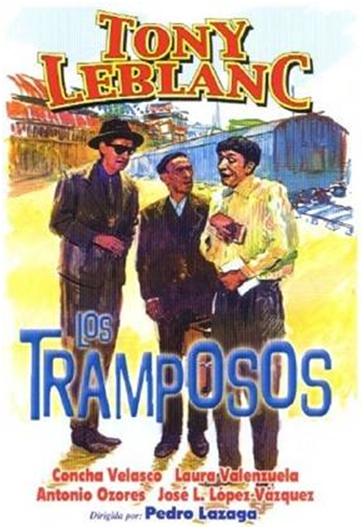
  • Los tramposos (The Swindlers, Pedro Lazaga, Spain, 1959)
DVD:
  • Schwerkraft (Gravity, Maximilian Erlenwein, Germany, 2009)

Robbery at 3 O'Clock
The Spanish academic who introduced this film mentioned it is widely regarded as the best Spanish comedy ever. Well, claims like that are always debatable, aren't they? It's largely a matter of taste. I don't know if I'd put it on such a high pedestal, but I can understand why historically it might be considered with high regard. After all, a film needs to be considered in the context of when it was made, something that described in the introduction.

Spain in 1962 was a pretty dark place. It was more than twenty years into a dictatorship that capped off a long and devastating civil war. This film gave the Spanish some ray of light, some joy and it is a lot of fun to follow a rag-tag bunch of bank employees plot to rob the branch they work in. The film's opening sequence makes clear what its influences are with a dialogue-free sequence that is pure Charlie Chaplin farce.

I imagine the film would be more enjoyable for a Spanish speaker, who would better understand the nuances of the language - apparently some of the dialogue was absorbed into popular Spanish culture at the time. The film makes a slight swipe at the government at the start of the film but is otherwise largely apolitical. We were told that this was the film's Australian premiere and was part of Almodóvar Presents at La Mirada.

Welcome
There's something distinctly unsatisfying about this film, and it nagged me most of the way throughout its length. It's one of the films from the French Film Festival 2010 that I decided (fortunately) to wait for its theatrical release. I've heard mixed things about it, and I'm definitely in the camp of the disappointed.

I was similarly disappointed with Lioret's previous Je vais bien, ne t'en fais pas/Don't Worry, I'm Fine which at least had the benefit of a quietly simmering performance by the wonderful Mélanie Laurent. Both films tend towards earnestness, overly so. They both have an arthouse aesthetic, both with human issues, but the issues are too overt - especially in Welcome.

Welcome, I'm sure you're aware, is about a young Iraqi who has found his way to France and is wanting to get to England to join his girlfriend. Failing to cross by truck, he meets up with a swim coach, learns to swim and plans to swim the English Channel. On the one hand, the film draws attention to the far-right neo-fascist policies of Nicolas Sarkozy, that would have been adored by John Howard, that criminalise any citizens that assist refugees in any way. I agree with the left-leaning (ie, social/humanist) policies the film is endorsing, but I don't need it thrust down my throat so overtly. Michael Winterbottom did it much more successfully (and seriously) with his In This World (2002), a much more timely film.

Lioret's film is much safer, clearly designed to appeal to a more mainstream audience - not that there's anything wrong that per se. It's just that with an added element of a domestic story, it all feels more than a little contrived, melodramatic and overtly appealing to our heart strings (especially with the use of music). It's the sort of film that probably did well at the French Film Festival or, post-festival, with the prime Palace demographic.

Another problem for me is Vincent Lindon in the main role of swim coach. Maybe it's my prejudice, but I don't like his looks for a role like this. He often plays a Mr. Everyman, which is what's asked for here. The trouble is, he doesn't come across as a Mr. Everyman. His acting is quite wooden, his face is largely expressionless and he has too narrow a range to effectively portray his character in this film. About the only roles I find him effective in are as a criminal. Otherwise, I normally see the actor and not the character.

For me, a film that exemplifies a much more satisfying depiction of an 'issue' is Michael Haneke's Caché/Hidden in which an Algerian massacre in France takes backseat to a contemporary story filled with ambiguity. Haneke assumes his audience will 'get it' without being preached to like Lioret's film does.

The Eclipse
This is quite a decent and thought-provoking film from the Republic of Ireland, set and filmed in Cobh, Cork County. Michael (Ciarán Hinds) is a single father grieving for his deceased wife. Hinds' is perfect for the role and his performance is spot on. He has a melancholy presence that conveys a repressed emotional burden. All is not perfect in his world, and a ghostly presence seems to be lingering. Is it his wife? Has Michael not let go of her? Or is it his elderly father-in-law, still alive, but on the precipice?

The film is not conventional horror - which is largely puerile, aiming at a teenage demographic. It's not really an adult ghost story, either. It crosses genres and really stands up predominantly as drama. The supernatural elements take up a small proportion of the film's screen time, but add an ever-present ambiance that looms in the background. The naturalistic lighting, tending towards darkish, accentuates the sombreness.

Michael is a regular volunteer at the local writers festival, during which he finds himself driving around the celebrated English author of The Eclipse, a book about ghostly experiences by the attractive author Lena Morelle (Iben Hjelje). Michael has the perfect opportunity to talk about the disturbing phenomena in his house, but is reluctant to completely open up. This scenario is perfect for a slow burn drama as various intertwining relationships unfold, involving another celebrated writer, Nicholas Holden (Aidan Quinn).

The performances of the lead characters are all strong all and the story is multi-layered, covering various themes, including grief, lettting to, celebrity and human relationships in general. If anything, it could be accused of being slightly over-ambitious to its detriment, but this is a minor complaint.

Michael's role as driver gives the film the opportunity to display the Irish countryside and townships, and these visuals of the architecture and scenery are just superb, without being postcard cliches. It's one of the things I love about world cinema, experiencing other places in some small way.

The supernatural element is used with restraint for the most part - The Others comes to mind, but that film was much more ghost-orientated. So horror film buffs might be disappointed. The Eclipse really aims at a more conventional arthouse audience with its solid dramatic themes, with the supernatural more an interesting variance on the genre.

As an aside, for me ghosts are a given, something I've experienced for as far back as my memory allows (at least since age two). I've never seen ghosts depicted in cinema quite as I've experienced them, but that's because I've never seen them physically but rather sensed them, or 'seen' them by my 'third eye'.

It's hard to convey, but there was a ghost that regularly visited me in my dreams all throughout my childhood. In my sleep, he assumed a form like a wolf and would breathe up close onto my dream body's face - a sort of dream within a dream. His breath stank like fish and hearing him would scare me. If, within my dream, I realised that my dream body was not real and it was just a dream, eventually he would go away. Mostly though, he would fool me and if my dream self woke up, them my real self would also wake up and I would have wet the bed. This continued until around age ten.

I was living interstate at age 23 when this same entity visited me again, when I was travelling away from home. I instantly recognised him when he appeared in my dream and, without waking up, I threatened him and he quickly disappeared. I later learned that there is no need for threats because ghosts are very insecure and will leave if asked to. Since that time, on the rare occasions when I've senses another entity, I've done just and they have always left without incident.

Actually, when I was nineteen years old, I was attacked by a ghost when I was sleeping under the stars along the Nullabor Plain. I was just drifting into sleep when I saw shooting stars which, according to Indian belief, are a bad omen. Fear gripped me at a vulnerable time and the next thing I knew, an entity was choking me. I warded it off mentally and it disappeared, leaving me a little traumatised.

I still sometimes sense entities around at night when I'm going to bed and often do a mental visualisation to protect myself. This involves asking all uninvited guests to please leave and any well-wishers may remain. Call them guardian angels if you like, but I have seen them while wide awake. I understand those without similar experiences may find this kooky or superstitious; for me it's just a innate part of my understanding and contributes to my perspective of life and death, something I alluded to in my post 'A Change of Plans'.

For the best part of thirty years, I've been left pretty much alone by ghosts or entities. I don't really call them ghosts, which implies they're a different type of being to us. The term 'entity' seems more appropriate - I see them as being people like you or I, but unembodied for whatever reason). I attribute my being left alone to my coming into my own power, understanding them and understanding myself relative to them.

Figuring Landscapes: Enactment
What can I say - experimental/conceptual art cinema usually does nothing for me. I thought I'd give this a go, but it was the same. So far, I haven't been able to penetrate that space.

Kick-Ass
A lot has been written about this very entertaining film. Some of the superlatives have been over the top, but it definitely is one of the best in its class. It's certainly not what the marketing of the film would have you believe it is. While the writing is very good, I think the film's success is the amazing performance and sneering charisma of the then eleven year old Chloe Moretz as Hit Girl. She steals the show and it wouldn't be the same without her. And even Nicholas Cage gives a decent performance (something he hasn't done since Adaptation and Bringing Out the Dead).

The Swindlers
This is a nice little vintage gem from the vaults of Spanish cinema, beautifully rendered in colour. Pedro Almodóvar selected this film for La Mirada and I can see how its "sardonic humour" (as festival director Rocio Garcia described it) would be right up his alley. It's right up mine, too. Three friends collude to con people out of money by any means they can but go straight to win the affections of a girl. The script is sharp, the performances good and the ending is just great.

Sunday, April 04, 2010

The Week in Review - 4/4/10

I haven't mentioned much yet about this year's La Mirada, one of my favourite local film festivals. I filled in a survey at the festival today at ACMI and for the question about what I like about the festival I put: [festival director] Rocio Garcia's passion and love for cinema (she introduces most of the films), the volume of door prizes, the atmosphere, the Almodóvar curated section and the pre-recorded intros by the respective film directors. That pretty much sums up for me why I go to the festival. A couple of years ago, I missed a real gem, In the City of Sylvia, which thankfully I caught at Melbourne Cinémathèque last year. Today I saw a similar gem, Paz Fábrega's Agua fría de mar/Cold Water of the Sea. More on this below.

During the week, I've been previewing some films for the Festival of German Films. I'll post a separate article on these films in the next week or two. Hopefully by then, I'll have my thoughts in writing on at least seven films, leading up to the festival's opening on 22 April.

FILMS:
  • Tesis (Thesis, Alejandro Amenábar, Spain, 1996)
  • Agua fría de mar (Cold Water of the Sea, Paz Fábrega, Costa Rica/France/Spain/Netherlands/Mexico, 2009)

DVD/BLU-RAY*:
  • *Léon: The Professional (Luc Besson, France,1994)
  • The Most Dangerous Man in America: Daniel Ellsberg and the Pentagon Papers (Judith Ehrlich/Rick Goldsmith, USA, 2009)
  • Big Fish (Tim Burton, USA, 2003)
  • Die Tür (The Door, Anno Saul, Germany, 2009)
  • Die Standesbeamtin (Will You Marry Us?, Micha Lewinsky, Switzerland, 2009)
  • John Rabe (Florian Gallenberger, France/China/Germany, 2009)

Thesis

This film interested me because (1) it's part of La Mirada's Almodóvar Presents. For me, Almodóvar's films provoke much discussion, even though (as I've often mentioned) I am greatly ambivalent about the films - see my post on Volver for more on that. And (2) because this is the first feature film by Alejandro Amenábar, director of such celebrated films as Abre los ojos/Open Your Eyes (remade as the inferior Tom Cruise vehicle, Vanilla Sky) and The Others (with the then Mrs. Cruise, Nicole Kidman).

What an impressive debut it is. According to festival director Rocio Garcia who introduced the film, Amenábar was only 23 years old when the film was made, still studying at university. He wrote, directed and composed the music. It's no high art, but a fabulous homage to cinema, and Hitchcock in particular. A female film student is doing a thesis on violence in the media and stumbles across a snuff film, leading to a dangerous journey in which her life is seemingly put at risk.

This is B-grade film-making at close to its best, and I mean that in the nicest possible non-disparaging way. The plot is pure B-grade. It's predictable and cliched (like the best Hitchcock films are), yet the writing is strong enough to capture your emotions anyway and I remained in suspense for the film's duration, even if it is slightly overlong. Despite this simple premise, Thesis works on other levels, too, for example questioning the audience's fascination with violence in film (something Haneke does in a more oblique and intellectual manner).

Amenábar demonstrates a great deal of film literacy, especially at so young an age. Being about film studies, students and teachers, he infuses the film with technical aspects of film-making and there are many filmic references. It was a blast to hear an academic deliver a lecture about what was wrong with Spanish cinema and what it needed, mirroring recent introspective discussions here about what's wrong with our industry. For the record, the academic was promoting the need for films to appeal to audiences, to attract bums on seats. Very familiar, indeed. Bear in mind that this was made fourteen years ago. I let out a big laugh at the time, and I'm sure those that heard me had no idea why.

There's a roughness, a crudeness, about this film that gives it both a bite and immense appeal, an appealing aesthetic. It's great to see what an inexperienced but talented film-maker can do on the smell of an oily rag. Not unlike Almodóvar, for that matter. The subject matter - the making of snuff films - is also challenging at times. Fortunately, the horror aspects are brief, just enough to put the fear of god into us at certain times, ratcheting up the suspense as we ponder what might transpire. Again, this is no high art, but well-worth seeing as part of Amenábar's oeuvre, to see where he began. It demonstrates that his later successes were no accident.

Agua fría de mar
I was in two minds about seeing this film. There's few reviews online, which appear mixed. In the end, I went with gut instinct and thought I'd take a risk because the film also appeared to take risks. La Mirada director introduced the film, mentioning that the festival is screening films by eight first time directors this year, including Agua fría. This film was a last minute inclusion after the festival's programming had already been concluded, which caused much inconvenience for rescheduling. Now, this is not a mainstream film - think Jose Luís Guerin, Pedro Costa (without his bleakness) or Lucrecia Martel (La mujer sin cabeza/The Headless Woman) - so my already high regard for Rocio Garcia expanded to an increased respect for her selection in cinema after seeing this.

So, as you can probably tell by now, I was impressed by this film. It has a minimalist aesthetic similar to the films by the above-mentioned directors, an understated confidence in story-telling without gimickry or overt manipulation, and a lovely eye for visuals that added perfectly to a particular ambience - and all with little or no music, other than what appears organically within the narrative and a cast of largely non-professional actors.

The film employs devices consistent with the concept of 'contemplative cinema' with long static takes in which not a whole lot seems to transpire. One has to 'enter the zone', skip to the film's pace, so to speak, and one can't help but take notice of visual details and sounds. One near constant is the rolling thunder of the waves - sometimes near, sometimes far - which maintains a specific sense of place. The film combines intertwining stories of two families on holiday by the sea. I've not been to Costa Rica but imagine the climate would not be dissimilar to neighbouring Panama, which I visited in 1987.

The film was introduced via pre-recorded video by the director and lead actress, both incredibly young. Paz Fábrega mentioned that the theme of the film is about young people not really knowing what their path in life is. Of course, the same can be said for those of us who are twice her age, but point taken. That's one thread through the film, which is deftly portrayed with much nuance, understatement and ambiguity.

Part of the film's appeal for me is the loose ends - there's no tidying up of issues, or even explanation of issues, leaving much to the imagination. There's another element of contemplative cinema - we are left wondering, speculating, trying to join the dots after we've left the cinema.

The other family thread in the film involves a family with four children, and the youngest goes missing one night. The film has an almost fly-on-the-wall element as we observe the seemingly mundane details of their interactions, the way they relate to each other. There's a sort of frustration, watching some dysfunctional interactions that we are helpless to intervene with. There's no sign-posting of this, and unless one is aware of the issues in real life, one may not recognise the significance within the film. Isn't this what good cinema is about? We each draw something according to our own experiences or wisdom, possibly drawing different conclusions which may be equally valid.

The camera work in the film is superb: the blend of static shots and skillful use of hand-held, unconventional angles and some truly unique visuals, such as hundreds of poisonous sea-snakes washing up on the beach which is full of children playing in the water and digging in the sand. It's a pity then, that we only got to see the film in DigiBeta. I presume it's because it was acquired for the festival at short notice, but I'd happily see the film again if a 35mm print was available. Maybe MIFF will pick it up - it or Melbourne Cinémathèque would be perfect platforms for a film of this calibre.

While the film could be seen as boring to a conventional audience (not a real lot happens on the surface), the dramatic drive comes from the intersection of the family and the couple, involving a deception which we are aware of but the protagonists aren't. It's pure visual poetry and more. And, for what it's worth, Rocio Garcia mentioned that this is the first film at La Mirada from Costa Rica. It's also the only film from Costa Rica I've ever seen. Paz Fábrega - keep your eye out for that name.

Léon: The Professional
Released here as just The Professional, I enjoyed this film when it was first released and was surprised to recognise one of my favourite American actresses, the one and only Natalie Portman, as a teenager in her first film role. It adds a whole other level of appreciation. Of course the film is pure fantasy - a girl whose entire family is murdered seeks refuge with her hitman neighbour and conspires to avenge the killers, lead by a corrupt cop.

I have immense respect for Gary Oldman, especially after his directorial debut, Nil by Mouth (1997). His rendition of a corrupt cop is funny to watch but perhaps too whacky. The characterisation is presumably a Besson trait, considering the wholesale whackiness we see in his next film, The Fifth Element (1997). Yet somehow the film is compelling.

Set in New York City, it looks like an American film, but two things give away its European origins. First is Besson regular, Jean Reno in the title role, who's at his prime, both visually and performance-wise. And secondly the story, way too edgy for a mainstream film from an American director - a teenage girl falling in love with a man four times her age. While I'm not the target audience for a film like this, when I want a bit of blockbuster-style escapism, this is the type of film I like to see.

Big Fish
I first saw this film on New Year's day 2004 in New York and it remained one of my favourite films of that year. I think it demonstrates that Tim Burton is a fabulous story-teller, particularly in making the mundane fantastical. The film is a story within a story within a story, with a father-son conflict being the catalyst to unravelling what is truth and what is imaginary.

Charming is usually a code word film reviewers use to describe a film I wouldn't want to see. In this case, however, it's totally appropriate in a positive way. There's a heavy use of sentiment that just seems to work. The film doesn't affect as strongly on second viewing for me - perhaps it was the joy of surprise on the first viewing, or maybe my taste has changed. I'm inclined to think it's more the former.

Still, the bizarre array of characters who appear in both fantasy and 'real' variations are a joy to behold and Burton makes good use of them. This story is perfect material for him, with his ability to turn the normal into a twisted fairy tale (though his recent fairy tale doesn't seem to have made such a good transition). Burton makes fairy tales for adults, but Big Fish is a better children's fairy tale than the vast majority of films made specifically for children, largely because children's films mostly underestimate a child's capacity for understanding.

Wednesday, March 31, 2010

Festival of German Films

I had a quick look at the films screening at this year's Festival of German Films, and two titles stood out straight away: Michael Haneke's The White Ribbon and Fatih Akin's Soul Kitchen. I saw The White Ribbon at MIFF last year and have been wondering when this magnificent film will get a release. I'm a big fan of Haneke and The White Ribbon is perhaps his most mature and complex film to date. It looks like cinephiles will have another opportunity to see it before a still unconfirmed theatrical release.

Fatih Akin is one of my favourite German directors. I only discovered him with The Edge of Heaven, which had me in tears multiple times. In fact my 9 year old son also loved it and it had him in tears, too, to my surprise. Soul Kitchen has a confirmed release date of 6 May, just after the end of the festival.

[Edit: it now looks like The White Ribbon also has a 6 May theatrical release]

Tuesday, March 30, 2010

The Most Dangerous Man in America

The Most Dangerous Man in America:
Daniel Ellsberg and the Pentagon Papers

Judith Ehrlich/Rick Goldsmith, USA, 2009
Errol Morris' The Fog of War is a brilliant study of the principals of war and how the US went wrong with its policies in the Vietnam War, as enunciated by its chief architect, Robert McNamara, with parallels applicable to the current Afghanistan/Iraq conflict. The Most Dangerous Man in America is a complementary study from the perspective of Daniel Ellsberg, a Vietnam War strategist who worked under McNamara and was involved in research that was used to justify the war. This is no small story, because the actions of Ellsberg in 1971, when he leaked 7,000 pages of top secret documents to the New York Times and other newspapers, are linked to the Watergate scandal and the ultimate demise of President Richard Nixon.

The film's title are derived from Secretary of State Henry Kissinger's description of Ellsberg and the Nixon tapes reveal the then President's contempt for who he considered a traitor. The story is fascinating and it's a wonder that a Hollywood rendition was never made in the mould of say, All the President's Men. The film works cinematically on two levels: firstly, the transformation of Ellsberg from a war hawk to dove and secondly, the suspense as the protagonist goes underground and evades a national hunt for him.

Ellsberg was a marine and later served in Vietnam in order to get first-hand understanding of the war. As a researcher for the government, he had access to policy documents that proved that what was being said in public to justify the war were bald-faced lies that spanned four presidencies. The refusal to abandon the war was clearly to do with a loss of national pride than anything else. As the film unfolds, it's clear that the story has universal application, with relevance to current conflicts. And not just the war in Afghanistan and Iraq. Just look at the train bombings in Moscow and the immediate political rhetoric. Politicians say what needs to be said, and what needs to be said is rarely the truth, anywhere in the world (Australia included).

Ellsberg's integrity and personality are most impressive - few would take the personal risks that he did, and there's no doubt he paid a tremendous price for his actions. He was charged with various offenses and became a pariah within his professional circle. He was branded a traitor and "the most dangerous man in America". Apparently Errol Morris contemplated the story for his first feature documentary, and eventually gave his blessings and a 500-page interview. Ultimately, the events depicted in the film led to important precedents confirming First Amendment rights to publish information significant to the people's understanding of government policy.

An aspect of the film that I find most fascinating is that even though it's a struggle to reveal the truth, that's only the start. Ellsberg handed the press the story of the century, but that didn't mean the truth was going to prevail. Rather, the struggle had only just begun. We see that today also. Everyone knows that the war in Iraq was predicated on lies, but we're still there. It reminds me of a faux-documentary, Imamura's A Man Vanishes (1967) in which the audience ultimately learns the story is false but, because the artifice continues, we get sucked back into the fiction. People "want to believe", they want to believe in their leaders and it's often too confronting to accept the truth and then act on it. This film raises all these quandaries.

The story is very well told and it's fascinating in both the context of the period it documents and the contemporary parallels. It has won various international awards and was nominated for the Oscars for best documentary feature. It has an exclusive screening at the Nova from 8 April - highly recommended.


Sunday, March 28, 2010

The Week in Review - 28/3/10

The offerings at the cinema are so thin at the moment. I did a bit of research and worked out a few films worth seeing at the Melbourne Queer Film Festival, but couldn't work any of them into my schedule. Weekends I've been busy with family and weekdays the screenings just haven't been convenient times. So, I've resorted to DVD: three of them this week.

FILMS:
  • A Single Man (Tom Ford, USA, 2009)
  • Daguerréotypes (Agnès Varda, France/West Germany, 1975)
  • Yo también (Me, Too, Alvaro Pastor/Antonio Naharro, Spain, 2009)
  • How to Train Your Dragon (Dean DeBlouis/Chris Sanders, USA, 2010)
DVD:
  • The Terminator (James Cameron, USA/UK, 1984)
  • Terminator 2: Judgment Day (James Cameron, USA/France, 1991)
  • Funny Ha Ha (Andrew Bujalski, USA, 2002)

A Single Man
I was planning not to see this film, because the trailer gave the impression that Firth was reprising his glum role in Winterbottom's effective though unremarkable Genova. However, reading Lynden Barber's post on the film, I decided to give it a try and wasn't disappointed.

Yes, Firth is reprising that role, more or less. People have raved about his performance, which is perhaps the best I've seen him - not that that's saying much because he normally imitates a door. Too much is made of an actor's ability to induce tears before the camera. It might be impressive, but it sometimes becomes little more than a party trick (and I'm thinking of Penelope Cruz here).

In this film's case, the acting is fine. What makes the film so watchable, however, is all to do with the film's construct and style and less to do with the acting. I kept thinking of Schnabel's The Diving Bell and the Butterfly - the unconventional approach to how the image is framed and how the story is constructed. The visuals all serve to suck you into the emotions of the story. I don't think it's a substantial film, but definitely worth watching for its unconventionality. It could be accused of style over substance, but I'd say the style is the substance.

Link: Audio interview with Tom Ford

Daguerréotypes
Agnès Varda, documentary, need I say more? The micro-level capturing of a local community, of a life-style perhaps long gone is rivetting. It mirrors thousands or perhaps millions of similar experiences world-wide. I love this woman's work and will jump at any opportunity to see more of it on the big screen. It screened at Melbourne Cinémathèque.

Me, Too
This is the opening night film of La Mirada Film Festival, my favourite Melbourne festival after MIFF and the French Film Festival. It's a curious film in its own right, and moreso as an opening night film - in fact, I'd call that gutsy programming. It blends elements of romantic comedy and black comedy, but is mostly social drama made in a manner that is accessible for a relatively mainstream audience.

Me, Too is unashamedly an 'issue' film, championing the cause of those with Down Syndrome. The story largely follows Daniel (Pablo Pineda) who starts his first job at age 34 in a government social services agency having just completed his university degree. The film challenges preconceptions of those with the condition. The actor factually has it and yet is able to effectively portray the intellect, characteristics and abilities of such a person. It's an impressive accomplishment and certainly challenged my notions.

Laura (Lola Dueñas) is a co-worker with issues of her own that form a tangential story. Both characters are social misfits of very different sorts, and very different backgrounds. While their pairing, so to speak, adds a populist slant to the film, it also serves to further challenge the audience, and there's some anticipation where their relationship might or might not go.

I don't think I'm quite the target audience for Me, Too but found it quite enjoyable nonetheless and appreciated the challenging nature of the story. It's quite ambitious, which is a good thing, but leaves the director with quite a number of threads to manage at the end, which gives the film a slightly overlong ending.

Me, Too opens the La Mirada Film Festival on Thursday 1 April at ACMI. The festival runs to 11 April.

How to Train Your Dragon
This is quite a likeable film, if you're part of the target market. My 9 year old son has read five of the books in the series and he thoroughly enjoyed it. It's not completely faithful to the source material, but is true to the spirit (on his say so - I've not read any of them). I like that the film doesn't market itself on any 'name' actors. The voice actors are all thoroughly competent and enjoyable without a single Tom Hanks, Mike Myers, George Clooney, Cameron Diaz or Miley Cyrus among them - thank god. I usually find the use of celebrities for voice actors a distraction.

This is a Dreamworks production, so you know it's going to be fairly conventional and mainstream. It's full of cliches, but that's not a negative. It is aimed at fans of the book and its lovely visuals don't disappoint - some of the scenes are quite reminiscent of Avatar. For what it's worth, my son gives it five out of five stars, but in his words, "dragons are my favourite fantasy creature". I think it's a good film for primary school age children and younger, and parents should find it enjoyable enough.

The Terminator
I first watched this on video in the early 90s and was struck by the power of the story, and still am. Much has dated in the film, but not necessarily to its detriment. The clothing, hair, makeup, music and colloquialisms all reveal a certain period. The film's special effects are the most dated, but I'm inclined to cut some slack here, because the film has to be looked at in context of time. Just like King Kong (1933) - the SFX are a joke by today's standards, but because the story is so good, and the film employs the best technology of its time, there's a certain reverence one may have for it (well, I do).

Arnie and Linda Hamilton are both so young in this flick, and little is done to Arnie to endear him to us. His hair style is terrible and basically he's just an unstoppable killing machine. There's something particularly terrifying about his character, a cyborg that will stop at nothing, neither bullets, fire nor explosions. His is a primal stereotype, the stuff of nightmares, more like the stuff of the horror genre - like say a zombie or vampire, only scarier. Perhaps this is one of the reasons this story works so well - it combines science fiction with drama, action, suspense and its own brand of horror. As Sarah Connor says, you could go crazy thinking about the logic (because ultimately the logic of it fails), but it's a great concept nonetheless.

Terminator 2: Judgment Day
Perhaps it's my 52" flat screen television, or my improved powers of observation because this film - long my favourite in the genre (action/SFX/sci-fi) - betrayed flaws I hadn't seen previously. Mind you, it's been many years since I saw this last. The technology has dated compared to what's currently available to film-makers, but it still holds up extremely well. Unlike similar types of films today, the SFX are used gratuitously, in a showy manner to showcase the technology without necessarily furthering the narrative. Hollow Man (2000) is a classic example of this.

In T2, Cameron employs the technology sparingly, only when needed. The story is always first and when the SFX appear, they are so organic to the narrative that one can't help but be impressed and absorbed in what's transpiring.

With what's available now, the SFX in T2 are not as impressive now, and one can see the 'seams' that weren't so obvious nearly twenty years ago. Like Arnie's character cutting his arm, or the face damaged by bullets (sometimes it's his face with prosthetics over the top, other times it's actually a mask).

Watching both Terminator films back-to-back (and for me, the franchise ends with the second), the humour stands out in spite of the terror. Both films have parallel trajectories and often parallel incidents. For example, Arnie appears first in both (obviously a trick in the second), getting clothes from punks in the first and bikies in the second. When Arnie throws the bikie onto the stove, it's like the blackest of black humour to see this guy burning himself. Yet when we next see Arnie in his clothes, they're all immaculate, like they're straight off the racks, all to the tune of "Bad to the Bone". It's quite a blast, really.

For the integrity of the franchise, they really should have stopped at 2. I saw 3 and it was just a shadow of the originals, milking blood out of a stone. I didn't even bother with Terminator Salvation. T2 is a very rare example of a sequel bettering the original, though on these viewings, I thought that T1 has bridged some of the gap. When I want to see a blockbuster, this is how I like to see them done.

Funny Ha Ha
This Bujalski film is reputedly the first of what is now known as mumblecore, a so-called movement of independent film-making. It seems to borrow heavily from the aesthetics, narrative style and low-budgets of John Cassavetes' work as well as the so-called Dogme school (without the rules). I can't say I'm a big fan of some Dogme but I do love Cassavetes' films. Unsurprisingly, the elements of the film that seem to borrow more from Dogme bother me while the strengths of the film have more in common with Cassavetes.

The devices that initially gave me reservations are the deliberate camera shake, the sometimes poor sound and the unusual framing characters often have part or all of their heads cut off. These were initially distracting but as the story and character development unfolded, I developed some empathy and emotional engagement and the distraction reduced. It didn't go away completely, but I started thinking about what is Bujalski trying to achieve.

Is it a variation of cinéma vérité, where we're taking a fly-on-the-wall perspective, as if we're present but obscured to the characters in some way? Or is Bujalski skewing the camera, in a sense like what Hal Hartley does with his camera rotations, albeit differently - in this case pointing the camera down slightly? Is he challenging the audience, and its conventional expectations of how a picture should look? Or just being different, to differentiate himself? Or trying to create a different aesthetic, consciously emulating Dogme? Maybe it's a bit of all of the above. I reserve my judgements for now and would like more exposure to mumblecore in general and Bujalski in particular.

I find it hard to believe that the sound could not have been better, without too much cost or effort. This appears to be an example of true guerilla film-making (ie, making it as cheaply and quickly as possible) and/or it's deliberately compromising (ie, reducing) the quality at times to disguise the genuine flaws.

The grainy 16mm film has a nice grungy aesthetic, and despite the high level of emotional honesty and social realism, some care has gone into the visuals with the use of colour and frame composition that I found enjoyable to watch. The story itself is well told. We follow Marnie, a 24 year old who loses her job, pines for someone who seems just out of reach and basically is struggling to find her place in an adult world. She parties and hangs out with her friends but, despite her attractiveness (think Natalie Portman), appears onely and confused. I don't think its fair to call this a slacker film, partly because the characters are not true slackers and partly because of the degree of realism is so Cassavetes-esque (think of the part that alcohol plays in his films).

I like that such an engaging film can be made on clearly a very low budget - perhaps some will find it too much like a student film. I also like that it addresses the very real and contemporary concerns of a particular demographic, which unsurprisingly is the demographic of the director (who plays a not insignificant role in the film, as a potential love interest), namely the early to mid twenties. In this sense, it serves as a kind of document, a documentary-like film very much unlike anything typically made about or for this demographic.

The film has a chastity you mightn't expect. Love and yearning are a strong theme, and mixed with excesses in alcohol, one wouldn't be too surprised where this could leave. There is no explicit sex or sexuality and little more than a kiss on-screen. The use of profanity is also very minimal, an element that is all the more noticeable when it occasionally occurs. This is much more representative of the middle-America it depicts than the populist Hollywood cinema that wildly exaggerates profanity. While we in Australia think we know American culture through TV and cinema, the real America does not engage in public cussing and sex as depicted in the media.

I did watch Bujalski's Mutual Appreciation on the (very) big screen at the Astor a while ago, but didn't appreciate it at the time (pun not intended) - perhaps my consequent discovery of Cassavetes helps me to better understand his work now. I thought this film might be a bit raw (aesthetically) for the missus, but she also likes it. For now, I hold on to my above-mentioned reservations about mumblecore and look forward to discovering more. Funny Ha Ha seems like a good place to start. It offers hope that a new generation of 'indie' film-makers is emerging.