Showing posts with label Germany. Show all posts

Monday, April 26, 2010

Festival of German Films 2010 - 2

It's been a Fatih Akin blitz this week, having watched his new comedy and two older films - a music documentary and his dramatic feature debut. I've also revisited The White Ribbon, the must-see film of the festival (though it has a cinematic release just after). All up, there's six films reviewed.
  • Soul Kitchen (Fatih Akin, Germany, 2009)
  • Das Weiße Band - Eine deutsche Kindergeschichte (The White Ribbon, Michael Haneke, Austria, 2009)
  • Aimée & Jaguar (Max Färberböck, Germany, 1999)
  • Crossing the Bridge: The Sound of Istanbul (Fatih Akin, Germany/Turkey, 2005)
  • Kurz und schmerzlos (Short Sharp Shock, Fatih Akin, Germany, 1998)
  • Die Päpstin (Pope Joan, Sönke Wortmann, Germany/UK/Italy/Spain, 2009)
Soul Kitchen
While Fatih Akin's latest film, a comedy called Soul Kitchen, is being described as very different to his earlier works, it has much in common with his first film, Short Sharp Shock in terms of place, characters and themes. In both films we see signs for Altona, a suburb of Hamburg that appears to crime-ridden and rundown. The restaurant in Soul Kitchen's title looks much like wharf warehouses we see in the earlier film. Adam Bousdoukos plays a petty crim in the earlier film, and the lead in Soul Kitchen, while Moritz Bleibtreu takes on a role similar to Bousdoukos' in the earlier film. And crime and trying to get ahead (honestly for some, by any means for others) are themes in common to both.

Bousdoukos' role in Short Sharp Shock provided welcome comic relief to a fairly dark story - in this film the comedy takes front row and he play a fairly boofhead sort of role that, despite the somewhat slapstick element, works quite well because of the authenticity of both his role and that of Bleibtreu, who plays his brother recently released from prison on day-release. Bleibtreu's performance is particularly effective, given that he has no Greek background yet channels the characteristics perfectly. I was a bit surprised at how well he resembled both in appearance and behaviour some of my in-laws.

Birol Ünel played an acclaimed role in Akin's Head On (which I have yet to see). In Soul Kitchen, he plays my favourite character - a chef, somewhat like the soup Nazi in Seinfeld - and we don't see enough of him. I like that despite making a light comedy, Akin uses heavy-weight actors like Ünel and Bleibtreu who play it largely straight, while the comedy is in how the story is constructed.

There's actually a lot going on in the story, which I won't detail here. It becomes quite convoluted and one doesn't have to be too astute to see some of the set-ups with the array of characters. The mood of the film is instantly upbeat from the start and never really lets up for its duration. Akin obviously has a fascination with music (his 2005 music documentary Crossing the Bridge is also screening at the festival) and I was impressed with how well a very diverse range of music styles is incorporated into the film.

As someone keen to see more of Akin's films (there's three at the festival and I've now seen them all), the film is definitely worth seeing. However, it's more of a curiosity and I much prefer his more dramatic work. I think the biggest mistake in the film is an overt sex scene which pretty much rules this film out as suitable for children - it's actually a little gratuitous and quite unnecessary. Otherwise, the comedic elements would have made it good for children. This film should appeal to a more mainstream arthouse audience (ie, Palace, etc), and it opens in cinemas on 6 May.

The White Ribbon
As I wrote in my FoGF preview, this was my favourite film at MIFF last year and, outside of the pressure cooker environment of MIFF, it was a joy to revisit it. This time I made more of an effort to follow which children belong to which families, to try to get a better handle on the intrigue. Haneke films frequently raise more questions than they answer, and he provides all the keys to unlock the mysteries he creates, but it's never simple at first glance.

While the film is relatively long (144 minutes) and even though there are long Haneke-signature static takes, it is always compelling. The camera's dwelling on a door while we hear what's on the other side of it is just a beautiful thing to behold. I noticed on this viewing how well constructed and edited the film is. Haneke quite cleverly and seamlessly blends one scene with children into another. It actually taxes the audience and one is forced to take mental count. I love a film that involves the audience, that doesn't hand things on a silver platter and make one work for it.

The film's elderly narrator in the present (one of the young characters in the story) makes a lovely comment at the start - what we are seeing cannot be entirely trusted because the truth is obscured over time. It adds uncertainty to a story which - even based on what we see - is already uncertain. At one stage, we see this character questioning another as to why he is engaged in risky behaviour. The answer to this question might offer insight into some of the mysteries that unfold, but the other's silence frustrates his pursuit of the truth. The whole film is like a 'whodunnit' where we try to solve these mysteries. And yet, that's not really what the film is about - it's really a parable about the nature of people, the causes of evil culminating in two world wars, and ultimately an examination of current world events - all without a mention of war. This is my kind of film - one of the three best to be released in theatres for the year so far (the others being A Prophet and Animal Kingdom, opening in June). The White Ribbon opens in cinemas on 6 May.

Aimée & Jaguar
This moving 1999 film is part of the festival's 'Berlin Based' stream and was followed by a Q&A with the author of the non-fiction book (Erica Fischer) that the film is based on. It's about a woman whose soldier husband is absent and who takes a lover that is not only a woman but a Jew. The story is so fantastic that, were it not true (and reportedly accurate), one might have trouble swallowing it.

I don't recall seeing any Holocaust depictions in Germany during the war. There have been many films from many countries depicting the subject and I always assumed that Jews were pretty much eliminated from Germany - or the cities at least - by the time the early stages of World War II had commenced. Certainly there was a nasty round-up of Jews well before that time in Germany. So it came as a surprise to me to see that Jews were still very much a part of a clandestine life in Berlin so late during the war (late 1944).

The cinematography is excellent, giving a strong feel for the period and the performances are mostly good. The story seems just a little melodramatic at times.

The author of the book, Erica Fischer, fielded questions after the screening. She mentioned that there were some elements of the story she wasn't entirely happy with but accepted the director's discretion in changing some details to make the story more cinematic. She said that the dialogue is very true to the book. She made up some of the dialogue in the book, but it's all based on interviews she did with the real-life Lilly Wust (d. 2006) and research she did on historical documents. The film is mostly concerned with the relationship between Wust and Felice Schragenheim, but the book contains much historic material such as photographs and documents.

Crossing the Bridge: The Sound of Istanbul
I really enjoyed this Fatih Akin music documentary. Perhaps in tracing his own ethnic roots, Akin is exploring the soul of the city of Istanbul. Music is clearly important to him, and he treats the subject with much respect in this film. Many artists of various styles - traditional, modern and in-between - are depicted and interviewed. There is much crossover or fusion between styles and it's quite moving to see rap artists talk with respect about pop artists. Or the meaning and significance of their work. Rap in Turkey, for example, eschews the gansta elements of American rap and is more interested in contemporary social and political issues. The film is not particularly coherent in telling a story, but works as a sort of map of the different styles and influences in Istanbul.

Short Sharp Shock
This is Fatih Akin's feature debut and has a lot in common with the Australian film, Cedar Boys. Gabriel (of Turkish background) has just got out of prison and hooks up with his petty thieving mates Costa (Greek) and Bobby (Serbian). Bobby wants to go big-time and work for the Albanian mafia while Gabriel wants to go straight and maybe return to his homeland.

As mentioned above, Costa provides some light relief to what is fairly dark material - not surprising given it's a film by Fatih Akin, and this early piece shows all the hallmarks that he has mastered in his more recent films. Akin also has a cameo role as a drug dealer (that's him on the right in the photo), also as a bit of light relief.

Akin's films always seem to be on the go, with a lot of energy and music to match. This is quite an ambitious debut, grabbing quite a lot of dramatic elements - there are various dynamics with sisters and girlfriends complicating matters, parents and religion, and of course multiple ethnicities. The various ethnicities of the three mates were almost irrelevant in the sense that these guys bonded regardless, and is very reminiscent of major Australian cities (certainly mine, Melbourne).

Having seen Akin's more recent work first, I come to this film from a different perspective than someone who saw this one first. I still think that I would have liked it for its themes and it definitely signposted the talent that has further developed. It's a very worthwhile film.

Pope Joan
The audience seemed to be enjoying this film, laughing in all the right places, etc. It looks very nice as a period film (9th Century Europe) and has an impressive international cast (including David Wenham in a significant role). But it did nothing for me and I could tell pretty much from the start that I wasn't going to like it (but I tried, I swear!).

The biggest problems for me were a lack of subtlety, over-theatrics and plausibility. The story is about a woman who pretends to be a man and becomes the Pope. The director, who answered questions afterwards, said he believed the story may be based on truth, but now doubts it. I think it's highly implausible, and the way much of the story panned out required a pretty big stretch in suspending disbelief.

I really didn't like the way characters were almost caricatures. It betrays a distrust in an audience's ability to perceive the obvious, that everything has to be spelt out in huge letters, so to speak. A father isn't just unreasonable, he's not just brutal, but he's massively brutal. Bad guys looked like bad guys, really bad guys. And so it continued throughout the film, and it all felt so theatrical - actors performing on a stage. But that's me, and a mainstream audience will lap it up.

Looking at both this film and Visions, and seeing what a black history the Church has, one has to question why any sane person would want to be part of such an organisation. So much of its history has been founded on violence and treachery.

Cross-posted on Club Troppo

Saturday, April 17, 2010

Festival of German Films - Festival Guests

As an addendum to my FoGF 2010 Preview, I thought I'd cut and paste a media release regarding the festival's guests:
Famed Director SÖNKE WORTMANN & Acclaimed Feminist Writer ERICA FISCHER in Oz for AUDI FESTIVAL OF GERMAN FILMS 2010

Now celebrating its 9th year, the AUDI FESTIVAL OF GERMAN FILMS returns in late April with its most dynamic line-up to date. Boasting more than 30 new movies – most of which have never before been screened in Australia, the Festival will commence in Sydney on April 21 and tour Melbourne, Brisbane, Adelaide and Perth until May 9 Our 2010 guests include renowned German Director Sönke Wortmann (THE MIRACLE OF BERN, MAYBE, MAYBE NOT, ALONE AMONG WOMEN) and noted feminist author, Erica Fischer, who both speak excellent English.

Wortmann will introduce screenings of his latest film, POPE JOAN, starring Johanna Wokalek (THE BAADER MEINHOF COMPLEX), David Wenham and John Goodman, whilst Fischer will present special screenings of the classic 1999 feature AIMÉE & JAGUAR, based on her best-selling 1994 novel, Aimée & Jaguar: A Love Story.

SÖNKE WORTMANN (In Melbourne Tuesday 27 April & Sydney on Thursday 29 April)
Sönke Wortmann is one of Germany’s most successful directors and producers, who has shaped German cinema since the 1990s. Wortmann has received numerous awards, including the Bambi for MAYBE, MAYBE NOT (Der bewegte Mann), the Bayerischer Filmpreis for THE MIRACLE OF BERN (Das Wunder von Bern) as well as the Bambi and the Adolf-Grimme-Preis for his documentary of the FIFA World Cup 2006: DEUTSCHLAND. EIN SOMMERMÄRCHEN. His second big passion is: Soccer – a topic he has very successfully brought to the big screen. His international blockbuster POPE JOAN (Die Päpstin), was a major box-office success in Germany in 2009 and will have its Australian premiere during the Festival.

ERICA FISCHER (Available now in Sydney and in Melbourne on Friday 23 April) Erica Fischer was born in England, where her Jewish- Austrian parents found exile during WW2. She was a founding member of the New Women’s Movement in Vienna, participating as activist, theorist and speaker in various events and demonstrations and co-founded the feminist magazine AUF – Eine Frauenzeitschrift (A Woman’s Magazine) as well as the women’s bookstore Frauenzimmer. Fischer is the author of more than 12 books, among them Aimée & Jaguar - a real-life love story of two women in war-troubled Germany. Published in 1994, it was a major success and has since been translated into 20 languages and in 1998 was made into a major film, which screens in the Festival. Erica Fischer presently lives in Berlin and works as a freelance author, interpreter and journalist.

Friday, April 16, 2010

Festival of German Films 2010 - Preview

The Festival of German Films 2010 opens with Fatih Akin's new comedy Soul Kitchen at the Como cinema on Thursday 22 April. The FoGF has gradually increased on popularity, and more by serious programming rather than populist. In fact, I suspect this has had an influence on the French Film Festival, which has until recently had too much of a focus (in my opinion) on popular mainstream cinema. Don't get me wrong, the FoGF is showcasing films that audiences will find appealing; it's just that the festival doesn't shy away from edgier themes.

I spoke briefly to festival director, Klaus Krischok from the Goethe Institute, about his criteria for selecting films for the festival. This year for the first time, there are different streams. He acknowledged my suggestion that the Culinary Comedies was chosen largely because of Akin's new film. (Akin is, of course, well-known for his sublime serious dramatic films like The Edge of Heaven and Head On.) Not only have other comedies been selected with a culinary theme, but film-goers will have a rare opportunity to see earlier films by Akin: Crossing the Bridge - The Sound of Istanbul, a documentary from 2005, and Short Sharp Shock, an inter-cultural drama from 1998 (These are both top of my list of films I want to see at the festival).

Another stream is 'Berlin Based', films focusing on Berlin. I've seen the first episode of The Wolves of Berlin, reviewed below, and hope to see the remaining two episodes during the festival. In answer to my question about his criteria for the 'German Currents' films, Klaus said that history and politics are strong themes that he feels that make German cinema distinctive. His three top recommendations for the festival are: When We Leave, Soul Kitchen and My Words, My Lies - My Love.

Of the following films that I've previewed, my pick are The White Ribbon as 'must-see', and Whisky with Vodka, Vision, Storm and The Wolves of Berlin as 'worth-seeing'.

In addition to screenings of 33 films, there will be panel discussions for Storm and The White Ribbon, and Sönke Wortmann, who has three films screening at the festival, and feminist author Erica Fischer, author of Aimée & Jaguar, will also be in attendance.

  • Die Tür (The Door, Anno Saul, Germany, 2009)
  • Die Standesbeamtin (Will You Marry Us?, Micha Lewinsky, Switzerland, 2009)
  • John Rabe (Florian Gallenberger, France/China/Germany, 2009)
  • Schwerkraft (Gravity, Maximilian Erlenwein, Germany, 2009)
  • Whisky mit Wodka (Whisky with Vodka, Andreas Dresen, Germany, 2009)
  • Die Wölfe: Nichts kann uns trennen (The Wolves of Berlin: Part One - Nothing Can Part Us, Friedemann Fromm, Germany, 2009)
  • Sturm (Storm, Hans-Christian Schmid, Germany/Denmark/Netherlands, 2009)
  • Vision - Aus dem Leben der Hildegard von Bingen (Vision, Margarethe von Trotta, Germany/France, 2009)
  • Das Weiße Band (The White Ribbon, Michael Haneke, Austria, 2009)
The Door
An artist loses his young daughter and gets another chance at making things right when he finds a doorway that takes him to another place. I suppose this paranormal thriller has parallels with films like The Terminator or Donnie Darko (without the sci-fi or special effects), with ideas that could have been used more effectively than they are here. On a micro-level, the acting is generally proficient, and the film looks nice enough. The problem is in the difficulty that a discerning audience will have in suspending disbelief at certain key moments, and it's the writing that is the weak point. Ultimately, the film should be entertaining for a mainstream audience but disappointing for cinephiles.

Will You Marry Us?
A civil celebrant is having marital problems and is asked by an old love interest to perform his marriage ceremony. This Swiss film is more romantic than comedy, though the film's premise and English title certainly suggests romantic comedy. The nature of markets, I suppose, means that distributors or film programming requires that genre labels be applied. All the contrived devices and predictable trajectory of the rom-com are employed. Yet the film remains a touch above the Hollywood standard by slightly understating the narrative and keeping the humour to a minimum. The visuals are lovely and there's a deliberate production theme using yellow primarily and the occasional use of the other primary colours. Anyone who enjoys romantic comedies shouldn't be disappointed with this.

John Rabe
This is a big studio film, a kind of cross between two Steven Spielberg films - Empire of the Sun and Schindler's List. It certainly looks good, depicting John Rabe, a German industrialist living in Nangking when it was invaded by the Japanese in 1937. He is credited with the saving of some 200,000 Chinese lives through his part in creating a safe zone. The 'Rape of Nangking' is a contentious issue between China and Japan. Japan has yet to fully acknowledge the extent of its wartime atrocities which include pillage, rape and mass murder - some 300,000 are estimated to have been killed in 6 weeks.

The film certainly works well cinematically if you're looking for a Spielberg-like war film. The more brutal aspects are largely sanitised for the big screen, though we do see glimpses of beheadings and mass executions, but very little is hinted at about the extent of rape.

I've never been particularly cognisant of this chapter in history, and it seems that Rabe has been an under-appreciated hero, despite his Nazi-party affiliations. Mind you, he hadn't lived in Germany for some thirty years prior and after his return to his homeland, he was silenced by the Nazis, had his diaries confiscated, and died a pauper in 1950. However, he remains a well-known hero in China.

The film benefits from an international cast, many of whom I recognised in films from their respective countries. Much of the dialogue is in English. I'm in no position to judge the film's historical accuracy, but it succeeded in prompting me to do some cursory research on its content. John Rabe's wins include best film and best actor at the German Film Awards.

Gravity
This is a strange film, strange as in I can't quite work out what the director is trying to achieve. A sociopathic bank loans officer experiences an existential crisis after a customer blows out his brains during a meeting with him, and takes to part-time crime with a former associate, while simultaneously trying to reignite an old relationship with a woman who he's been stalking.

The film looks nice enough, the acting is certainly adequate, but the story is just weird. It plays out mostly as drama and thriller but it doesn't quite cut it as either genre because there's a strong level of unreality (largely due to massive implausibilities), and one senses there's an attempt at black comedy, perhaps styled on the Coen brothers. The film is clearly aimed at a young, hip audience, evidenced by the music choices and other visual elements but there's still something not quite right. Comedy works best when it's based on fundamental reality but this film seems to ignore human psychology with characters, reactions and scenarios not feeling quite real.

The film makes some social commentary in passing, like equating business with crime, but is never - to it's credit - didactic. I think to enjoy it, one has to really suspend disbelief to a degree that some might find difficult. It will probably appeal to the target audience of The Girl With the Dragon Tattoo. Like that film, for me this feels better suited for television. It's OK for a debut feature, and it'll be interesting to see what
Erlenwein does next.

Whisky with Vodka
This is quite an endearing film about film-making that is like a cross between Catherine Breillat's Sex is Comedy and Mia Hansen-Løve's Father of My Children. Like Breillat's film, the film depicts the difficulty a director (and indeed, the whole film crew) experiences dealing with actors. And like Father of My Children, the film depicts the difficulties for the producer.

In Whisky with Vodka which, despite its description as a comedy is more drama with just a touch of wry comedy, a film's completion is threatened when it's aging and popular lead actor can't control his fondness for alcohol. The producers insist on two shoots, one with the original actor, Otto Kullberg (Henry Hübchen), and one with the possible replacement, a younger Arno Runge (Markus Hering).

The director Martin Telleck (Sylvester Groth) objects to this scenario, insisting he's "not a bucket for everyone to shit in". The film manages to both entertain without falling into parody (which it easily could have done) and remain thought-provoking. There are a number of good lines in which characters describe their craft. The film also gives a glimpse at how one person's ego can cause grief to dozens of others, and how dysfunctional an environment a film set can be. The characterisations and scenarios are very good. I found the film quietly satisfying.

The Wolves of Berlin: Part One - Nothing Can Part Us
The Wolves of Berlin is a three-part made-for-TV miniseries that centres on life in Berlin at three important points in time: 1948, 1961 and 1989. I've only seen the first episode, but I can say that it's well put together and looks good on the big screen. I hope to see the remaining episodes during the festival.

The story follows a group of teenagers in post-war Berlin, struggling for survival and who make a pact to stick together. The film focuses on the personal impact of the changes that were taking place at the time, as Berlin was divided into four sectors and blockaded.

The film has a clever visual style - sometimes black and white, sometimes slightly tinted and other times muted colour. Inserted from time to time is historical footage, also of varying qualities, which appears organic to the rest of the film. It lends an authentic and pleasing feel to the film. Because the film opens in the present, in a tense situation, we know there's bad blood, some of which will be divulged in later episodes. Recommended viewing.


Storm

This political thriller by German director, Hans-Christian Schmid, illustrates some of the difficulties in bringing war criminals to justice. Here, a former Serbian officer is accused of atrocities against Bosnian civilians. With an international cast, the predominant language is English and centres on a Hague prosecutor Hannah Maynard (Kerry Fox) in her oft-thwarted attempts to collect evidence. It also features Anamaria Marinca (4 Months, 3 Weeks and 2 Days) in a convincing role as a surviving witness.

Storm has a social-realist feel to it, underscored by lots of hand-held camera (slightly more shaky than required, but not fatally so) and has a feel to it more akin to films of this genre from Latin America than Europe. The film's arc is quite relevant, especially given recent attempts to bring an alleged war criminal to trial from Australia. One problem the film points out is that such people are often considered war heroes in their native lands. This is a solid film without being showy.

Vision
Margarethe von Trotta has had some hits (The Lost Honor of Katharina Blum, 1975) and misses (I Am the Other Woman, 2006). This latest film, an historical biopic, falls more into the camp of the former. It's beautifully photographed, depicting the life of a twelfth century Christian mystic and prominent author, Hildegarde of Bingem. Tithed to a monastery at the age of eight, she eventually became the leader of her nun community and went on to found two other monasteries.

Vision underscores for me how much suffering the Christian church (and religion in general) has forced upon humanity. It's not really religion to blame per se, but human nature, which uses religion as an excuse for inexcusable behaviour - and not much has changed over the millennia.

Different schools of Christianity developed over time that speculated or concocted their own brands of the central teachings. Some (as depicted in this film) felt it a virtue to punish themselves by flagellation, "to suffer as Christ did". Others focused on theological or intellectual studies while others became involved in dastardly Inquisitorial 'activities'.

Hildegarde was very fortunate to escape the latter, after her revelation of mystic visions. Many thousands of others perished throughout the Middle Ages (from around Hildegarde's time, and especially during the reign of Pope Gregory IX, 1227-1241). Perhaps what saved her was her noble background and the support she had from prominent members of the Church.

Von Trotta does a good job of telling the story, though a bit of restraint in pointing out the obvious would have been welcome. Other than The White Ribbon, this has the best visuals of any film that I've previewed from the festival.

The White Ribbon

This Haneke film was my favourite at MIFF last year and also made it into my list of top films of the year. It's simply stunning and demonstrates a master film-maker at the peak of his game. I love how Haneke creates a riveting human story which is about what it appears to be about, and yet there is so much important sub-text which doesn't consume or overwhelm the primary story. It may well be that Haneke's underlying themes are more important to him than the apparent story, but it's never didactic. This is in direct contrast with Lioret's recent Welcome. Here are my original comments about the film, posted during MIFF last year:
The White Ribbon is perhaps Michael Haneke's most mature and entrancing film. That's quite some claim, given the awesome body of work he has created (in my mind, there is no such thing as a bad Haneke film). It encompasses or flirts with a number of themes and genres already covered in his earlier films (such as social realism, horror, crime, thriller, supernatural), perhaps playing with our expectations and yet subverting them, but never in a cheap, contrived manner. Haneke plays it straight with the audience, but you never really know where he's going. What's important with this film is to focus not on the destination, but the journey.

This is a film in which you really need to concentrate, take note of who is who (and there's a lot of people to keep a track of) and which children belong to who. There's also a lot of children, who play some stunning roles. Some of them may be victims, some of them innocent bystanders and some of them something more sinister. If evil exists, can you blame the children? Or the often well-meant but deluded parents. Some of the imagery used is amazing, in particular the chastised boy with the simple cross on the wall behind him. Many times the camera takes a point of view shot to very good effect. The characterisations, period detail and reproduction of mannerisms and social mores are all at the very highest levels of achievement and it's not hard to see why this film was awarded Cannes' highest honour.

The story is superficially much more conventional than one associates with Haneke. At first it seems a slightly rambling, rustic, rural tale. A subversion of expectations? Maybe.

Eventually, like Hidden, the film has something to say about politics, and more besides. There are broadsides at religion and society in general. At the outset of the start of World War I, Haneke seems to suggest that the brutality of the next two wars over thirty years could perhaps be traced to the cruel ways that humans treat each other on the micro level: within villages, communities and families. The film is shot in black and white, a bold choice by Haneke, but it works very well. It resembles a Carl Dreyer film (think Gertrude) or even Bergman.
The Festival of German Films screens in Melbourne at the Kino and Como cinemas from 22 April to 2 May.

Cross-posted on Club Troppo

Sunday, April 11, 2010

The Week in Review - 11/4/10

I can't believe I saw ten films this week. I'm not working at present and had four days where I saw 2 films each day. This was also partly due to Easter and partly because of the Festival of German Films preview screenings (I'm posting separately about these).

The stand-out of the week is Animal Kingdom, which will definitely make my top 10 of the year. This film is going to sweep the AFI awards this year and is as good a film as Samson and Delilah. The only other new release so far this year that is every bit as good is Jacques Audiard's A Prophet/Un prophète. It seems that Madman are trying some new strategies in their marketing and invited a small number of reviewers - mostly bloggers and those with a web presence - to a screening ahead of the media preview. The film has lingered and consumed me more than any film has for a long time. I'll post my review on it separately in a day or two.

La Mirada ended, and I attended the final screening, not realising it was the closing night film. It cost me $24, and I didn't stay for the after-party - ouch! But The Swindlers (part of Almodóvar Presents) is a lot of fun and it was great to see this film, screened for the first time in Australia.

FILMS:
  • Atraco a las tres (Robbery at 3 O'Clock, José María Forqué, Spain, 1962)
  • Welcome (Philippe Lioret, France, 2009)
  • The Eclipse (Conor McPherson, Ireland, 2009)
  • Figuring Landscapes: Enactment (Patricia Piccinini, Ben Rivers, Margaret Tait, George Barber, Tammy Honey, UK/Australia, 2008)
  • Animal Kingdom (David Michôd, Australia, 2010)
  • Kick-Ass (Matthew Vaughn, USA/UK, 2010)
  • Whisky mit Wodka (Whisky with Vodka, Andreas Dresen, Germany, 2009)
  • Die Wölfe: Nichts kann uns trennen (The Wolves of Berlin: Part One - Nothing Can Part Us, Friedemann Fromm, Germany, 2009)
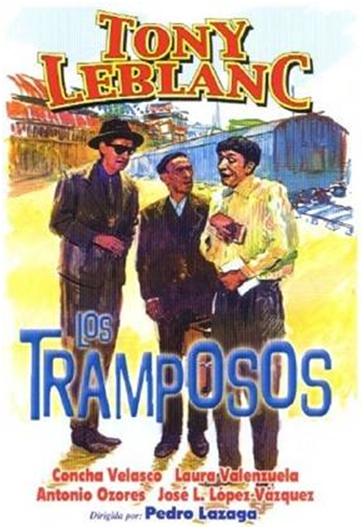
  • Los tramposos (The Swindlers, Pedro Lazaga, Spain, 1959)
DVD:
  • Schwerkraft (Gravity, Maximilian Erlenwein, Germany, 2009)

Robbery at 3 O'Clock
The Spanish academic who introduced this film mentioned it is widely regarded as the best Spanish comedy ever. Well, claims like that are always debatable, aren't they? It's largely a matter of taste. I don't know if I'd put it on such a high pedestal, but I can understand why historically it might be considered with high regard. After all, a film needs to be considered in the context of when it was made, something that described in the introduction.

Spain in 1962 was a pretty dark place. It was more than twenty years into a dictatorship that capped off a long and devastating civil war. This film gave the Spanish some ray of light, some joy and it is a lot of fun to follow a rag-tag bunch of bank employees plot to rob the branch they work in. The film's opening sequence makes clear what its influences are with a dialogue-free sequence that is pure Charlie Chaplin farce.

I imagine the film would be more enjoyable for a Spanish speaker, who would better understand the nuances of the language - apparently some of the dialogue was absorbed into popular Spanish culture at the time. The film makes a slight swipe at the government at the start of the film but is otherwise largely apolitical. We were told that this was the film's Australian premiere and was part of Almodóvar Presents at La Mirada.

Welcome
There's something distinctly unsatisfying about this film, and it nagged me most of the way throughout its length. It's one of the films from the French Film Festival 2010 that I decided (fortunately) to wait for its theatrical release. I've heard mixed things about it, and I'm definitely in the camp of the disappointed.

I was similarly disappointed with Lioret's previous Je vais bien, ne t'en fais pas/Don't Worry, I'm Fine which at least had the benefit of a quietly simmering performance by the wonderful Mélanie Laurent. Both films tend towards earnestness, overly so. They both have an arthouse aesthetic, both with human issues, but the issues are too overt - especially in Welcome.

Welcome, I'm sure you're aware, is about a young Iraqi who has found his way to France and is wanting to get to England to join his girlfriend. Failing to cross by truck, he meets up with a swim coach, learns to swim and plans to swim the English Channel. On the one hand, the film draws attention to the far-right neo-fascist policies of Nicolas Sarkozy, that would have been adored by John Howard, that criminalise any citizens that assist refugees in any way. I agree with the left-leaning (ie, social/humanist) policies the film is endorsing, but I don't need it thrust down my throat so overtly. Michael Winterbottom did it much more successfully (and seriously) with his In This World (2002), a much more timely film.

Lioret's film is much safer, clearly designed to appeal to a more mainstream audience - not that there's anything wrong that per se. It's just that with an added element of a domestic story, it all feels more than a little contrived, melodramatic and overtly appealing to our heart strings (especially with the use of music). It's the sort of film that probably did well at the French Film Festival or, post-festival, with the prime Palace demographic.

Another problem for me is Vincent Lindon in the main role of swim coach. Maybe it's my prejudice, but I don't like his looks for a role like this. He often plays a Mr. Everyman, which is what's asked for here. The trouble is, he doesn't come across as a Mr. Everyman. His acting is quite wooden, his face is largely expressionless and he has too narrow a range to effectively portray his character in this film. About the only roles I find him effective in are as a criminal. Otherwise, I normally see the actor and not the character.

For me, a film that exemplifies a much more satisfying depiction of an 'issue' is Michael Haneke's Caché/Hidden in which an Algerian massacre in France takes backseat to a contemporary story filled with ambiguity. Haneke assumes his audience will 'get it' without being preached to like Lioret's film does.

The Eclipse
This is quite a decent and thought-provoking film from the Republic of Ireland, set and filmed in Cobh, Cork County. Michael (Ciarán Hinds) is a single father grieving for his deceased wife. Hinds' is perfect for the role and his performance is spot on. He has a melancholy presence that conveys a repressed emotional burden. All is not perfect in his world, and a ghostly presence seems to be lingering. Is it his wife? Has Michael not let go of her? Or is it his elderly father-in-law, still alive, but on the precipice?

The film is not conventional horror - which is largely puerile, aiming at a teenage demographic. It's not really an adult ghost story, either. It crosses genres and really stands up predominantly as drama. The supernatural elements take up a small proportion of the film's screen time, but add an ever-present ambiance that looms in the background. The naturalistic lighting, tending towards darkish, accentuates the sombreness.

Michael is a regular volunteer at the local writers festival, during which he finds himself driving around the celebrated English author of The Eclipse, a book about ghostly experiences by the attractive author Lena Morelle (Iben Hjelje). Michael has the perfect opportunity to talk about the disturbing phenomena in his house, but is reluctant to completely open up. This scenario is perfect for a slow burn drama as various intertwining relationships unfold, involving another celebrated writer, Nicholas Holden (Aidan Quinn).

The performances of the lead characters are all strong all and the story is multi-layered, covering various themes, including grief, lettting to, celebrity and human relationships in general. If anything, it could be accused of being slightly over-ambitious to its detriment, but this is a minor complaint.

Michael's role as driver gives the film the opportunity to display the Irish countryside and townships, and these visuals of the architecture and scenery are just superb, without being postcard cliches. It's one of the things I love about world cinema, experiencing other places in some small way.

The supernatural element is used with restraint for the most part - The Others comes to mind, but that film was much more ghost-orientated. So horror film buffs might be disappointed. The Eclipse really aims at a more conventional arthouse audience with its solid dramatic themes, with the supernatural more an interesting variance on the genre.

As an aside, for me ghosts are a given, something I've experienced for as far back as my memory allows (at least since age two). I've never seen ghosts depicted in cinema quite as I've experienced them, but that's because I've never seen them physically but rather sensed them, or 'seen' them by my 'third eye'.

It's hard to convey, but there was a ghost that regularly visited me in my dreams all throughout my childhood. In my sleep, he assumed a form like a wolf and would breathe up close onto my dream body's face - a sort of dream within a dream. His breath stank like fish and hearing him would scare me. If, within my dream, I realised that my dream body was not real and it was just a dream, eventually he would go away. Mostly though, he would fool me and if my dream self woke up, them my real self would also wake up and I would have wet the bed. This continued until around age ten.

I was living interstate at age 23 when this same entity visited me again, when I was travelling away from home. I instantly recognised him when he appeared in my dream and, without waking up, I threatened him and he quickly disappeared. I later learned that there is no need for threats because ghosts are very insecure and will leave if asked to. Since that time, on the rare occasions when I've senses another entity, I've done just and they have always left without incident.

Actually, when I was nineteen years old, I was attacked by a ghost when I was sleeping under the stars along the Nullabor Plain. I was just drifting into sleep when I saw shooting stars which, according to Indian belief, are a bad omen. Fear gripped me at a vulnerable time and the next thing I knew, an entity was choking me. I warded it off mentally and it disappeared, leaving me a little traumatised.

I still sometimes sense entities around at night when I'm going to bed and often do a mental visualisation to protect myself. This involves asking all uninvited guests to please leave and any well-wishers may remain. Call them guardian angels if you like, but I have seen them while wide awake. I understand those without similar experiences may find this kooky or superstitious; for me it's just a innate part of my understanding and contributes to my perspective of life and death, something I alluded to in my post 'A Change of Plans'.

For the best part of thirty years, I've been left pretty much alone by ghosts or entities. I don't really call them ghosts, which implies they're a different type of being to us. The term 'entity' seems more appropriate - I see them as being people like you or I, but unembodied for whatever reason). I attribute my being left alone to my coming into my own power, understanding them and understanding myself relative to them.

Figuring Landscapes: Enactment
What can I say - experimental/conceptual art cinema usually does nothing for me. I thought I'd give this a go, but it was the same. So far, I haven't been able to penetrate that space.

Kick-Ass
A lot has been written about this very entertaining film. Some of the superlatives have been over the top, but it definitely is one of the best in its class. It's certainly not what the marketing of the film would have you believe it is. While the writing is very good, I think the film's success is the amazing performance and sneering charisma of the then eleven year old Chloe Moretz as Hit Girl. She steals the show and it wouldn't be the same without her. And even Nicholas Cage gives a decent performance (something he hasn't done since Adaptation and Bringing Out the Dead).

The Swindlers
This is a nice little vintage gem from the vaults of Spanish cinema, beautifully rendered in colour. Pedro Almodóvar selected this film for La Mirada and I can see how its "sardonic humour" (as festival director Rocio Garcia described it) would be right up his alley. It's right up mine, too. Three friends collude to con people out of money by any means they can but go straight to win the affections of a girl. The script is sharp, the performances good and the ending is just great.

Wednesday, March 31, 2010

Festival of German Films

I had a quick look at the films screening at this year's Festival of German Films, and two titles stood out straight away: Michael Haneke's The White Ribbon and Fatih Akin's Soul Kitchen. I saw The White Ribbon at MIFF last year and have been wondering when this magnificent film will get a release. I'm a big fan of Haneke and The White Ribbon is perhaps his most mature and complex film to date. It looks like cinephiles will have another opportunity to see it before a still unconfirmed theatrical release.

Fatih Akin is one of my favourite German directors. I only discovered him with The Edge of Heaven, which had me in tears multiple times. In fact my 9 year old son also loved it and it had him in tears, too, to my surprise. Soul Kitchen has a confirmed release date of 6 May, just after the end of the festival.

[Edit: it now looks like The White Ribbon also has a 6 May theatrical release]

Saturday, August 08, 2009

MIFF 2009 Day 16 - 8/8/09

  • La nana (The Maid, Sebastián Silva, Chile, 2008)
  • Zift (Javor Gadev, Bulgaria, 2008)
  • Das Flüstern der Bäume (The Whispering of the Trees, Tom Lemke, Chile/Germany, 2007) + Salt (Michael Angus/Murray Fredericks, Australia, 2009)
The Maid
Psychopaths are everywhere, even in our own homes. That's the message of this film about Raquel, a jaded and bitter maid to a middle-class Chilean family who's been around a little too long. Twenty years in fact, since a year before the oldest daughter was born. When the parents decide to get another maid in to assist Raquel, she sabotages all their endeavours but the mother is too attached to let Raquel go.

I found the film a little frustrating, because I hate this kind of character (I've seen my share of corportate psychopaths) and wanted to see successive maids overcome the obstacles put in their way. I also hated how the maid mostly gets her way each step of the way, but none of this is a reflection of the film. It's an OK story, nothing special and the film was enjoyable enough without showing any great insights.

Zift
Film noir, Bulgarian-style. Aside from some sub-titles that disappeared into the print, this is a tremendously enjoyable and satisfying film that uses every noir cliche, but uses it with style, tongue-in-cheek and with a strong, dark Balkan flavour.

Salt
I was keen to see this short (28') on recommendation and also after winning a festival award (don't ask me which one). The visuals of Lake Eyre, including time-lapse photography are absolutely inspirational and I'd love to be able to recreate what Murray Fredericks has. I also loved the personal nature of his story, the video-journal nature of his record and his frankness. A beautiful story and film that I highly recommend. This screened prior to The Whispering of the Trees. Check out the official website for some amazing examples of the time-lapse photography.

The Whispering of the Trees
I knew nothing about this film and went sight unseen on the strength of its accompanying Salt. I had planned to attend the Closing Night film, Bran Nue Dae, but figured I'll see it when it gets its inevitable (but yet unscheduled) release. With a fascination for indigenous cultures, I found it a very endearing documentary, about a slowly disappearing culture in southern Chile and Argentina. This remote community survives entirely by their harvesting of pine nuts, a dangerous job that has sustained them for generations.

MIFF 2009 Day 15 - 7/8/09

Today I had the pleasure of having lunch with Lynden Barber from Eyes Wired Open who has braved the southern climes to interview MIFF director Richard Moore for SBS, visit the Len Lye exhibition at ACMI (his article) and cram as many films into the weekend that he can. It was the first time we'd met other than online and I I took him on a little walking tour of Melbourne's laneways before catching Fassbinder's Chinese Roulette. I highly recommend his Eyes Wired Open as one of the best Australian film blogs.
  • Chinesisches Roulette (Chinese Roulette, Rainer Werner Fassbinder, West Germany/France, 1976)
  • Best of the MIFF Shorts
  • Un lac (A Lake, Philippe Grandrieux, France, 2008)
Chinese Roulette
In some respects, I feel similarly towards Fassbinder as I do towards Godard. Other than Ali: Fear Eats the Soul, little of Fassbinder's work touches me and - like Godard's films - feels designed to remain distant. Chinese Roulette is unmistakably Fassbinder: the melodrama, the score, the sexual innuendo, the camp undertones.

Anna Karina's role demands little of her. She plays the husband's mistress and speaks a few words of German here and there. As in Godard's films, it appears her role is little more than window-dressing, pretty as she is.

The film encapsulates an era, and is fascinating in that context. The story is a bit of a romp and enjoyable enough. Like Godard, I don't feel I know enough about Fassbinder's intent to discuss the film further, but am happy to be enlightened by others. I enjoyed the film, but it was nothing special.

Best of the MIFF Shorts
I didn't realise that this session was largely taken up by the awards ceremony, so we only got to see six shorts:
  • Instead of Abracadabra
    A Swedish comedy (with a zany sense of humour guaranteed to appeal to Australian audiences) about a young layabout whose amateur magic shows sometimes put relatives in hospital.
  • Next Floor
    The silent era styeled credits preface a film without dialogue. The visuals recall any number of gothic horror films and the style is almost Greenaway.
  • Two Men
    A simple premise is explored in a novel fashion, a kind of what-if, indigenous style.
  • Necessary Games
    I can't say I'm a big fan for experimental cinema, though this one is intriguing.
  • The Cat Piano
    Inventive, entertaining, film noir with a voiceover by Nick Cave - how could you go wrong?
  • Slaves
    The animation does an excellent job of making a dark subject accessible. Who'd have thought that the terrible things described are taking place today?
Memo to self: next year, include at least one shorts session in my program.

A Lake
"It's like sticking knitting needles into your eyes" is how one walk-out described this film to me, though I found it captivating. I just had to capture that response, which I find amusing, and fair enough. I noticed quite a number of walk-outs and I don't blame any of them.

A Lake is a difficult film: the hand-held camera has a tendency at times to replicate the experience of the epileptic protagonist. There's not a whole lot happening. Our man cuts down trees in the snow. The visuals are staggeringly beautiful. His fits are increasing in frequency, which he reveals to his sister (with whom he has a sexual fixation), but not his mother.

The film is dark, brooding and again, difficult. Yet somehow compelling.

Thursday, August 06, 2009

MIFF 2009 Day 12 - 4/8/09

Due to illness, I dropped Yuri's Day and The Nun from my schedule but watched Morphia in the comfort of my own lounge-room, thanks to a preview screener for the Russian Resurrection Film Festival. As for The Nun, I generally love Rivette, though I heard the print was at best ordinary. I finally ventured out for the 9:15PM screening of The White Ribbon and was questioning my sanity - sick as a dog and staying up to midnight for the screening. But I'm glad I did - it remains my favourite film of the festival so far. Coincidentally, both films I saw are set in the same period.
  • Morfiy (Morphia, Aleksey Balabanov, Russia, 2008)
  • Das weiße Band (The White Ribbon, Michael Haneke, Austria, 2009)
Morphia
Morphia is a technically impressive film – the period reproduction in particular is awesome. Set in Siberia at the outset of the Russian Revolution, a talented young doctor is sent on his first assignment to a small provincial hospital in which he is the sole doctor. After an allergic reaction to a diphtheria vaccination, he is given morphine, to which he gradually becomes addicted.

Despite obvious strengths, the film may be a challenge for some audiences. An amputation and a tracheotomy are particularly gruesome. The constant snow and blizzards also have a chilling effect. Perhaps most significant is that there are virtually no redeemable characters and the main protagonist is a lying drug addict, and we never really get insights into his inner world. The director seems intent on keeping us out in the cold, in more ways that one. I couldn't warm to it, I found it disturbing and had to watch something light afterwards.

The White Ribbon
The White Ribbon is perhaps Michael Haneke's most mature and entrancing film. That's quite some claim, given the awesome body of work he has created (in my mind, there is no such thing as a bad Haneke film). It encompasses or flirts with a number of themes and genres already covered in his earlier films (such as social realism, horror, crime, thriller, supernatural), perhaps playing with our expectations and yet subverting them, but never in a cheap, contrived manner. Haneke plays it straight with the audience, but you never really know where he's going. What's important with this film is to focus not on the destination, but the journey.

This is a film in which you really need to concentrate, take note of who is who (and there's a lot of people to keep a track of) and which children belong to who. There's also a lot of children, who play some stunning roles. Some of them may be victims, some of them innocent bystanders and some of them something more sinister. If evil exists, can you blame the children? Or the often well-meant but deluded parents. Some of the imagery used is amazing, in particular the chastised boy with the simple cross on the wall behind him. Many times the camera takes a point of view shot to very good effect. The characterisations, period detail and reproduction of mannerisms and social mores are all at the very highest levels of achievement and it's not hard to see why this film was awarded Cannes' highest honour.

The story is superficially much more conventional than one associates with Haneke. At first it seems a slightly rambling, rustic, rural tale. A subversion of expectations? Maybe.

Eventually, like Hidden, the film has something to say about politics, and more besides. There are broadsides at religion and society in general. At the outset of the start of World War I, Haneke seems to suggest that the brutality of the next two wars over thirty years could perhaps be traced to the cruel ways that humans treat each other on the micro level: within villages, communities and families. The film is shot in black and white, a bold choice by Haneke, but it works very well. It resembles a Carl Dreyer film (think Gertrude) or even Bergman.

Sunday, April 26, 2009

The Week in Review - 26/4/09

This week was exceptional for its quality more than its quantity. Le feu follet and Pandora's Box are both outstanding films that lifted my spirits immensely, in spite of their potentially bleak subject matter (suicide and Alzheimer's respectively). To see two films of such high standard in the same week is fantastic and highly recommend them both. I really liked Palermo Shooting as well.

FILMS:
  • Selvi boylum, al yazmalim (The Lady with the Red Scarf, Atif Yilmaz, Turkey, 1977)
  • Les amants (The Lovers, Louis Malle, France, 1958)
  • Le feu follet (Louis Malle, France, 1963)
  • Pandora’nın Kutusu (Pandora's Box, Yeşim Ustaoğlu, Turkey/France/Belgium/Germany, 2008)
  • Lulu und Jimi (Oskar Roehler, Germany/France, 2008)
  • Palermo Shooting (Wim Wenders, Germany/France/Italy, 2008)


The Lady with the Red Scarf
Other than opening and closing night films, this is the only other Turkish Film Festival film I could squeeze in at ACMI. It's a classic film, based on a novel and very popular in Turkey and elsewhere. Maybe it's a cultural thing, but I didn't like it at all.

This kind of melodrama would play out well in India and other countries where films tend to be, shall we say, simple. I found it beyond melodramatic, moving into soap opera and downright corny. I could have walked out at any point and left a few minutes early for Melbourne Cinémathèque.

Les amants
Louis Malle's second film, and a little disappointing after his thrilling Lift to the Scaffold. The film looks good and starts of with promise. The story of a philandering provincial couple has all the right tension. However, after Jeanne Moreau's character has done so much to convince us what a completely selfish bitch she is, I couldn't buy into her falling in true love with a stranger and elope with him. I wonder what Malle's intent was. Was he just messing with our expectations? Messing with our heads? Was there supposed to be some intuitive chemistry between these unlikely lovers that I missed? I love Moreau as an actress. In terms of both looks and demeanour, she's like a French Bette Davis.

Le feu follet
This is one of the most remarkable films I've seen from this era (early 60s). Stylistically, Le feu follet looks French New Wave, but thematically, it's decades ahead of its time. At times, it reminded me of early Cassavetes. Full of wise insights into relationships and the human condition, the film is basically an under-stated portrait of a suicidal alcoholic.

Alain Leroy (Maurice Ronet) wanders the streets of Paris, in all it's glorious urban decay and beautifully filmed in black and white. We've already seen his service revolver, perhaps a remnant from a distant war, with which he intends to kill himself. The film follows Alain as he visits his old haunts, saying good-bye to those he considers friends and associates. We know he is doomed, because no matter how sincere are the attempts to help him, he is beyond help. All he wants is to leave.

Alain's occasional outbursts about his personal failures reveal much about the mind of a depressive man, and much about the nature of relationships. It also demonstrates the destructive nature of alcohol. This is a film I could watch over and over. Some may find it depressing, but I find it life-affirming. There's still another week to go of the Malle season at Melbourne Cinémathèque, but this is my favourite so far.

Oh, and by the way, does anyone know the significance in the film of 23 July (scrawled on the mirror)?

Pandora's Box
This was the closing night film for the Melbourne Turkish Film Festival, and what a film! This is a pan-European production, and it shows. While family friction is a common dramatic theme (hinted at in the film's title), old age and Alzheimer's disease aren't.

The latter subjects were, of course, tackled in Sarah Polley's Away From Her. I have much respect for Polley and don't doubt her sincerity and integrity. However, her romanticised story, also featuring an elderly woman with Alzheimer's and starring an impossibly gorgeous Julie Christie, just isn't in the same league as this amazing film by Yesim Ustaoğlu.

Pandora's Box tackles multiple themes, masterfully handles them all, is poetic, naturalistic, funny (without trace of comedy), dramatic and moving. The festival blurb forewarns us of the adult sibling conflict, which is not as prominent as I expected. It is merely an element, woven into a greater tapestry, the tapestry of life.

The film is to different degrees about various types of relationships, generational change (thematically similar to Summer Hours) and the effects of Alzheimer's as well as documenting the rural and urban divide. The latter element seems to be a recurring theme in European cinema, as a way of life that has remained largely unchanged for many decades (if not centuries) slowly dies.

The main character of the film is the elderly Nusret played by Tsilla Chelton, a 91-year old French actress who learnt Turkish for the role! Her performance is so convincing, so realistic, that it's hard to believe that she is acting. Her blend of smouldering attitude and frail vulnerability is terribly moving. The whole ensemble cast performs wonderfully, a credit both to their skills and the direction.

An element of the film that I strongly related to was the way in which virtually all the characters in the film rejected, in one way or another, the controlling nature of one of the siblings. It alienated her husband, her son, her siblings, and even her mother in a very amusing and poignant way.

The film is filmed in a very naturalistic and beautiful way without the slightest trace of pretentiousness. The music, which seemed to be absent until the 80-minute mark, is subtle, full of melancholy and added beautifully, especially in its restraint. The film was a lovely way to finish the festival and I left on a high. Now I want the DVD, and intend seeking out the director's earlier works. Check out the official website.

The closing night film was preceded by various presentations. This is the inaugural year of the Turkish Film Festival and the indicators are that it will continue and grow on the success of this year. Expect a longer, larger festival next year, and without the clash it had this year (with the Festival of German Films.

Lulu und Jimi
Fortunately I was forewarned about this film, screening at the Festival of German Films. It was compared to early Ozon, ie, bizarre/unconventional melodrama, and that's largely whey I made a point of seeing it. Bizarre it certainly is, entertaining too. It has shades of Lynch - Jennifer more than David - with its over-the-top plot, bright colours and its surreal aburdity and fantasy. I respect its audacity but it doesn't pull it off quite as competently as it wants. The lead actors aren't completely convincing and the dubbing for the English dialog for Lulu is a bit rough. Still, it's a lot of fun and way left-of-centre.

Palermo Shooting
What do you do when you're a famous international film-maker, you've been around for a long time and made a lot of films, two of your favourite directors die (on the same day) and you're feeling your vulnerability. Well, if you're Wim Wenders, you'd make Palermo Shooting and, despite it being canned at Cannes 2008, I really dug it. Mind you, Wenders' previous feature, Don't Come Knockin' wasn't exactly warmly received, but I liked that a lot, too.

Palermo Shooting is, however, a very different type of film. It's a small budget project, a film that could be compared with Francis Ford Coppola's Youth Without Youth. Compared, because they are both made by established and aging directors that deal with the passage of time and death (albeit treated in very different ways). In a sense, they might both be considered indulgent, about subjects that are very personal to the respective directors, but I think that perception is unfair.

Death and aging (also a theme in the above Pandora's Box) is every bit a part of life and a universal experience, a topic ripe for exploration in cinema. Finn is an in-demand photographer, well-heeled and well-travelled. He's experienced much and is known in all the right circles. But he can't sleep well. He has recurring dreams, and he is suffering an existential crisis. If that sounds a lot like a Bergman film, it should. Filmed at the time of the dual Bergman-Antonioni deaths, Wenders salutes the great masters and incorporates aspects of their work into the film. Berman is most apt, as existential crises and a preoccupation with time, aging, death and the meaning of life are themes he dealt with throughout his life's work.

The film most obviously references Wild Strawberries with the surrealist dreams of Finn and The Seventh Seal, with Dennis Hopper taking the role of Death, and thematically with Winter Light's existential crisis. I think critics take issue with the audacity of a director taking on such iconic films but then, Bergman himself was ridiculed for the being too arty farty towards the end of his career. I had no problems with the self-conscious references, and I thought Wenders take and variations on these was quite moving (and funny at times, too). There were aspects of the writing that seemed a little unpolished, but always managed to stay on track, even if it seemed they wouldn't.

Death, consciousness and the meaning of life are topics I've contemplated since my childhood. Less than a week ago, I was discussing with a friend how my entire outlook has changed since my motorcycle accident in which I too looked Death in the eye (figuratively, of course). It's had a quietly profound effect on me, and I really related to Finn's existential crisis. I even articulated to my friend that I felt death was simply like walking through a door, a door we don't walk back through. I was thunderstruck when virtually the same dialogue appears in the film. Of course, when one walks through a door and doesn't return, we are gone to those who remain, but we continue in another room. This cosmic-view is a strong argument against suicide, another subject I would like to write on in this context, but not now. It was also relevant to another film I saw this week - the brilliant Le feu follet (see above).

Palermo Shooting is a return by Wenders to his native Dusseldorf. It's a personal film, it's an indulgent film. It tackles some of the most relevant, important and universal themes of life. It's explorative, it's derivative, it's moving. I don't think it's for everyone, but I loved it. Riding away from the cinema on my motorbike, I was surprised how much it moved me and affected me in a physical way.

My exposure at the Festival of German Films 2009 hasn't really been representative of German cinema: One, Two, Three is American (though set in Berlin), Lulu und Jimi has an American protagonist and much of the dialogue is in English, and now Palermo Shooting, a significant part of the dialogue is in English and features a couple of American actors (Dennis Hopper and Milla Jovovic as herself). I really wanted to see Jerichow, but life got in the way (the missus says cinema gets in the way of my life, but what does she know?).