Showing posts with label France. Show all posts

Sunday, April 18, 2010

The Week in Review - 18/4/10

Another week heavy with film - the stand-out is Man with a Movie Camera which screened at Melbourne Cinémathèque on Wednesday, an amazing film given it's place in history. Starting this week is a three-week season of films by (and one about) Jacques Demy, which I'm looking forward to - I've seen none of his work. My reviews of the two German films listed below can be found on my preview of the Festival of German Films.

FILMS:
  • Greenberg (Noah Baumbach, USA, 2010)
  • A Serious Man (Ethan Coen, Joel Coen, USA/UK/France, 2009)
  • Good Hair (Jeff Stilson, USA, 2009)
  • Madeo (Mother, Bong Joon-ho, South Korea, 2009)
  • Chelovek s kino-apparatom (Man with a Movie Camera, Dziga Vertov, USSR, 1929)
  • Aelita (Yakov Protazanov, USSR, 1924)
  • Le concert (The Concert, Radu Mihaileanu, France/Italy/Romania/Belgium, 2009)
DVD/BLU-RAY*:
  • Sturm (Storm, Hans-Christian Schmid, Germany/Denmark/Netherlands, 2009)
  • Vision - Aus dem Leben der Hildegard von Bingen (Vision, Margarethe von Trotta, Germany/France, 2009)
  • *Nikita (La Femme Nikita, Luc Besson, France/Italy, 1990)
  • In Bruges (Martin McDonagh, UK/USA, 2008)
Greenberg
I prefer this latest Baumbach film to his previous Margot at the Wedding (which I found a bit dull) but not as much as The Squid and the Whale, which I think more compellingly captured some home truths. This latest film seems to aspire in part with mumblecore, particularly with the character of Florence (played wonderfully by Greta Gerwig), the themes of adult lack of direction in life, and perhaps alluded to by the appearance of mumblecore wunderkind Mark Duplass. But it's not really mumblecore per se, as Greenberg (Ben Stiller in a solid and welcome serious role) is in his forties, as are his friends. And the heavy use of soundtrack music also gives it a different aesthetic.

I like that the film is nuanced and demonstrates Baumbach's eye for details within dysfunctional relationships. Given that the titular character has recently spent time in a psychiatric institution, it's not quite as universal a story as Baumbach's previous films. What is universal getting to a point in life and realising that things have not gone to plan, and of opportunities lost.

Baumbach is a thoughtful film-maker and has a take on life that for me is real. There's an underlying truthfulness to his films, one that many of his compatriots are not prepared to handle so frankly. Yet this film doesn't fully grab me. I would have preferred the film give more time to Gerwig's role. Stiller performs surprisingly convincingly, given the puerile material he normally works with, but his deliberately unlikeable character lacks something - there's a kind of monotony to it whereby he's going nowhere, though that seems to be the point of the role. This film will likely appeal mostly to fans of Baumbach, mumblecore and Stiller.

A Serious Man
This screened as part of double feature with Greenberg at Nova. I can see how they make good companion pieces, but I don't understand why (1) Greenberg is getting advance screenings as a double, (2) the advance screenings are over the course of a week and not just a weekend, (3) the film has no confirmed release date, and (4) it's screening only during the day (when most people are at work). Though I'd seen A Serious Man already and have it on Blu-ray, I decided to stay and see it again on the big screen.

I noticed a lot of small details that I missed on first screening, but otherwise, I don't think I gleaned much that I didn't on first viewing. The Yiddish story at the beginning remains my favourite part and the main story to me seems to be all about the Jewish identity, and the indefinable aspects of Jewish culture. I love that the Rabbis are very matter-of-fact as opposed to a false saintliness that their Christian counterparts often assume. I'll have to watch this again on the Blu-ray with the extras.

Good Hair
I wasn't going to see this documentary at ACMI, but changed my mind after the missus showed me the Chris Rock clip from YouTube below. It has nothing to do with Good Hair, but it demonstrated to me how intelligent and insightful Rock is.

Good Hair is about black American women's obsession with their hair and the lengths they go to in order to have "good hair", i.e., like Asian or European women's hair. Rock ensures the material is always entertaining without allowing his personality to shadow the material. It effectively presents information that should surprise audiences, for example, how much these women spend on hair products, how widespread their obsessions are, and what these products are made from and where they are sourced.

I've read criticisms that the film isn't balanced but I don't think a documentary necessarily has to have a counter view to be worthy. Rock presents various pieces of information, clearly has his own view, but leaves it to both his subjects and audience to make up their own mind. It's definitely worth a look.

The following clip is for my pleasure, and if you like it too, that's a bonus. Here's Chris Rock in full-flight stand-up.

..

Mother
There was a lot of buzz about this film coming out of MIFF last year and I was happy to catch it out of the pressure-cooker environment of a major festival, which gives one a bit more space to appreciate it. There's been comparisons to Hitchcock and others and they're all valid. The film looks nice, confounds expectations quite cleverly (but not too cleverly) and is definitely worth seeing. Like Bong's previous film, I like it, but not as much as others seem to. Kudos to the Nova cinema for giving it a chance to find a non-festival audience. The Nova has so many screenings these days that no-one else is supporting, so in support of diversity, it behooves us to support these small-run screenings so that Nova keeps putting them on.

Man with a Movie Camera
This is one of the most amazing silent-era films I've seen, a veritable masterpiece. I had no idea that cinema was so introspective and developed at such an early stage. Vertov sets out to prove that cinema is an art distinct from literature and theatre by proclaiming that this film includes no sets, no inter-titles and no actors (with a brief exception). The film is mostly documentary in form, but not entirely. It has elements that are socially anthropological and it is also self-reflexive, including elements that are about the process of making a film. The array of techniques on display is awesome and puts Paul Greengrass to shame (hand-held doesn't have to look like shit).

Watching it at Cinémathèque, I was frequently reminded of social realist and essay films such as the works of Agnès Varda, Chris Marker and others. I imagine this film would have been treasured by the early social realist movement in Australia, who were largely influenced by Soviet cinema and communism.

I was also amazed at how Russian society at that time looked almost indistinguishable from say American society, with all the trappings of bourgeois life - bikinis, hair salons, dressing up, art deco artwork and architecture, etc. Equally fascinating is Vertov's presumed intention of capturing the seemingly banal; he must have known that this would document a particular place and time. It's focus on machinery in action is reminiscent of Fritz Lang's Metropolis, made two years earlier. Of course, what may appear banal today, is not necessarily banal even in the near future. I thought this title was available from Criterion but can't find it online. I'd like to get this on DVD or (preferably) Blu-ray. If anyone can point me in the right direction, that'd be great.

Aelita
I was getting pretty tired by the time this first Russian sci-fi (silent) film screened at Cinémathèque. It's worth seeing if one has the chance, particularly on the big screen, but it didn't engage me anywhere near as much as Man with a Movie Camera. It's futuristic sets also remind one of Metropolis, but was made three years before.

The Concert
This comedic drama (or dramatic comedy) has a central conceit that is basically an impossible premise (though the director claims it is based partly on factual incidents). One's ability to enjoy the film is - initally, at least - dependent on one's ability to suspend disbelief, which shouldn't be a problem for the mainstream audience it targets. A former orchestra conductor for the Bolshoi Orchestra witholds an invitation by the Chantelet Theatre, and brings together all his old friends from the Soviet era to perform in Paris in place of the actual orchestra.

There is social and political parody of the Soviet era, which Mihaileanu allows the audience to absorb without feeling they're being preached to. The film's first third is largely slapstick and enjoyable enough, though a bit formulaic. The middle is a bit flat before the film really kicks into gear, when the luminous Mélanie Laurent charismatically consumes the screen (as she always does). Along with the wonderful musical element, the film surprisingly grabs the audience in a way I didn't expect, and it had me in tears. Mind you, Mihaileanu's more serious Live and Become also had a similar effect on me. This film is clearly aimed at the Palace demographic and I imagine it will be well-received. It's not must-see for cinephiles, but it's not bad fun either. It opens in cinemas on 29 April.

Nikita
I was pleasantly surprised to find that this Luc Besson film stands up quite well after twenty years. It was the first French film I saw that emulated Hollywood blockbusters and I thought it had an edginess that Hollywood lacks. On this second viewing, my observation was that the film shifts between cartoonish violence not so different to a good James Bond film (and it's been a long time since there's been a good one of those) and drama in which the character development and actor performances are just so real. Small details, like Nikita's torn nylons and bleeding leg for example, are a nice touch that Hollywood would normally gloss over. These elements give the film gravitas that one doesn't usually associate with the genre.

Like my recent viewing of Besson's Léon, I had a lot of fun watching this. The film introduces us to Victor (Jean Reno) who re-surfaces as Léon in a full-bodied role in Léon. Nikita was remade by Hollywood, with Bridget Fonda as the lead, but I couldn't bring myself to see it.

In Bruges
Looks good, good characters, good fun. And lots of profanity. Not much else to say. Except that it's nice to see Ralph Fiennes playing something other than a broody, whiny prick.

Sunday, April 11, 2010

The Week in Review - 11/4/10

I can't believe I saw ten films this week. I'm not working at present and had four days where I saw 2 films each day. This was also partly due to Easter and partly because of the Festival of German Films preview screenings (I'm posting separately about these).

The stand-out of the week is Animal Kingdom, which will definitely make my top 10 of the year. This film is going to sweep the AFI awards this year and is as good a film as Samson and Delilah. The only other new release so far this year that is every bit as good is Jacques Audiard's A Prophet/Un prophète. It seems that Madman are trying some new strategies in their marketing and invited a small number of reviewers - mostly bloggers and those with a web presence - to a screening ahead of the media preview. The film has lingered and consumed me more than any film has for a long time. I'll post my review on it separately in a day or two.

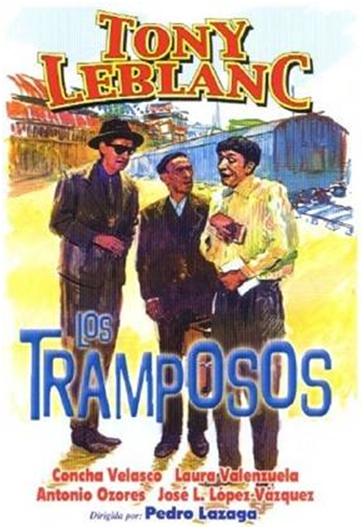
La Mirada ended, and I attended the final screening, not realising it was the closing night film. It cost me $24, and I didn't stay for the after-party - ouch! But The Swindlers (part of Almodóvar Presents) is a lot of fun and it was great to see this film, screened for the first time in Australia.

FILMS:
  • Atraco a las tres (Robbery at 3 O'Clock, José María Forqué, Spain, 1962)
  • Welcome (Philippe Lioret, France, 2009)
  • The Eclipse (Conor McPherson, Ireland, 2009)
  • Figuring Landscapes: Enactment (Patricia Piccinini, Ben Rivers, Margaret Tait, George Barber, Tammy Honey, UK/Australia, 2008)
  • Animal Kingdom (David Michôd, Australia, 2010)
  • Kick-Ass (Matthew Vaughn, USA/UK, 2010)
  • Whisky mit Wodka (Whisky with Vodka, Andreas Dresen, Germany, 2009)
  • Die Wölfe: Nichts kann uns trennen (The Wolves of Berlin: Part One - Nothing Can Part Us, Friedemann Fromm, Germany, 2009)
  • Los tramposos (The Swindlers, Pedro Lazaga, Spain, 1959)
DVD:
  • Schwerkraft (Gravity, Maximilian Erlenwein, Germany, 2009)

Robbery at 3 O'Clock
The Spanish academic who introduced this film mentioned it is widely regarded as the best Spanish comedy ever. Well, claims like that are always debatable, aren't they? It's largely a matter of taste. I don't know if I'd put it on such a high pedestal, but I can understand why historically it might be considered with high regard. After all, a film needs to be considered in the context of when it was made, something that described in the introduction.

Spain in 1962 was a pretty dark place. It was more than twenty years into a dictatorship that capped off a long and devastating civil war. This film gave the Spanish some ray of light, some joy and it is a lot of fun to follow a rag-tag bunch of bank employees plot to rob the branch they work in. The film's opening sequence makes clear what its influences are with a dialogue-free sequence that is pure Charlie Chaplin farce.

I imagine the film would be more enjoyable for a Spanish speaker, who would better understand the nuances of the language - apparently some of the dialogue was absorbed into popular Spanish culture at the time. The film makes a slight swipe at the government at the start of the film but is otherwise largely apolitical. We were told that this was the film's Australian premiere and was part of Almodóvar Presents at La Mirada.

Welcome
There's something distinctly unsatisfying about this film, and it nagged me most of the way throughout its length. It's one of the films from the French Film Festival 2010 that I decided (fortunately) to wait for its theatrical release. I've heard mixed things about it, and I'm definitely in the camp of the disappointed.

I was similarly disappointed with Lioret's previous Je vais bien, ne t'en fais pas/Don't Worry, I'm Fine which at least had the benefit of a quietly simmering performance by the wonderful Mélanie Laurent. Both films tend towards earnestness, overly so. They both have an arthouse aesthetic, both with human issues, but the issues are too overt - especially in Welcome.

Welcome, I'm sure you're aware, is about a young Iraqi who has found his way to France and is wanting to get to England to join his girlfriend. Failing to cross by truck, he meets up with a swim coach, learns to swim and plans to swim the English Channel. On the one hand, the film draws attention to the far-right neo-fascist policies of Nicolas Sarkozy, that would have been adored by John Howard, that criminalise any citizens that assist refugees in any way. I agree with the left-leaning (ie, social/humanist) policies the film is endorsing, but I don't need it thrust down my throat so overtly. Michael Winterbottom did it much more successfully (and seriously) with his In This World (2002), a much more timely film.

Lioret's film is much safer, clearly designed to appeal to a more mainstream audience - not that there's anything wrong that per se. It's just that with an added element of a domestic story, it all feels more than a little contrived, melodramatic and overtly appealing to our heart strings (especially with the use of music). It's the sort of film that probably did well at the French Film Festival or, post-festival, with the prime Palace demographic.

Another problem for me is Vincent Lindon in the main role of swim coach. Maybe it's my prejudice, but I don't like his looks for a role like this. He often plays a Mr. Everyman, which is what's asked for here. The trouble is, he doesn't come across as a Mr. Everyman. His acting is quite wooden, his face is largely expressionless and he has too narrow a range to effectively portray his character in this film. About the only roles I find him effective in are as a criminal. Otherwise, I normally see the actor and not the character.

For me, a film that exemplifies a much more satisfying depiction of an 'issue' is Michael Haneke's Caché/Hidden in which an Algerian massacre in France takes backseat to a contemporary story filled with ambiguity. Haneke assumes his audience will 'get it' without being preached to like Lioret's film does.

The Eclipse
This is quite a decent and thought-provoking film from the Republic of Ireland, set and filmed in Cobh, Cork County. Michael (Ciarán Hinds) is a single father grieving for his deceased wife. Hinds' is perfect for the role and his performance is spot on. He has a melancholy presence that conveys a repressed emotional burden. All is not perfect in his world, and a ghostly presence seems to be lingering. Is it his wife? Has Michael not let go of her? Or is it his elderly father-in-law, still alive, but on the precipice?

The film is not conventional horror - which is largely puerile, aiming at a teenage demographic. It's not really an adult ghost story, either. It crosses genres and really stands up predominantly as drama. The supernatural elements take up a small proportion of the film's screen time, but add an ever-present ambiance that looms in the background. The naturalistic lighting, tending towards darkish, accentuates the sombreness.

Michael is a regular volunteer at the local writers festival, during which he finds himself driving around the celebrated English author of The Eclipse, a book about ghostly experiences by the attractive author Lena Morelle (Iben Hjelje). Michael has the perfect opportunity to talk about the disturbing phenomena in his house, but is reluctant to completely open up. This scenario is perfect for a slow burn drama as various intertwining relationships unfold, involving another celebrated writer, Nicholas Holden (Aidan Quinn).

The performances of the lead characters are all strong all and the story is multi-layered, covering various themes, including grief, lettting to, celebrity and human relationships in general. If anything, it could be accused of being slightly over-ambitious to its detriment, but this is a minor complaint.

Michael's role as driver gives the film the opportunity to display the Irish countryside and townships, and these visuals of the architecture and scenery are just superb, without being postcard cliches. It's one of the things I love about world cinema, experiencing other places in some small way.

The supernatural element is used with restraint for the most part - The Others comes to mind, but that film was much more ghost-orientated. So horror film buffs might be disappointed. The Eclipse really aims at a more conventional arthouse audience with its solid dramatic themes, with the supernatural more an interesting variance on the genre.

As an aside, for me ghosts are a given, something I've experienced for as far back as my memory allows (at least since age two). I've never seen ghosts depicted in cinema quite as I've experienced them, but that's because I've never seen them physically but rather sensed them, or 'seen' them by my 'third eye'.

It's hard to convey, but there was a ghost that regularly visited me in my dreams all throughout my childhood. In my sleep, he assumed a form like a wolf and would breathe up close onto my dream body's face - a sort of dream within a dream. His breath stank like fish and hearing him would scare me. If, within my dream, I realised that my dream body was not real and it was just a dream, eventually he would go away. Mostly though, he would fool me and if my dream self woke up, them my real self would also wake up and I would have wet the bed. This continued until around age ten.

I was living interstate at age 23 when this same entity visited me again, when I was travelling away from home. I instantly recognised him when he appeared in my dream and, without waking up, I threatened him and he quickly disappeared. I later learned that there is no need for threats because ghosts are very insecure and will leave if asked to. Since that time, on the rare occasions when I've senses another entity, I've done just and they have always left without incident.

Actually, when I was nineteen years old, I was attacked by a ghost when I was sleeping under the stars along the Nullabor Plain. I was just drifting into sleep when I saw shooting stars which, according to Indian belief, are a bad omen. Fear gripped me at a vulnerable time and the next thing I knew, an entity was choking me. I warded it off mentally and it disappeared, leaving me a little traumatised.

I still sometimes sense entities around at night when I'm going to bed and often do a mental visualisation to protect myself. This involves asking all uninvited guests to please leave and any well-wishers may remain. Call them guardian angels if you like, but I have seen them while wide awake. I understand those without similar experiences may find this kooky or superstitious; for me it's just a innate part of my understanding and contributes to my perspective of life and death, something I alluded to in my post 'A Change of Plans'.

For the best part of thirty years, I've been left pretty much alone by ghosts or entities. I don't really call them ghosts, which implies they're a different type of being to us. The term 'entity' seems more appropriate - I see them as being people like you or I, but unembodied for whatever reason). I attribute my being left alone to my coming into my own power, understanding them and understanding myself relative to them.

Figuring Landscapes: Enactment
What can I say - experimental/conceptual art cinema usually does nothing for me. I thought I'd give this a go, but it was the same. So far, I haven't been able to penetrate that space.

Kick-Ass
A lot has been written about this very entertaining film. Some of the superlatives have been over the top, but it definitely is one of the best in its class. It's certainly not what the marketing of the film would have you believe it is. While the writing is very good, I think the film's success is the amazing performance and sneering charisma of the then eleven year old Chloe Moretz as Hit Girl. She steals the show and it wouldn't be the same without her. And even Nicholas Cage gives a decent performance (something he hasn't done since Adaptation and Bringing Out the Dead).

The Swindlers
This is a nice little vintage gem from the vaults of Spanish cinema, beautifully rendered in colour. Pedro Almodóvar selected this film for La Mirada and I can see how its "sardonic humour" (as festival director Rocio Garcia described it) would be right up his alley. It's right up mine, too. Three friends collude to con people out of money by any means they can but go straight to win the affections of a girl. The script is sharp, the performances good and the ending is just great.

Sunday, April 04, 2010

The Week in Review - 4/4/10

I haven't mentioned much yet about this year's La Mirada, one of my favourite local film festivals. I filled in a survey at the festival today at ACMI and for the question about what I like about the festival I put: [festival director] Rocio Garcia's passion and love for cinema (she introduces most of the films), the volume of door prizes, the atmosphere, the Almodóvar curated section and the pre-recorded intros by the respective film directors. That pretty much sums up for me why I go to the festival. A couple of years ago, I missed a real gem, In the City of Sylvia, which thankfully I caught at Melbourne Cinémathèque last year. Today I saw a similar gem, Paz Fábrega's Agua fría de mar/Cold Water of the Sea. More on this below.

During the week, I've been previewing some films for the Festival of German Films. I'll post a separate article on these films in the next week or two. Hopefully by then, I'll have my thoughts in writing on at least seven films, leading up to the festival's opening on 22 April.

FILMS:
  • Tesis (Thesis, Alejandro Amenábar, Spain, 1996)
  • Agua fría de mar (Cold Water of the Sea, Paz Fábrega, Costa Rica/France/Spain/Netherlands/Mexico, 2009)

DVD/BLU-RAY*:
  • *Léon: The Professional (Luc Besson, France,1994)
  • The Most Dangerous Man in America: Daniel Ellsberg and the Pentagon Papers (Judith Ehrlich/Rick Goldsmith, USA, 2009)
  • Big Fish (Tim Burton, USA, 2003)
  • Die Tür (The Door, Anno Saul, Germany, 2009)
  • Die Standesbeamtin (Will You Marry Us?, Micha Lewinsky, Switzerland, 2009)
  • John Rabe (Florian Gallenberger, France/China/Germany, 2009)

Thesis

This film interested me because (1) it's part of La Mirada's Almodóvar Presents. For me, Almodóvar's films provoke much discussion, even though (as I've often mentioned) I am greatly ambivalent about the films - see my post on Volver for more on that. And (2) because this is the first feature film by Alejandro Amenábar, director of such celebrated films as Abre los ojos/Open Your Eyes (remade as the inferior Tom Cruise vehicle, Vanilla Sky) and The Others (with the then Mrs. Cruise, Nicole Kidman).

What an impressive debut it is. According to festival director Rocio Garcia who introduced the film, Amenábar was only 23 years old when the film was made, still studying at university. He wrote, directed and composed the music. It's no high art, but a fabulous homage to cinema, and Hitchcock in particular. A female film student is doing a thesis on violence in the media and stumbles across a snuff film, leading to a dangerous journey in which her life is seemingly put at risk.

This is B-grade film-making at close to its best, and I mean that in the nicest possible non-disparaging way. The plot is pure B-grade. It's predictable and cliched (like the best Hitchcock films are), yet the writing is strong enough to capture your emotions anyway and I remained in suspense for the film's duration, even if it is slightly overlong. Despite this simple premise, Thesis works on other levels, too, for example questioning the audience's fascination with violence in film (something Haneke does in a more oblique and intellectual manner).

Amenábar demonstrates a great deal of film literacy, especially at so young an age. Being about film studies, students and teachers, he infuses the film with technical aspects of film-making and there are many filmic references. It was a blast to hear an academic deliver a lecture about what was wrong with Spanish cinema and what it needed, mirroring recent introspective discussions here about what's wrong with our industry. For the record, the academic was promoting the need for films to appeal to audiences, to attract bums on seats. Very familiar, indeed. Bear in mind that this was made fourteen years ago. I let out a big laugh at the time, and I'm sure those that heard me had no idea why.

There's a roughness, a crudeness, about this film that gives it both a bite and immense appeal, an appealing aesthetic. It's great to see what an inexperienced but talented film-maker can do on the smell of an oily rag. Not unlike Almodóvar, for that matter. The subject matter - the making of snuff films - is also challenging at times. Fortunately, the horror aspects are brief, just enough to put the fear of god into us at certain times, ratcheting up the suspense as we ponder what might transpire. Again, this is no high art, but well-worth seeing as part of Amenábar's oeuvre, to see where he began. It demonstrates that his later successes were no accident.

Agua fría de mar
I was in two minds about seeing this film. There's few reviews online, which appear mixed. In the end, I went with gut instinct and thought I'd take a risk because the film also appeared to take risks. La Mirada director introduced the film, mentioning that the festival is screening films by eight first time directors this year, including Agua fría. This film was a last minute inclusion after the festival's programming had already been concluded, which caused much inconvenience for rescheduling. Now, this is not a mainstream film - think Jose Luís Guerin, Pedro Costa (without his bleakness) or Lucrecia Martel (La mujer sin cabeza/The Headless Woman) - so my already high regard for Rocio Garcia expanded to an increased respect for her selection in cinema after seeing this.

So, as you can probably tell by now, I was impressed by this film. It has a minimalist aesthetic similar to the films by the above-mentioned directors, an understated confidence in story-telling without gimickry or overt manipulation, and a lovely eye for visuals that added perfectly to a particular ambience - and all with little or no music, other than what appears organically within the narrative and a cast of largely non-professional actors.

The film employs devices consistent with the concept of 'contemplative cinema' with long static takes in which not a whole lot seems to transpire. One has to 'enter the zone', skip to the film's pace, so to speak, and one can't help but take notice of visual details and sounds. One near constant is the rolling thunder of the waves - sometimes near, sometimes far - which maintains a specific sense of place. The film combines intertwining stories of two families on holiday by the sea. I've not been to Costa Rica but imagine the climate would not be dissimilar to neighbouring Panama, which I visited in 1987.

The film was introduced via pre-recorded video by the director and lead actress, both incredibly young. Paz Fábrega mentioned that the theme of the film is about young people not really knowing what their path in life is. Of course, the same can be said for those of us who are twice her age, but point taken. That's one thread through the film, which is deftly portrayed with much nuance, understatement and ambiguity.

Part of the film's appeal for me is the loose ends - there's no tidying up of issues, or even explanation of issues, leaving much to the imagination. There's another element of contemplative cinema - we are left wondering, speculating, trying to join the dots after we've left the cinema.

The other family thread in the film involves a family with four children, and the youngest goes missing one night. The film has an almost fly-on-the-wall element as we observe the seemingly mundane details of their interactions, the way they relate to each other. There's a sort of frustration, watching some dysfunctional interactions that we are helpless to intervene with. There's no sign-posting of this, and unless one is aware of the issues in real life, one may not recognise the significance within the film. Isn't this what good cinema is about? We each draw something according to our own experiences or wisdom, possibly drawing different conclusions which may be equally valid.

The camera work in the film is superb: the blend of static shots and skillful use of hand-held, unconventional angles and some truly unique visuals, such as hundreds of poisonous sea-snakes washing up on the beach which is full of children playing in the water and digging in the sand. It's a pity then, that we only got to see the film in DigiBeta. I presume it's because it was acquired for the festival at short notice, but I'd happily see the film again if a 35mm print was available. Maybe MIFF will pick it up - it or Melbourne Cinémathèque would be perfect platforms for a film of this calibre.

While the film could be seen as boring to a conventional audience (not a real lot happens on the surface), the dramatic drive comes from the intersection of the family and the couple, involving a deception which we are aware of but the protagonists aren't. It's pure visual poetry and more. And, for what it's worth, Rocio Garcia mentioned that this is the first film at La Mirada from Costa Rica. It's also the only film from Costa Rica I've ever seen. Paz Fábrega - keep your eye out for that name.

Léon: The Professional
Released here as just The Professional, I enjoyed this film when it was first released and was surprised to recognise one of my favourite American actresses, the one and only Natalie Portman, as a teenager in her first film role. It adds a whole other level of appreciation. Of course the film is pure fantasy - a girl whose entire family is murdered seeks refuge with her hitman neighbour and conspires to avenge the killers, lead by a corrupt cop.

I have immense respect for Gary Oldman, especially after his directorial debut, Nil by Mouth (1997). His rendition of a corrupt cop is funny to watch but perhaps too whacky. The characterisation is presumably a Besson trait, considering the wholesale whackiness we see in his next film, The Fifth Element (1997). Yet somehow the film is compelling.

Set in New York City, it looks like an American film, but two things give away its European origins. First is Besson regular, Jean Reno in the title role, who's at his prime, both visually and performance-wise. And secondly the story, way too edgy for a mainstream film from an American director - a teenage girl falling in love with a man four times her age. While I'm not the target audience for a film like this, when I want a bit of blockbuster-style escapism, this is the type of film I like to see.

Big Fish
I first saw this film on New Year's day 2004 in New York and it remained one of my favourite films of that year. I think it demonstrates that Tim Burton is a fabulous story-teller, particularly in making the mundane fantastical. The film is a story within a story within a story, with a father-son conflict being the catalyst to unravelling what is truth and what is imaginary.

Charming is usually a code word film reviewers use to describe a film I wouldn't want to see. In this case, however, it's totally appropriate in a positive way. There's a heavy use of sentiment that just seems to work. The film doesn't affect as strongly on second viewing for me - perhaps it was the joy of surprise on the first viewing, or maybe my taste has changed. I'm inclined to think it's more the former.

Still, the bizarre array of characters who appear in both fantasy and 'real' variations are a joy to behold and Burton makes good use of them. This story is perfect material for him, with his ability to turn the normal into a twisted fairy tale (though his recent fairy tale doesn't seem to have made such a good transition). Burton makes fairy tales for adults, but Big Fish is a better children's fairy tale than the vast majority of films made specifically for children, largely because children's films mostly underestimate a child's capacity for understanding.

Sunday, March 28, 2010

The Week in Review - 28/3/10

The offerings at the cinema are so thin at the moment. I did a bit of research and worked out a few films worth seeing at the Melbourne Queer Film Festival, but couldn't work any of them into my schedule. Weekends I've been busy with family and weekdays the screenings just haven't been convenient times. So, I've resorted to DVD: three of them this week.

FILMS:
  • A Single Man (Tom Ford, USA, 2009)
  • Daguerréotypes (Agnès Varda, France/West Germany, 1975)
  • Yo también (Me, Too, Alvaro Pastor/Antonio Naharro, Spain, 2009)
  • How to Train Your Dragon (Dean DeBlouis/Chris Sanders, USA, 2010)
DVD:
  • The Terminator (James Cameron, USA/UK, 1984)
  • Terminator 2: Judgment Day (James Cameron, USA/France, 1991)
  • Funny Ha Ha (Andrew Bujalski, USA, 2002)

A Single Man
I was planning not to see this film, because the trailer gave the impression that Firth was reprising his glum role in Winterbottom's effective though unremarkable Genova. However, reading Lynden Barber's post on the film, I decided to give it a try and wasn't disappointed.

Yes, Firth is reprising that role, more or less. People have raved about his performance, which is perhaps the best I've seen him - not that that's saying much because he normally imitates a door. Too much is made of an actor's ability to induce tears before the camera. It might be impressive, but it sometimes becomes little more than a party trick (and I'm thinking of Penelope Cruz here).

In this film's case, the acting is fine. What makes the film so watchable, however, is all to do with the film's construct and style and less to do with the acting. I kept thinking of Schnabel's The Diving Bell and the Butterfly - the unconventional approach to how the image is framed and how the story is constructed. The visuals all serve to suck you into the emotions of the story. I don't think it's a substantial film, but definitely worth watching for its unconventionality. It could be accused of style over substance, but I'd say the style is the substance.

Link: Audio interview with Tom Ford

Daguerréotypes
Agnès Varda, documentary, need I say more? The micro-level capturing of a local community, of a life-style perhaps long gone is rivetting. It mirrors thousands or perhaps millions of similar experiences world-wide. I love this woman's work and will jump at any opportunity to see more of it on the big screen. It screened at Melbourne Cinémathèque.

Me, Too
This is the opening night film of La Mirada Film Festival, my favourite Melbourne festival after MIFF and the French Film Festival. It's a curious film in its own right, and moreso as an opening night film - in fact, I'd call that gutsy programming. It blends elements of romantic comedy and black comedy, but is mostly social drama made in a manner that is accessible for a relatively mainstream audience.

Me, Too is unashamedly an 'issue' film, championing the cause of those with Down Syndrome. The story largely follows Daniel (Pablo Pineda) who starts his first job at age 34 in a government social services agency having just completed his university degree. The film challenges preconceptions of those with the condition. The actor factually has it and yet is able to effectively portray the intellect, characteristics and abilities of such a person. It's an impressive accomplishment and certainly challenged my notions.

Laura (Lola Dueñas) is a co-worker with issues of her own that form a tangential story. Both characters are social misfits of very different sorts, and very different backgrounds. While their pairing, so to speak, adds a populist slant to the film, it also serves to further challenge the audience, and there's some anticipation where their relationship might or might not go.

I don't think I'm quite the target audience for Me, Too but found it quite enjoyable nonetheless and appreciated the challenging nature of the story. It's quite ambitious, which is a good thing, but leaves the director with quite a number of threads to manage at the end, which gives the film a slightly overlong ending.

Me, Too opens the La Mirada Film Festival on Thursday 1 April at ACMI. The festival runs to 11 April.

How to Train Your Dragon
This is quite a likeable film, if you're part of the target market. My 9 year old son has read five of the books in the series and he thoroughly enjoyed it. It's not completely faithful to the source material, but is true to the spirit (on his say so - I've not read any of them). I like that the film doesn't market itself on any 'name' actors. The voice actors are all thoroughly competent and enjoyable without a single Tom Hanks, Mike Myers, George Clooney, Cameron Diaz or Miley Cyrus among them - thank god. I usually find the use of celebrities for voice actors a distraction.

This is a Dreamworks production, so you know it's going to be fairly conventional and mainstream. It's full of cliches, but that's not a negative. It is aimed at fans of the book and its lovely visuals don't disappoint - some of the scenes are quite reminiscent of Avatar. For what it's worth, my son gives it five out of five stars, but in his words, "dragons are my favourite fantasy creature". I think it's a good film for primary school age children and younger, and parents should find it enjoyable enough.

The Terminator
I first watched this on video in the early 90s and was struck by the power of the story, and still am. Much has dated in the film, but not necessarily to its detriment. The clothing, hair, makeup, music and colloquialisms all reveal a certain period. The film's special effects are the most dated, but I'm inclined to cut some slack here, because the film has to be looked at in context of time. Just like King Kong (1933) - the SFX are a joke by today's standards, but because the story is so good, and the film employs the best technology of its time, there's a certain reverence one may have for it (well, I do).

Arnie and Linda Hamilton are both so young in this flick, and little is done to Arnie to endear him to us. His hair style is terrible and basically he's just an unstoppable killing machine. There's something particularly terrifying about his character, a cyborg that will stop at nothing, neither bullets, fire nor explosions. His is a primal stereotype, the stuff of nightmares, more like the stuff of the horror genre - like say a zombie or vampire, only scarier. Perhaps this is one of the reasons this story works so well - it combines science fiction with drama, action, suspense and its own brand of horror. As Sarah Connor says, you could go crazy thinking about the logic (because ultimately the logic of it fails), but it's a great concept nonetheless.

Terminator 2: Judgment Day
Perhaps it's my 52" flat screen television, or my improved powers of observation because this film - long my favourite in the genre (action/SFX/sci-fi) - betrayed flaws I hadn't seen previously. Mind you, it's been many years since I saw this last. The technology has dated compared to what's currently available to film-makers, but it still holds up extremely well. Unlike similar types of films today, the SFX are used gratuitously, in a showy manner to showcase the technology without necessarily furthering the narrative. Hollow Man (2000) is a classic example of this.

In T2, Cameron employs the technology sparingly, only when needed. The story is always first and when the SFX appear, they are so organic to the narrative that one can't help but be impressed and absorbed in what's transpiring.

With what's available now, the SFX in T2 are not as impressive now, and one can see the 'seams' that weren't so obvious nearly twenty years ago. Like Arnie's character cutting his arm, or the face damaged by bullets (sometimes it's his face with prosthetics over the top, other times it's actually a mask).

Watching both Terminator films back-to-back (and for me, the franchise ends with the second), the humour stands out in spite of the terror. Both films have parallel trajectories and often parallel incidents. For example, Arnie appears first in both (obviously a trick in the second), getting clothes from punks in the first and bikies in the second. When Arnie throws the bikie onto the stove, it's like the blackest of black humour to see this guy burning himself. Yet when we next see Arnie in his clothes, they're all immaculate, like they're straight off the racks, all to the tune of "Bad to the Bone". It's quite a blast, really.

For the integrity of the franchise, they really should have stopped at 2. I saw 3 and it was just a shadow of the originals, milking blood out of a stone. I didn't even bother with Terminator Salvation. T2 is a very rare example of a sequel bettering the original, though on these viewings, I thought that T1 has bridged some of the gap. When I want to see a blockbuster, this is how I like to see them done.

Funny Ha Ha
This Bujalski film is reputedly the first of what is now known as mumblecore, a so-called movement of independent film-making. It seems to borrow heavily from the aesthetics, narrative style and low-budgets of John Cassavetes' work as well as the so-called Dogme school (without the rules). I can't say I'm a big fan of some Dogme but I do love Cassavetes' films. Unsurprisingly, the elements of the film that seem to borrow more from Dogme bother me while the strengths of the film have more in common with Cassavetes.

The devices that initially gave me reservations are the deliberate camera shake, the sometimes poor sound and the unusual framing characters often have part or all of their heads cut off. These were initially distracting but as the story and character development unfolded, I developed some empathy and emotional engagement and the distraction reduced. It didn't go away completely, but I started thinking about what is Bujalski trying to achieve.

Is it a variation of cinéma vérité, where we're taking a fly-on-the-wall perspective, as if we're present but obscured to the characters in some way? Or is Bujalski skewing the camera, in a sense like what Hal Hartley does with his camera rotations, albeit differently - in this case pointing the camera down slightly? Is he challenging the audience, and its conventional expectations of how a picture should look? Or just being different, to differentiate himself? Or trying to create a different aesthetic, consciously emulating Dogme? Maybe it's a bit of all of the above. I reserve my judgements for now and would like more exposure to mumblecore in general and Bujalski in particular.

I find it hard to believe that the sound could not have been better, without too much cost or effort. This appears to be an example of true guerilla film-making (ie, making it as cheaply and quickly as possible) and/or it's deliberately compromising (ie, reducing) the quality at times to disguise the genuine flaws.

The grainy 16mm film has a nice grungy aesthetic, and despite the high level of emotional honesty and social realism, some care has gone into the visuals with the use of colour and frame composition that I found enjoyable to watch. The story itself is well told. We follow Marnie, a 24 year old who loses her job, pines for someone who seems just out of reach and basically is struggling to find her place in an adult world. She parties and hangs out with her friends but, despite her attractiveness (think Natalie Portman), appears onely and confused. I don't think its fair to call this a slacker film, partly because the characters are not true slackers and partly because of the degree of realism is so Cassavetes-esque (think of the part that alcohol plays in his films).

I like that such an engaging film can be made on clearly a very low budget - perhaps some will find it too much like a student film. I also like that it addresses the very real and contemporary concerns of a particular demographic, which unsurprisingly is the demographic of the director (who plays a not insignificant role in the film, as a potential love interest), namely the early to mid twenties. In this sense, it serves as a kind of document, a documentary-like film very much unlike anything typically made about or for this demographic.

The film has a chastity you mightn't expect. Love and yearning are a strong theme, and mixed with excesses in alcohol, one wouldn't be too surprised where this could leave. There is no explicit sex or sexuality and little more than a kiss on-screen. The use of profanity is also very minimal, an element that is all the more noticeable when it occasionally occurs. This is much more representative of the middle-America it depicts than the populist Hollywood cinema that wildly exaggerates profanity. While we in Australia think we know American culture through TV and cinema, the real America does not engage in public cussing and sex as depicted in the media.

I did watch Bujalski's Mutual Appreciation on the (very) big screen at the Astor a while ago, but didn't appreciate it at the time (pun not intended) - perhaps my consequent discovery of Cassavetes helps me to better understand his work now. I thought this film might be a bit raw (aesthetically) for the missus, but she also likes it. For now, I hold on to my above-mentioned reservations about mumblecore and look forward to discovering more. Funny Ha Ha seems like a good place to start. It offers hope that a new generation of 'indie' film-makers is emerging.

Sunday, March 21, 2010

French Film Festival 2010 - 12 (I'm Glad My Mother is Alive)

Je suis heureux que ma mère soit vivante (I'm Glad My Mother is Alive, Claude Miller & Nathan Miller, France, 2009)
My last film of the French Film Festival was a disappointment. It's not a bad film, but not a good one either. I was surprised at the size of the audience at the Como - it was nearly full - given the film is reasonably serious and certainly not of the mainstream populist variety that normally pulls in the big numbers.

The film announces at the start that it's "based on a true story" and I made a mention to the missus that that's always a concern. It's sometimes an indication that the film-maker is going to attempt to pull a swifty on the audience and get away with things because, after all, it's a true story. And so it came to pass, at least partly.

An adopted boy cannot find peace with his adoptive family, because of the rejection he feels. He needs some kind of resolution and seeks out his birth mother. What eventually transpires is quite a jolt, because nothing preceding it prepares one. This climax, if you will, is perhaps the best moment of the film but doesn't save the rest of it from mediocrity. Not an overwhelming mediocrity, but a pervading sense that the story's potential is not being realised. It's not helped by the very dull cinematography, which I presume is the result of a cheap transfer from digital camera to 35mm film (not that I profess any expertise in these technical elements).

The performances are generally OK. The problem is that the screenplay is a bit flat and the direction is certainly not inspirational. The whole film seems like it's made for TV and would probably do better in that format, perhaps screened over consecutive nights on the small screen.

After the screening, I bumped into first Peter Krausz, chair of the Australian Film Critics Association. I think Peter and I are two of the most dedicated to promoting world cinema in Melbourne through our respective media. I shared with him my opinion that this year's festival has the best programming ever, to which he agreed.

Shortly after, Patrice Pauc, director of Alliance Française stopped by and I put this to him. I was wondering if it was just a coincidence, due to the availability of titles from many renowned directors, or whether it was a concerted effort by AF to broaden the appeal of the festival beyond cinéma populaire to cinéma d'auteur. Patrice mentioned that, among other things, it's largely due to the maturing of the relationships that the festival programmers (primarily in Sydney) have established with the French distributors. All-in-all, I had a wonderful time with this year's festival and hope to see the quality of the programming continue for the following years.

I saw 22 films at the festival this year, exactly double the number of the previous two years. My quick reference guide gives my opinions at a glance of each of the films I've seen. In short, there are two must-sees: Robert Guédiguian's The Army of Crime and Mia Hansen-Love's Father of My Children. These are both definitely worth hunting down. The number of highly recommended films is quite awesome - seven, no less - and includes proven and veteran film directors such as Claude Chabrol, Alain Resnais, Tony Gatlif, Christophe Honoré, Claire Denis, François Ozon and Denis Dercourt. That makes nine top quality films in just over two weeks - not bad going at all.

Of the remaining films I saw, I count one as good (Queen to Play) and six as good fun (mostly children's films and comedies). There's six I'd have been quite happy not to have seen at all: three that are OK but flawed and three that I downright didn't like at all. I actually hated Anything for Her and In the Beginning. So that makes 16 out of 22 films that I was happy with, a much better success rate than I've had at MIFF in recent years.

Friday, March 19, 2010

French Film Festival 2010 - 11

Ah, the festival is on the last stretch with just this weekend to go. Actually, there's a few more screenings into next week. Here's my report on two more films, with one to go (I'm Glad My Mother is Alive, produced by Jacques Audiard) on Sunday. I would've seen the Coco Chanel film on Saturday, but it's sold out (and is getting a release anyway).
  • Le petit Nicolas (Little Nicolas, Laurent Tirard, 2009)
  • À l’origine (In The Beginning, Xavier Giannoli, France, 2009)

Little Nicolas
I saw this children's film with my French teacher, who was interested to see the adaptation from the children's story book that his mother read to him as a child. He says it's true to the spirit of the source material but, like me, didn't find it anything special. The story-book mood is invoked by the opening credits and the children's performances are all what I suppose might be called charming. My nine-year old son would probably like it because it depicts the exploits of boys his age. There were lots of laughs in the audience, but this really is a film for pre-teenagers and their parents only.

In the Beginning
"It's all fake", despairs 'Philippe' (François Cluzet), realising that his sham/scam to build a road through a rural town is placing him out of his depth - he's usually a petty thief. The trouble is, around the same time, that's how I felt about the film as a whole. It's totally implausible and, though it claims to be based on a true story (which it may well be), this story has so many gaping plot holes in it, you could drive an road construction excavator through it.

For example, the basic premise that a small-time crim would not take the ample opportunities he had to take the money and run (which he'd done hundreds of times before). Or Philippe is knee-deep in mud and the rain is bucketing down. He hysterically calls out to the workers to keep on working, the rain has stopped. Or the shooting of a man, in which a company vehicle is left at the scene, but the police do nothing to track our man - incredulous. Or a wide shot of a construction site where the rain is pouring down - but only in the middle (from the overhead sprinklers) and not on either side. A man is covered in petrol after an accident and is trapped. The petrol catches fire, but our man is still save-able. There's an explosion - surely the guy is dead? No, there's one more chance, he's dragged to safety and another big explosion - utter garbage. If you want to get picky, there's a multitude of details about road construction, but let's not go there - most would be unaware of the ridiculousness of this aspect. For me, it looked like they were just driving some equipment around a field looking busy, but really doing nothing.

Emmanuelle Devos is always good value and adds real credibility to her role as the town's mayor, Stéphane. Unfortunately she is wasted and there is no on-screen chemistry between her and Philippe. Gérard Depardieu still has some gravity in his small role as a crim, though his obesity is a regular distraction in recent films. I really wish, for his own sake, that he'd lose some weight - otherwise his career will not last must longer. It's painful to watch.

I note that François Cluzet was the main character in Ne le dis à personne/Tell No One, one of my three worst films of 2007. In the Beginning will easily make my worst 10 of this year. I wrote of Tell No One at the time: "125 painful minutes. That's what I endured, though it seemed much longer." There's more in that post, and so much of it could be said of this film, like: "after about 20 minutes I was looking at my watch, and at 45 minutes I was thinking it must be coming to an end (only to be disappointed to see how little time had passed)." I also tired of this film by the 45 minute mark and was restless for the remaining hour and a half - yes, it's bloody long. My verdict: avoid at all costs (though every overseas review I've looked at raves about it - go figure).

Monday, March 15, 2010

French Film Festival 2010 - 10 (Korkoro)

Korkoro (Liberté !, Tony Gatlif, France, 2009)
I've seen half a dozen or so of Tony Gatlif's films and I've enjoyed them all - in fact his previous film, Transylvania, was my equal favourite cinema release of 2008. While Gatlif's work documents the way of the Roma (gypsies), the themes are universal to me: celebrations of music, culture, ethnicity and so on. It's the dramatic and visual way in which Gatlif portrays these elements that has much impact for me.

Korkoro (which means liberty in what I presume is Romanian) certainly doesn't disappoint. The visuals are beautifully rendered, and the frame is used wonderfully - sometimes with extreme close-ups, sometimes panoramic. Like Robert Guédiguian's latest film, The Army of Crime, the film is set during World War II. According to the end credits, an estimated 250,000 to 500,000 of Europe's 2 million pre-war gypsies died at the hands of the Nazis. This story follows a wandering family of 15 of those.

The Germans in occupied France decreed a law forbidding the movement of itinerants and this family find themselves stranded in a town where they seasonally perform farm work, before they are imprisoned in a camp. The family has the sympathy of the town's mayor - who provides land for the family - and the local teacher, Mademoiselle Lundi (Marie-Josée Croze), who is based on the real-life resistance fighter Yvette Lundy.

I love this film. Not only does it have all the trademark Gatlif traits: wild depictions of gypsy life, wild music and spurts of insanity, but its presentation of the rarely depicted and tragic part that the Roma played in WWII combine to make this a lovely story.

Some of the visuals are amazing, like a sick horse and its gypsy treatment (it'll have you wondering how the hell they got animals to 'act'). The cinematography is superb. The acting is strong and Croze's role is especially beautifully understated. Well worth seeing.

Saturday, March 13, 2010

French Film Festival 2010 - 9 (Bellamy)

Bellamy (Claude Chabrol, France, 2009)
Chabrol's reverence for Hitchcock is well-known and the influence is evident from the start of this film. Unlike a Hitchcock film, though, this is more about mystery than suspense, and it's more about the journey than the destination. The film's characters seem to inhabit a parallel universe, much like our own, but where they don't respond quite as you'd expect, confounding the audience but adding to and prolonging the mystery.

A man is dead under suspicious circumstances and the killer may or may not be known to a holidaying police inspector, Paul Bellamy (Gérard Depardieu, playing one of the best roles I've seen from him in recent years). The director strings us along, letting events unfold in no particular hurry. The very particular construction of the narrative sort of reminds me a little of the Alain Resnais films I've seen in that there's a very obvious artifice, an artifice that also bothered me a little in Chabrol's Nightcap/Merci pour le chocolat. I think I was wrong to expect realism in these films and my expectations blinded me to what is being conveyed.

I'm not claiming a mastery of understanding yet, but I sense that the Chabrol's intention is to play with the audience. The story is a puzzle, sign-posted at the outset with Bellamy attempting to complete a crossword puzzle. It also feels like a game of chess, with characters being moved across the board, circling and counter-circling, with various intrusions to our expectations. Our suspicions are sometimes aroused and we cannot always expect certain outcomes. Whatever the outcome - and I certainly wouldn't want to divulge it - there is a satisfying finale, if you're prepared for unconventionality. The performances in the film are all fine but it's the writing and direction that really shine. A warning, though - the film's ambiguity and unconventional story-telling won't be to everyone's liking. You must be able to suspend disbelief to appreciate the film.

Wednesday, March 10, 2010

French Film Festival 2010 - 8 (Tomorrow at Dawn)

Demain dès l’aube (Tomorrow at Dawn, Denis Dercourt, France, 2009)
I missed seeing Denis Dercourt's previous film La tourneuse de pages/The Page Turner, though I heard it's a good solid thriller. Well, after seeing his latest work, I feel like I need to search out his others. This is really good, intelligent, genre film-making.

I'm not going to describe any of the plot. I went into the cinema with no idea of what period the film is set, or what it's about. The less you know, the more you will enjoy it. For me, as a consequence, there was a bit of working out what I was actually seeing. Things are not always what they seem, but that's not due to silly trickery but rather, it's the skillful manner in which the director chooses to feed us information. It's really quite a ride.

Now, this is a genre film, a thriller and there are clear set-ups. I sometimes found myself thinking, "Why is he going down this path? Can't he see where this will take him" or "No! Don't do that". Despite the constructs, my heart remained firmly in my mouth for much of the film's duration. The constructs are very clever, not in a tricksy way, but in an intelligent manner that a discerning audience can still suspend disbelief.

There are elements to the film that are combined in a very thoughtful and original manner. Dercourt, himself a musician, has music as a central intrinsic element of the narrative. There are relationship issues on more than one front, there's death and dying (or the possibility of it) also on more than one front. There's an almost Fight Club element to some role-playing gone haywire. This is strong genre film-making and there's not a wasted moment on the screen. I like this film a lot.

Monday, March 08, 2010

French Film Festival 2010 - 7

  • Micmacs à tire-larigot (Micmacs, Jean-Pierre Jeunet, France, 2009)
  • Non ma fille tu n’iras pas danser (Making Plans For Lena, Christophe Honoré, 2009)
Micmacs
I love Jeunet's films, all of them. I love his consistent retro style, the aesthetically pleasing urban and industrial decay, his bizarre characters and their equally weird looks and idiosyncrasies and the predilection for darker themes. Underlying them one senses a real love for the underdog in society and what injustices (or indeed, evils) one has to sometimes overcome.

Micmacs is a Warner Brothers production and it seems that the alignment with a big studio has required some modifications to what Jeunet may otherwise have created. Have no doubt, all the Jeunet signature devices and traits are all there - in bucket-loads. It does seem, though, to be self-consciously catering to a wider market and the film obviously has a bigger budget than his previous films.

Jeunet has assembled several of his easily recognisable actors that he's used in previous films. He's also cheekily referenced some of those films, most noticeably a short homage to Delicatessen. In fact, there seem to be a number of other filmic references. One of the characters is called Buster, for example, possibly a reference to Buster Keaton, whose influence can be felt.

The film is a visual delight, as you'd expect and I'm sure will do very well when it's released just after the French Film Festival ends. I know that every screening at the festival has had strong demand and the session I attended sold out quite some time prior - something I'm not accustomed to seeing at the Kino. In fact, I don't think I've ever seen a sold-out session at the Kino until now. Micmacs is perhaps not quite as dark (thematically) as other Jeunet films and is a little more family-friendly, though less so than Amelie. My son loved it, though I found it less satisfying than his previous films. My verdict: good fun.

Making Plans For Lena
This Honoré fellow doesn't pull any punches with his films. Love them or hate them, you've gotta respect the guy and his work. For me, Ma mère is perhaps the most powerful, transgressive film I've seen. It's a hard film to watch, but it's an amazing piece of work. Dans Paris/Inside Paris is a bleak film about a depressive young man that I found difficult and Les chansons d'amour/Love Songs is a strange musical. All these films are gutsy and now we have Non ma fille, tu n'iras pas danser, literally "No My Daughter, You Will Not Dance" but titled Making Plans for Lena for us Anglophones. Having seen the film, I love the original title, which has so much more poignant meaning. I can't really articulate definitively how it relates to the story, but it feels so right.

[Edit: my French teacher has corrected my translation. It should be No My Daughter, You Will Not Go Dancing]

The film starts with a family get-together in the grand-parents' country home before and it immediately reminded me of Summer Hours. Hah! How wrong could I be. This is no light middle-class tale - this is a story about the struggles of people in relationships, about selfishness and conflict, love and contentment. But mostly conflict, and in this regard it reminded me of relationships in trouble in Sam Mendes' painfully honest Revolutionary Road.

I have a take on this film, that I feel is close to Honoré's intention, and I'm sure it will be contentious. Some might consider it misogynistic, and if that's what you think, so be it. Honoré depicts - brutally honestly in my opinion, various conflicts that all involve women.

Léna is a self-destructive and selfish woman. She's also very troubled. She left her husband without warning, taking the two young children with her and ultimately divorces. When needed, she calls upon him at short notice and places demands upon him as if they were still married. Yet she still chides and belittles him.

Léna's relationships with her family are no better. She is close to her father, but is resentful, critical and argumentative with her mother, sister and brother. She has allowed herself to be dominated by an overwhelming selfishness, a ME-ME-ME complex. She wants everything, and she wants it her way. If she is incapable of achieving what she wants, she gets angry with whoever is around for their inability to fulfill her. Regrettably, I have experienced all this first-hand.

I think it is a phenomenon of Western society that women often develop what I call a princess bitch syndrome, or PBS for short. Don't take offence if I use 'women' in a general sense. I don't mean all women and I don't want to qualify myself every time I use the word 'women'.

Women often want it all. They know (and often joke about) it, men know it, and it's simply denial not to acknowledge it. Socially, we rationalise it, we justify it ("it's a woman's right to change her mind" and similar). A common saying is that there's only two words a man needs to have a happy marriage, "yes, dear". Now, I'm all for chivalry, and I extend courtesy towards people of any gender. But the idea that a woman can treat a man like a door mat and he'll just say "yes, dear" - sorry that's just wrong, just like the idea that the customer is always right.

People find harmony within relationships by balancing difference proclivities and through compromises that leaving each person feeling equal and treated fairly. Where there is no approximation of equality and fairness, there is unlikely to be harmony. I'm not really discussing much of Making Plans for Lena, but these are the themes it raises for me.

Just as Revolutionary Road confirmed to me that Sam Mendes' American Beauty was no accident and is based on great insights that matured in the later film, Honoré's Making Plans for Lena cements in my mind how insightful a person he is. Honore's film paints on a much broader canvas, looking beyond a single marriage and yet focusing on just one woman and how she relates to people around her, including her (ex) husband.

The acting in the film is excellent, with Léna portrayed by Chiara Mastroianni and a solid ensemble support cast including Marina Foïs, Marie-Christine Barrault, Jean-Marc Barr and Fred Ulysse. The film's backbone is the writing, which is credite to the director and Geneviève Brisac. It has a mostly linear structure but jumps in time (but not back) and also includes a bizarre though enjoyable digression as a child narrates a story, a folk tale that relates to the themes of the main story.

Christophe Honoré is a director I have a lot of respect for. This latest film is a lot more accessible to audiences than most of his films that I've seen and I found it both enjoyable and thought-provoking. I doubt you'll ever see this on the big screen outside of a festival (or ACMI). Highly recommended.