It is apparent at times in all our lives that we come to a cross-road. Often times we just indicate and continue, and yet at other times we stall in trepidation or confusion. My absence of late is due to this phenomenon and so to update and return I say:
My personal transformation and point of launch comes to me now like a rock off the overpass. While laying here in pain from being hit so hard, I am reminded of the works that I have studied to date within this new-found perception, like Louise Hay's You Can Heal Your Life, Dan Millman's The Way of the Peaceful Warrior and others.
Millman's book is supposedly a fictionalised version of his real-life experience with an urban mystic he calls Socrates. How much truth there is in his story I do not know, but I now know for sure that such people do indeed walk this earth. I have found such a person, a Spiritual Life Coach named Grant Watson, who is helping me beyond my wildest dreams, in much the same way that Socrates assisted Millman.
In essence, I am finding my own truth, my core self, and understanding how my life experiences have veiled me to that truth. I realise now how deluded and clouded much of my personality has been, including my writing in this medium. My writing will now have a greater personal integrity and be aligned to the Spiritual content and values of whatever I place here whether it be critiquing a movie or chatting to you about the events of my life as this blogger.
Stay tuned - my mentor says actions will speak louder.
Showing posts with label personal. Show all posts
Showing posts with label personal. Show all posts
Saturday, June 12, 2010


Sunday, April 11, 2010
The Week in Review - 11/4/10
I can't believe I saw ten films this week. I'm not working at present and had four days where I saw 2 films each day. This was also partly due to Easter and partly because of the Festival of German Films preview screenings (I'm posting separately about these).
The stand-out of the week is Animal Kingdom, which will definitely make my top 10 of the year. This film is going to sweep the AFI awards this year and is as good a film as Samson and Delilah. The only other new release so far this year that is every bit as good is Jacques Audiard's A Prophet/Un prophète. It seems that Madman are trying some new strategies in their marketing and invited a small number of reviewers - mostly bloggers and those with a web presence - to a screening ahead of the media preview. The film has lingered and consumed me more than any film has for a long time. I'll post my review on it separately in a day or two.
La Mirada ended, and I attended the final screening, not realising it was the closing night film. It cost me $24, and I didn't stay for the after-party - ouch! But The Swindlers (part of Almodóvar Presents) is a lot of fun and it was great to see this film, screened for the first time in Australia.
FILMS:
Robbery at 3 O'Clock
 The Spanish academic who introduced this film mentioned it is widely regarded as the best Spanish comedy ever. Well, claims like that are always debatable, aren't they? It's largely a matter of taste. I don't know if I'd put it on such a high pedestal, but I can understand why historically it might be considered with high regard. After all, a film needs to be considered in the context of when it was made, something that described in the introduction.
Spain in 1962 was a pretty dark place. It was more than twenty years into a dictatorship that capped off a long and devastating civil war. This film gave the Spanish some ray of light, some joy and it is a lot of fun to follow a rag-tag bunch of bank employees plot to rob the branch they work in. The film's opening sequence makes clear what its influences are with a dialogue-free sequence that is pure Charlie Chaplin farce.
I imagine the film would be more enjoyable for a Spanish speaker, who would better understand the nuances of the language - apparently some of the dialogue was absorbed into popular Spanish culture at the time. The film makes a slight swipe at the government at the start of the film but is otherwise largely apolitical. We were told that this was the film's Australian premiere and was part of Almodóvar Presents at La Mirada.
Welcome
 There's something distinctly unsatisfying about this film, and it nagged me most of the way throughout its length. It's one of the films from the French Film Festival 2010 that I decided (fortunately) to wait for its theatrical release. I've heard mixed things about it, and I'm definitely in the camp of the disappointed.
I was similarly disappointed with Lioret's previous Je vais bien, ne t'en fais pas/Don't Worry, I'm Fine which at least had the benefit of a quietly simmering performance by the wonderful Mélanie Laurent. Both films tend towards earnestness, overly so. They both have an arthouse aesthetic, both with human issues, but the issues are too overt - especially in Welcome.
Welcome, I'm sure you're aware, is about a young Iraqi who has found his way to France and is wanting to get to England to join his girlfriend. Failing to cross by truck, he meets up with a swim coach, learns to swim and plans to swim the English Channel. On the one hand, the film draws attention to the far-right neo-fascist policies of Nicolas Sarkozy, that would have been adored by John Howard, that criminalise any citizens that assist refugees in any way. I agree with the left-leaning (ie, social/humanist) policies the film is endorsing, but I don't need it thrust down my throat so overtly. Michael Winterbottom did it much more successfully (and seriously) with his In This World (2002), a much more timely film.
Lioret's film is much safer, clearly designed to appeal to a more mainstream audience - not that there's anything wrong that per se. It's just that with an added element of a domestic story, it all feels more than a little contrived, melodramatic and overtly appealing to our heart strings (especially with the use of music). It's the sort of film that probably did well at the French Film Festival or, post-festival, with the prime Palace demographic.
Another problem for me is Vincent Lindon in the main role of swim coach. Maybe it's my prejudice, but I don't like his looks for a role like this. He often plays a Mr. Everyman, which is what's asked for here. The trouble is, he doesn't come across as a Mr. Everyman. His acting is quite wooden, his face is largely expressionless and he has too narrow a range to effectively portray his character in this film. About the only roles I find him effective in are as a criminal. Otherwise, I normally see the actor and not the character.
For me, a film that exemplifies a much more satisfying depiction of an 'issue' is Michael Haneke's Caché/Hidden in which an Algerian massacre in France takes backseat to a contemporary story filled with ambiguity. Haneke assumes his audience will 'get it' without being preached to like Lioret's film does.
The Eclipse
 This is quite a decent and thought-provoking film from the Republic of Ireland, set and filmed in Cobh, Cork County. Michael (Ciarán Hinds) is a single father grieving for his deceased wife. Hinds' is perfect for the role and his performance is spot on. He has a melancholy presence that conveys a repressed emotional burden. All is not perfect in his world, and a ghostly presence seems to be lingering. Is it his wife? Has Michael not let go of her? Or is it his elderly father-in-law, still alive, but on the precipice?
The film is not conventional horror - which is largely puerile, aiming at a teenage demographic. It's not really an adult ghost story, either. It crosses genres and really stands up predominantly as drama. The supernatural elements take up a small proportion of the film's screen time, but add an ever-present ambiance that looms in the background. The naturalistic lighting, tending towards darkish, accentuates the sombreness.
Michael is a regular volunteer at the local writers festival, during which he finds himself driving around the celebrated English author of The Eclipse, a book about ghostly experiences by the attractive author Lena Morelle (Iben Hjelje). Michael has the perfect opportunity to talk about the disturbing phenomena in his house, but is reluctant to completely open up. This scenario is perfect for a slow burn drama as various intertwining relationships unfold, involving another celebrated writer, Nicholas Holden (Aidan Quinn).
The performances of the lead characters are all strong all and the story is multi-layered, covering various themes, including grief, lettting to, celebrity and human relationships in general. If anything, it could be accused of being slightly over-ambitious to its detriment, but this is a minor complaint.
Michael's role as driver gives the film the opportunity to display the Irish countryside and townships, and these visuals of the architecture and scenery are just superb, without being postcard cliches. It's one of the things I love about world cinema, experiencing other places in some small way.
The supernatural element is used with restraint for the most part - The Others comes to mind, but that film was much more ghost-orientated. So horror film buffs might be disappointed. The Eclipse really aims at a more conventional arthouse audience with its solid dramatic themes, with the supernatural more an interesting variance on the genre.
As an aside, for me ghosts are a given, something I've experienced for as far back as my memory allows (at least since age two). I've never seen ghosts depicted in cinema quite as I've experienced them, but that's because I've never seen them physically but rather sensed them, or 'seen' them by my 'third eye'.
It's hard to convey, but there was a ghost that regularly visited me in my dreams all throughout my childhood. In my sleep, he assumed a form like a wolf and would breathe up close onto my dream body's face - a sort of dream within a dream. His breath stank like fish and hearing him would scare me. If, within my dream, I realised that my dream body was not real and it was just a dream, eventually he would go away. Mostly though, he would fool me and if my dream self woke up, them my real self would also wake up and I would have wet the bed. This continued until around age ten.
I was living interstate at age 23 when this same entity visited me again, when I was travelling away from home. I instantly recognised him when he appeared in my dream and, without waking up, I threatened him and he quickly disappeared. I later learned that there is no need for threats because ghosts are very insecure and will leave if asked to. Since that time, on the rare occasions when I've senses another entity, I've done just and they have always left without incident.
Actually, when I was nineteen years old, I was attacked by a ghost when I was sleeping under the stars along the Nullabor Plain. I was just drifting into sleep when I saw shooting stars which, according to Indian belief, are a bad omen. Fear gripped me at a vulnerable time and the next thing I knew, an entity was choking me. I warded it off mentally and it disappeared, leaving me a little traumatised.
I still sometimes sense entities around at night when I'm going to bed and often do a mental visualisation to protect myself. This involves asking all uninvited guests to please leave and any well-wishers may remain. Call them guardian angels if you like, but I have seen them while wide awake. I understand those without similar experiences may find this kooky or superstitious; for me it's just a innate part of my understanding and contributes to my perspective of life and death, something I alluded to in my post 'A Change of Plans'.
For the best part of thirty years, I've been left pretty much alone by ghosts or entities. I don't really call them ghosts, which implies they're a different type of being to us. The term 'entity' seems more appropriate - I see them as being people like you or I, but unembodied for whatever reason). I attribute my being left alone to my coming into my own power, understanding them and understanding myself relative to them.
Figuring Landscapes: Enactment
What can I say - experimental/conceptual art cinema usually does nothing for me. I thought I'd give this a go, but it was the same. So far, I haven't been able to penetrate that space.
Kick-Ass
 A lot has been written about this very entertaining film. Some of the superlatives have been over the top, but it definitely is one of the best in its class. It's certainly not what the marketing of the film would have you believe it is. While the writing is very good, I think the film's success is the amazing performance and sneering charisma of the then eleven year old Chloe Moretz as Hit Girl. She steals the show and it wouldn't be the same without her. And even Nicholas Cage gives a decent performance (something he hasn't done since Adaptation and Bringing Out the Dead).
The Swindlers
 This is a nice little vintage gem from the vaults of Spanish cinema, beautifully rendered in colour. Pedro Almodóvar selected this film for La Mirada and I can see how its "sardonic humour" (as festival director Rocio Garcia described it) would be right up his alley. It's right up mine, too. Three friends collude to con people out of money by any means they can but go straight to win the affections of a girl. The script is sharp, the performances good and the ending is just great.
The stand-out of the week is Animal Kingdom, which will definitely make my top 10 of the year. This film is going to sweep the AFI awards this year and is as good a film as Samson and Delilah. The only other new release so far this year that is every bit as good is Jacques Audiard's A Prophet/Un prophète. It seems that Madman are trying some new strategies in their marketing and invited a small number of reviewers - mostly bloggers and those with a web presence - to a screening ahead of the media preview. The film has lingered and consumed me more than any film has for a long time. I'll post my review on it separately in a day or two.
La Mirada ended, and I attended the final screening, not realising it was the closing night film. It cost me $24, and I didn't stay for the after-party - ouch! But The Swindlers (part of Almodóvar Presents) is a lot of fun and it was great to see this film, screened for the first time in Australia.
FILMS:
- Atraco a las tres (Robbery at 3 O'Clock, José María Forqué, Spain, 1962)
- Welcome (Philippe Lioret, France, 2009)
- The Eclipse (Conor McPherson, Ireland, 2009)
- Figuring Landscapes: Enactment (Patricia Piccinini, Ben Rivers, Margaret Tait, George Barber, Tammy Honey, UK/Australia, 2008)
- Animal Kingdom (David Michôd, Australia, 2010)
- Kick-Ass (Matthew Vaughn, USA/UK, 2010)
- Whisky mit Wodka (Whisky with Vodka, Andreas Dresen, Germany, 2009)
- Die Wölfe: Nichts kann uns trennen (The Wolves of Berlin: Part One - Nothing Can Part Us, Friedemann Fromm, Germany, 2009)
- Los tramposos (The Swindlers, Pedro Lazaga, Spain, 1959)
- Schwerkraft (Gravity, Maximilian Erlenwein, Germany, 2009)
Robbery at 3 O'Clock
 The Spanish academic who introduced this film mentioned it is widely regarded as the best Spanish comedy ever. Well, claims like that are always debatable, aren't they? It's largely a matter of taste. I don't know if I'd put it on such a high pedestal, but I can understand why historically it might be considered with high regard. After all, a film needs to be considered in the context of when it was made, something that described in the introduction.
Spain in 1962 was a pretty dark place. It was more than twenty years into a dictatorship that capped off a long and devastating civil war. This film gave the Spanish some ray of light, some joy and it is a lot of fun to follow a rag-tag bunch of bank employees plot to rob the branch they work in. The film's opening sequence makes clear what its influences are with a dialogue-free sequence that is pure Charlie Chaplin farce.
I imagine the film would be more enjoyable for a Spanish speaker, who would better understand the nuances of the language - apparently some of the dialogue was absorbed into popular Spanish culture at the time. The film makes a slight swipe at the government at the start of the film but is otherwise largely apolitical. We were told that this was the film's Australian premiere and was part of Almodóvar Presents at La Mirada.
Welcome
 There's something distinctly unsatisfying about this film, and it nagged me most of the way throughout its length. It's one of the films from the French Film Festival 2010 that I decided (fortunately) to wait for its theatrical release. I've heard mixed things about it, and I'm definitely in the camp of the disappointed.
I was similarly disappointed with Lioret's previous Je vais bien, ne t'en fais pas/Don't Worry, I'm Fine which at least had the benefit of a quietly simmering performance by the wonderful Mélanie Laurent. Both films tend towards earnestness, overly so. They both have an arthouse aesthetic, both with human issues, but the issues are too overt - especially in Welcome.
Welcome, I'm sure you're aware, is about a young Iraqi who has found his way to France and is wanting to get to England to join his girlfriend. Failing to cross by truck, he meets up with a swim coach, learns to swim and plans to swim the English Channel. On the one hand, the film draws attention to the far-right neo-fascist policies of Nicolas Sarkozy, that would have been adored by John Howard, that criminalise any citizens that assist refugees in any way. I agree with the left-leaning (ie, social/humanist) policies the film is endorsing, but I don't need it thrust down my throat so overtly. Michael Winterbottom did it much more successfully (and seriously) with his In This World (2002), a much more timely film.
Lioret's film is much safer, clearly designed to appeal to a more mainstream audience - not that there's anything wrong that per se. It's just that with an added element of a domestic story, it all feels more than a little contrived, melodramatic and overtly appealing to our heart strings (especially with the use of music). It's the sort of film that probably did well at the French Film Festival or, post-festival, with the prime Palace demographic.
Another problem for me is Vincent Lindon in the main role of swim coach. Maybe it's my prejudice, but I don't like his looks for a role like this. He often plays a Mr. Everyman, which is what's asked for here. The trouble is, he doesn't come across as a Mr. Everyman. His acting is quite wooden, his face is largely expressionless and he has too narrow a range to effectively portray his character in this film. About the only roles I find him effective in are as a criminal. Otherwise, I normally see the actor and not the character.
For me, a film that exemplifies a much more satisfying depiction of an 'issue' is Michael Haneke's Caché/Hidden in which an Algerian massacre in France takes backseat to a contemporary story filled with ambiguity. Haneke assumes his audience will 'get it' without being preached to like Lioret's film does.
The Eclipse
 This is quite a decent and thought-provoking film from the Republic of Ireland, set and filmed in Cobh, Cork County. Michael (Ciarán Hinds) is a single father grieving for his deceased wife. Hinds' is perfect for the role and his performance is spot on. He has a melancholy presence that conveys a repressed emotional burden. All is not perfect in his world, and a ghostly presence seems to be lingering. Is it his wife? Has Michael not let go of her? Or is it his elderly father-in-law, still alive, but on the precipice?
The film is not conventional horror - which is largely puerile, aiming at a teenage demographic. It's not really an adult ghost story, either. It crosses genres and really stands up predominantly as drama. The supernatural elements take up a small proportion of the film's screen time, but add an ever-present ambiance that looms in the background. The naturalistic lighting, tending towards darkish, accentuates the sombreness.
Michael is a regular volunteer at the local writers festival, during which he finds himself driving around the celebrated English author of The Eclipse, a book about ghostly experiences by the attractive author Lena Morelle (Iben Hjelje). Michael has the perfect opportunity to talk about the disturbing phenomena in his house, but is reluctant to completely open up. This scenario is perfect for a slow burn drama as various intertwining relationships unfold, involving another celebrated writer, Nicholas Holden (Aidan Quinn).
The performances of the lead characters are all strong all and the story is multi-layered, covering various themes, including grief, lettting to, celebrity and human relationships in general. If anything, it could be accused of being slightly over-ambitious to its detriment, but this is a minor complaint.
Michael's role as driver gives the film the opportunity to display the Irish countryside and townships, and these visuals of the architecture and scenery are just superb, without being postcard cliches. It's one of the things I love about world cinema, experiencing other places in some small way.
The supernatural element is used with restraint for the most part - The Others comes to mind, but that film was much more ghost-orientated. So horror film buffs might be disappointed. The Eclipse really aims at a more conventional arthouse audience with its solid dramatic themes, with the supernatural more an interesting variance on the genre.
As an aside, for me ghosts are a given, something I've experienced for as far back as my memory allows (at least since age two). I've never seen ghosts depicted in cinema quite as I've experienced them, but that's because I've never seen them physically but rather sensed them, or 'seen' them by my 'third eye'.
It's hard to convey, but there was a ghost that regularly visited me in my dreams all throughout my childhood. In my sleep, he assumed a form like a wolf and would breathe up close onto my dream body's face - a sort of dream within a dream. His breath stank like fish and hearing him would scare me. If, within my dream, I realised that my dream body was not real and it was just a dream, eventually he would go away. Mostly though, he would fool me and if my dream self woke up, them my real self would also wake up and I would have wet the bed. This continued until around age ten.
I was living interstate at age 23 when this same entity visited me again, when I was travelling away from home. I instantly recognised him when he appeared in my dream and, without waking up, I threatened him and he quickly disappeared. I later learned that there is no need for threats because ghosts are very insecure and will leave if asked to. Since that time, on the rare occasions when I've senses another entity, I've done just and they have always left without incident.
Actually, when I was nineteen years old, I was attacked by a ghost when I was sleeping under the stars along the Nullabor Plain. I was just drifting into sleep when I saw shooting stars which, according to Indian belief, are a bad omen. Fear gripped me at a vulnerable time and the next thing I knew, an entity was choking me. I warded it off mentally and it disappeared, leaving me a little traumatised.
I still sometimes sense entities around at night when I'm going to bed and often do a mental visualisation to protect myself. This involves asking all uninvited guests to please leave and any well-wishers may remain. Call them guardian angels if you like, but I have seen them while wide awake. I understand those without similar experiences may find this kooky or superstitious; for me it's just a innate part of my understanding and contributes to my perspective of life and death, something I alluded to in my post 'A Change of Plans'.
For the best part of thirty years, I've been left pretty much alone by ghosts or entities. I don't really call them ghosts, which implies they're a different type of being to us. The term 'entity' seems more appropriate - I see them as being people like you or I, but unembodied for whatever reason). I attribute my being left alone to my coming into my own power, understanding them and understanding myself relative to them.
Figuring Landscapes: Enactment
What can I say - experimental/conceptual art cinema usually does nothing for me. I thought I'd give this a go, but it was the same. So far, I haven't been able to penetrate that space.
Kick-Ass
 A lot has been written about this very entertaining film. Some of the superlatives have been over the top, but it definitely is one of the best in its class. It's certainly not what the marketing of the film would have you believe it is. While the writing is very good, I think the film's success is the amazing performance and sneering charisma of the then eleven year old Chloe Moretz as Hit Girl. She steals the show and it wouldn't be the same without her. And even Nicholas Cage gives a decent performance (something he hasn't done since Adaptation and Bringing Out the Dead).
The Swindlers
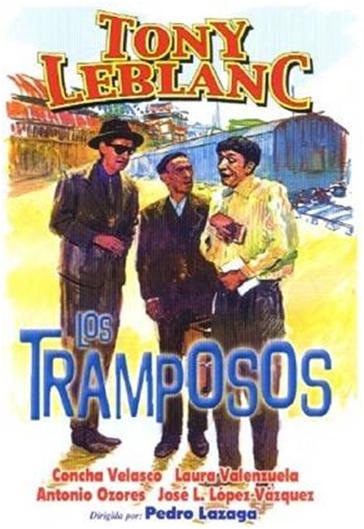 This is a nice little vintage gem from the vaults of Spanish cinema, beautifully rendered in colour. Pedro Almodóvar selected this film for La Mirada and I can see how its "sardonic humour" (as festival director Rocio Garcia described it) would be right up his alley. It's right up mine, too. Three friends collude to con people out of money by any means they can but go straight to win the affections of a girl. The script is sharp, the performances good and the ending is just great.
Friday, March 26, 2010
Cosmetics
 OK, Blogger have provided some new templates that allow much more flexibility to the design of a blog. I want to stick with green. Colour is important for me in many aspects of my life and with the passage of time, I've gravitated towards different colours.
I 'see' colour, something I mentioned in my 'Change of Plans'. Even as a child colour was important to me and I have vivid recollections of care taken to arrange toys, pencils, jelly beans, smarties, etc in order, often the colours of the rainbow. As an adult, I similarly arrange my clothes, especially shirts, socks and underwear. I do virtually all the cooking in my household, and I take care to cook also with a sense of visuals in terms of colour.
I didn't seek it, but major life changes (a divorce) nearly twenty years ago, awoke in me a perception of colour I hadn't been aware of before. At this time, purple appeared to me and was prominent in my life, reflecting the changes I was undergoing. I still have affection for all colours, but purple became dominant. Later life changes brought blue to prominence and yet later changes elevated green. That's where I am now and I find that given an option between green and another colour, I'll more than likely choose green. Now, I'm not going to get into colour therapy and interpretations here, but if you're open to this aspect of metaphysics, you'll have some idea of the significance of all this.
This is all a round-about way of saying that this is why I chose green for my blog's colour scheme when I started it back in October 2006, and why I've decided to stick with it. I like the crispness of this new makeover, and Blogger have made it much more flexible to make changes. I might experiment a little, trying to avoid too many changes. So far, I've made the blog width as wide as I can and added another column. Cosmetics aren't too important to me - content is my main interest - though I do want to make navigating this site as pleasant an experience as possible. Feel free to offer any comments on the makeover.
Monday, October 19, 2009
Still Not Dead
Yes folks, I'm still alive. And healthy. You could be forgiven for thinking otherwise, and I appreciate the few emails I've received recently enquiring about my welfare. I believe that I still have pneumonia, confirmed by X-ray six weeks after the original diagnosis, but not that I'm particularly cognisant of it. The main symptom is fatigue, which I only experience if I lack sleep.
Ah, sleep - something I've deprived myself for all my adult life, and now it's catching up on me. We think we can train ourselves to live without it, but that's simply delusion.
Despite my absence from the blogosphere for the last six weeks or so, I've actually being seeing pretty much the same number of films, four or five each week. Except that I've not been staying late at Melbourne Cinematheque. Actually, I did last week for the first time, for the Migrant Experiences screenings of Australian films selected by Christos Tsiolkas and Spiro Economopoulos. These were simply sublime, obscure little gems, especially Winter's Harvest, film about the Italian migrant experience that captures a world long gone both here and in Italy. It's a film that should be sent to Martin Scorsese. I'm sure it would bring him to tears and have him restoring it and promoting it.
There's been so many films I've wanted to write about: Blessed, a film that profoundly moved me, in spite of its many faults; Mao's Last Dancer, a film that profoundly moved me in spite of its mainstream appeal, a film more complex and subtle than it appears on the surface; several films at Melbourne Cinematheque, and many others. Like Encounters at the End of the World, Whatever Works, Moon, Louise-Michel, Once Upon a Time in the West (this is a brand new restoration, screening at the Astor and is an absolute must-see on the big screen!), Astro Boy and The Girlfriend Experience. In fact, for most of the year, I've found little of interest among cinema releases, but there's been no shortage of late.
So, the film-viewing has been there but whatever spare time I've had has been spent migrating from my old PC to this new one. I've set up a wireless home network for the first time and now I can be typing this on my lap while with the family in the lounge room. It is nothing short of revolutionary for me, and I truly mean it. But I've fucked something up and I'm going to format this computer and start all over again. That's going to take up all my spare time for the next couple of weeks or so.
So, I just had to get this up to document where I'm at. I'm alive and well and watching films (and still learning French, though je dois plus pratiquer). But one day, sooner or later, the posts will stop and you'll left wondering... whatever happened to Paul???
Saturday, August 15, 2009
Not Dead Yet
Over the last couple of days, I was again reminded of my (or rather the collective 'our') frailty when I was hit hard and hit swiftly by a bout of pneumonia. Not that I needed any reminders, as my accident earlier in the year is never far from my thoughts.
It all started mid-MIFF when, like Glenn at Stale Popcorn, I got knocked down by a virus. I figured I was run-down, typical MIFF-fatigue. I slowed down, cut back on films, got more rest and seemed to be OK before the festival was over. I returned to work on Monday but on Wednesday found I was getting the same shivers I had the week before. I left work early and crashed out that night, sleeping for the best part of 12 hours, sleep punctuated by fever and pains in the chest.
I took Thursday off work but by lunch-time the chest pain had escalated. My friend David is staying with me and promptly took me to the local hospital. Fortunately, the emergency ward was quiet and I received prompt attention. It seems I have a chest infection, hence the pain, and a chest X-ray confirmed I have a slight case of pneumonia. I was given a script for antibiotics and Panadeine Forte and told to take Friday off.
Thursday night was hell. I took the pain-killers. Panadeine Forte was more than enough after my motorcycle accident, but they did nothing for my chest pains. Movement was painful, breathing was painful, coughing all but impossible. The missus took the morning off work and took me back to hospital where they prescribed OxyNorm, a stronger morphine-based painkiller.
I took the tablets when I got home and rested, trying to catch up on the sleep I didn't get the previous night. The missus had gone to work, David had gone for his daily walk and I dozed off on the couch for an hour. When I woke, it seemed the painkillers had had no effect and the pain in my chest had escalated to the point that I found it difficult to breath at all. I wasn't exactly panicking, but I was a bit freaked out. It was a struggle just to get take each shallow breath, and I was trying to withstand the pain of taking deeper ones.
I phoned David, but struggled to talk. I just blurted out enough to get him panicking, and he ran back the three kilometres he was from home. I knew he would be freaked out, and unable to communicate effectively, I wrote this note for him:
David dropped me at the door of Emergency and parked. When I entered, the triage nurse was dealing with a patient who seemed non-urgent so I interrupted and said "I'm having difficulty breathing". Another nurse came over and got me on oxygen which relieved the pain in my chest by reducing the need for deeper breaths. This was 3pm.
I didn't leave hospital until nearly 11pm, and I'm not going to bore you with everything that happened over those eight hours. It would bore me writing it. Anyone who has experienced a public hospital would understand.
My first hospital visit was at Williamstown, a quaint little institution that is a throwback to what life was like before Kennett and his massive hospital and school closures. I mentioned to a nurse that it's amazing this place still exists and her response was that it's probably the Bracks factor. Steve Bracks was, of course, the State Premier and it was probably his influence that kept it open. It's also ironic that the Federal Health Minister is also the local member of parliament.
After my second visit to hospital, on the Friday morning, I was told that if my condition escalates, I should go to Footscray, because Williamstown doesn't have any overnight beds. We'd headed for Footscray, because a hospital stay seemed likely.
At Footscray, I was sitting in the waiting area of Emergency with an oxygen mask. Eventually the oxygen ran out but even though the triage nurse was told, nothing was done about it. I was breathing OK by then, so no point was made of it. It was about two hours before they took me into the Emergency Ward. Again I was put on oxygen and the cool gas was relieving.
The missus and the kid arrived and the kid cried when he saw me in pain. I had to reassure him and told him I was in pain but would be OK. Over the next few hours I did a lot of sitting and lying around, dozing when I could. A chest X-ray confirmed that I had only a mild case of pneumonia, which didn't seem explain the amount of pain I was in. I was given two or three morphine shots which relieved the pain markedly, but not completely. I had a CT scan of my chest to see if there was any lung clot, but that came back all clear.
Normally, hospitals are not a place one wants to spend any time unnecessarily. On this occasion, I felt safe being there - they have the oxygen and the painkillers, even if their procedural systems are inadequate. All my vital signs were OK, so I was discharged.
We got home around 11pm. I hadn't eaten for twelve hours, and didn't feel particularly inclined to, but had a bit of toast to keep up the blood-sugar levels. I braced myself for another tough night's sleep and took a dose of OxyNorm and Nurofen (anti-imflammatory). I had nine hours of unbroken sleep and am now breathing normally - there's just a slight hint of pain on a deep breath. What a difference twelve hours can make.
It all started mid-MIFF when, like Glenn at Stale Popcorn, I got knocked down by a virus. I figured I was run-down, typical MIFF-fatigue. I slowed down, cut back on films, got more rest and seemed to be OK before the festival was over. I returned to work on Monday but on Wednesday found I was getting the same shivers I had the week before. I left work early and crashed out that night, sleeping for the best part of 12 hours, sleep punctuated by fever and pains in the chest.
I took Thursday off work but by lunch-time the chest pain had escalated. My friend David is staying with me and promptly took me to the local hospital. Fortunately, the emergency ward was quiet and I received prompt attention. It seems I have a chest infection, hence the pain, and a chest X-ray confirmed I have a slight case of pneumonia. I was given a script for antibiotics and Panadeine Forte and told to take Friday off.
Thursday night was hell. I took the pain-killers. Panadeine Forte was more than enough after my motorcycle accident, but they did nothing for my chest pains. Movement was painful, breathing was painful, coughing all but impossible. The missus took the morning off work and took me back to hospital where they prescribed OxyNorm, a stronger morphine-based painkiller.
I took the tablets when I got home and rested, trying to catch up on the sleep I didn't get the previous night. The missus had gone to work, David had gone for his daily walk and I dozed off on the couch for an hour. When I woke, it seemed the painkillers had had no effect and the pain in my chest had escalated to the point that I found it difficult to breath at all. I wasn't exactly panicking, but I was a bit freaked out. It was a struggle just to get take each shallow breath, and I was trying to withstand the pain of taking deeper ones.
I phoned David, but struggled to talk. I just blurted out enough to get him panicking, and he ran back the three kilometres he was from home. I knew he would be freaked out, and unable to communicate effectively, I wrote this note for him:
It's hard to talk & breatheMy intention was to allay his fears, but he panicked anyway. He picked up the phone to call an ambulance but I told him not to. I was prepared to continue exercise my breathing but he wanted me to go straight to hospital. I agreed for him to take me, but told him not to panic. Twice on the way there, I had to tell him to slow down.
I'm in a lot of pain
I just took another pain-killer
I'm trying to take deeper breaths which may alleviate the pain, but is itself painful
We may need to go to Footscray Hosp. at short notice - I'll let you know
David dropped me at the door of Emergency and parked. When I entered, the triage nurse was dealing with a patient who seemed non-urgent so I interrupted and said "I'm having difficulty breathing". Another nurse came over and got me on oxygen which relieved the pain in my chest by reducing the need for deeper breaths. This was 3pm.
I didn't leave hospital until nearly 11pm, and I'm not going to bore you with everything that happened over those eight hours. It would bore me writing it. Anyone who has experienced a public hospital would understand.
My first hospital visit was at Williamstown, a quaint little institution that is a throwback to what life was like before Kennett and his massive hospital and school closures. I mentioned to a nurse that it's amazing this place still exists and her response was that it's probably the Bracks factor. Steve Bracks was, of course, the State Premier and it was probably his influence that kept it open. It's also ironic that the Federal Health Minister is also the local member of parliament.
After my second visit to hospital, on the Friday morning, I was told that if my condition escalates, I should go to Footscray, because Williamstown doesn't have any overnight beds. We'd headed for Footscray, because a hospital stay seemed likely.
At Footscray, I was sitting in the waiting area of Emergency with an oxygen mask. Eventually the oxygen ran out but even though the triage nurse was told, nothing was done about it. I was breathing OK by then, so no point was made of it. It was about two hours before they took me into the Emergency Ward. Again I was put on oxygen and the cool gas was relieving.
The missus and the kid arrived and the kid cried when he saw me in pain. I had to reassure him and told him I was in pain but would be OK. Over the next few hours I did a lot of sitting and lying around, dozing when I could. A chest X-ray confirmed that I had only a mild case of pneumonia, which didn't seem explain the amount of pain I was in. I was given two or three morphine shots which relieved the pain markedly, but not completely. I had a CT scan of my chest to see if there was any lung clot, but that came back all clear.
Normally, hospitals are not a place one wants to spend any time unnecessarily. On this occasion, I felt safe being there - they have the oxygen and the painkillers, even if their procedural systems are inadequate. All my vital signs were OK, so I was discharged.
We got home around 11pm. I hadn't eaten for twelve hours, and didn't feel particularly inclined to, but had a bit of toast to keep up the blood-sugar levels. I braced myself for another tough night's sleep and took a dose of OxyNorm and Nurofen (anti-imflammatory). I had nine hours of unbroken sleep and am now breathing normally - there's just a slight hint of pain on a deep breath. What a difference twelve hours can make.
Saturday, June 20, 2009
Beggars Belief
I was down Lygon St. this evening and a woman was sitting on the cold and dark pavement asking for money. I consider myself a generous person, but I've had a long-standing policy of not giving to beggars. I'll give to buskers, I'll give to Big Issue vendors, even sometimes I give to charity (selectively) but generally I don't give to beggars.
Why? Partly it's an intuitive thing that I find hard to rationalise, but I'll try. I give to others, because I feel they're doing something, they're taking initiative and doing something to justify others giving. Beggars are often substance abusers who - we assume - are going to misuse the money for things other than basic necessities. I'm happy to part of a solution but not part of the problem and don't want to fund someone's nicotine, alcohol or other drug habit.
In recent years, I've loosened my attitude to beggars. It probably started with seeing Alkinos Tsilimidos' Tom White, a film that affected me deeply and made me look at homelessness differently. Isn't that what cinema is all about? I still tend to avoid those beggars that are obviously (at least, in my opinion or perception) are drug addicts. Depending on the demands on my time, sometimes I've taken to questioning the beggar, as I did twice tonight in short succession (and with hindsight, I suspect they're a male and female team).
Sometimes I've had conversations with homeless people and mental illness is clearly a factor for many of them. Sometimes I'll offer to buy food for the person, but this offer has never been taken up. I could mention a few stories, but that'll have to wait for another time (right, always another time).
So this 30-something woman, better-spoken than most and no obvious signs of addiction or mental illness asks for money. "What for", I ask. "For food and a room", comes the reply. "I won't give you money", I say, "but I'm happy to buy you a meal". "Nuh", she says, "I just want to buy some bread or something". "Well, let's go buy some bread". "Nuh, I just need $38 for a room for the night". And I walk away. A person says they want food, you offer food, but they just want the money.
As I'm walking away, I think about it. Maybe she said food, but really she just wants a room. Maybe I could have given something. I dunno, this is a hard one. This is where intuition plays a part, not that it's necessarily reliable.
I cross the road and find myself in a similar conversation with a guy of similar age. When I ask similar questions, he says he wants $38 for a room for the night in St. Kilda. OK, I give him $5. I'd just given the Big Issue vendor $5 and I was wondering what he thought of my charity. I suspected that he thought I was being conned; maybe I was.
When I crossed the road again, I handed the woman the $5 and said "I don't know what you're going to do with this, but I don't want to be part of someone's problem. If you're genuine, you can't survive like this". "I know", she said, "God bless". Goddamn, I hate that. It sounds so fucking false and bullshit. It occurred to me that these two are both claiming they need the same amount and are probably working together. We really don't know who is genuinely in need, and whether our contribution is making things better, or contributing to someone's decline. I find it sad that homelessness has become a bigger and bigger issue over time.
A final word: I will never give to a beggar who hassles people while they're eating a meal or having a coffee. I'm thinking specifically of Degraves St. This is a pet hate of mine and no culture on the planet accepts that you harrass people while they're eating. It's a kind of ambush where people don't want indigestion so are less likely to tell you to fuck off and have nowhere to go.
While this post might seem to have little to do with cinema, it touches on themes that recur regularly, and affect me most in films. Social issues and themes that touch on the nature of life, death and everything can be conveyed most magnificently and effectively through cinema, don't you think?
Saturday, March 14, 2009
A Change of Plans - pt.3
In Part 1, I describe how on Monday 12 January 2009, 100 metres from my destination, a delivery van's changing lanes without looking and without indicating, side-swiped my motorcycle. I lost control, hitting a street sign and was thrown to the ground while the bike continued up the footpath and hit a pedestrian.
In Part 2, I describe my experiences from the time the ambulance arrived until I arrived at St. Vincent's Hospital.
I was initially pleased that my expensive protective gear was removed without the need for cutting. It turns out that it didn't really matter because, other than the boots, it all needs to be replaced. The pants came off in the ambulance, but the jacket had to wait due to concerns about possible spinal damage and the pain in my right arm. It took quite a bit of manipulation to eventually get it off.
Anyone buying a motorcycle or scooter should consider full gear an intrinsic part of the initial cost*. Too many unnecessary injuries are sustained when unprotected riders are involved in accidents. Without my gear, I would have shattered my knee, fractured my shin and probably fractured my elbow and shoulder. The armour in each of these parts protected me. Heavily bruised, yes, but at the end of the day, I miraculously walked out of hospital in one piece.
The “change of plans” was at 8am; I was admitted to the emergency ward of St. Vincent's around 8.30am. About 9am, I called the missus, something I'd been dreading. A nurse could have phoned at my request, but I knew she'd freak to get that call. I devised a plan - not that I gave it much thought.
If I told Zoe straight off what had happened, she'd panic and maybe go hysterical. I just spoke casually, as if I was OK, and in a sense I was. At least I was in one piece and alert. “Hi”, I said, “what are you doing?”, small chit-chat like that. She later told me that at the time she thought it was really sweet: my first day back at work and I was missing her already... or so she thought.
After a few minutes, I said “I'm lying down right now”. “Why?” she asked, thinking it odd, but that maybe I was taking it easy at work. “Don't panic, but I've had a bit of an accident and I'm in hospital”. It worked. She could tell that everything seemed OK. She didn't freak and calmly ascertained where I was and said she was coming in with the kid, Alexander. Phew, that was a relief, though there was still Alexander to allay.
Zoe told him only that Dad wasn't feeling well and we'll go see him in hospital. In the car, he started conjecturing, “Maybe he’s had a heart attack”, but then “nuh, he wouldn't have had a heart attack”. He mentioned various scenarios like this, and it wasn't until he saw me that he found out. In fact, he became angry with his mum for “lying”, though I later explained it wasn't lying, but rather “Mum didn't want you to worry, thinking things were worse than they are”.
I knew it would be disturbing for Alexander to see his Dad like this. I made a point of reassuring him and playing down the situation, saying everything was fine, nothing was broken, just lots of bruises. I joked to assuage his fears and for now, the approach appeared successful.
Pain was everywhere, though my adrenaline insulated me from the worst of it. Asked by a nurse to place the pain on a scale from 1 to 10, I said 4 to 7, depending. Pain-killers were offered but declined. In fact, I was asked every hour or more, and I kept declining. For now, it was manageable. I'd take them if it got too bad.
Obs (observations) were regularly monitored. Every hour, it was the same thing (or a permutation of it). What's your name? What's today's date? The year? Where are you? What happened? They'd check my eyes, blood pressure, once they took a urine test and a blood test. Do you want pain-killers? No. Are you sure? Yes. Did I want a tetanus shot? No.
Needles freak me out, however in my state, the anxiety of being a burden to others was more than I could bear. Incapacitated, my life was entirely in their hands. I just wanted to be a good patient and make their lives as easy as possible. I soon succumbed to the tetanus shot and later, when a nurse explained that I shouldn't wait until the pain became unbearable, I also took the pain-killers. I felt much better after that.
The priority was to check for fractures. My knees were X-rayed, and X-rayed again. My neck was X-rayed then CT scanned, then a CT scan of my brain. The thoroughness was reassuring as each result came back positive. This sounds so efficient, but every activity has multiple steps, each requiring considerable waiting. I would wait in the emergency ward on my trolley until a machine was soon to become available. Then an orderly takes me to that area where I wait again. When my turn comes I'm wheeled in, scanned and come back to the waiting area where I wait for the orderly to return me to the ward. Repeat over and over again for each scan: waiting, waiting and more waiting as cases are prioritised. Not that I'm complaining, because as a road trauma victim, I was high priority and fortunately, it wasn’t a busy morning on the ward. Walk-in patients get frustrated at the delays, but it's reassuring as an emergency patient that you're seen promptly.
Zoe went to buy lunch and Alexander accompanied me for the knee X-rays, but had to wait by himself when I went into the X-ray room. I had intended to have breakfast at work, so by 1pm when she returned I hadn't eaten for 19 hours. I felt hungry, which was a good sign. Zoe brought me a salad sandwich, cut it up into small pieces and hand-fed me while I lay on my back in the neck brace. I drank in the same manner; it's a damn weird experience and I never thought it possible.
At this stage (and for a few days to come), it was very painful to lie down or get up. Each time I did either, I required assistance and had massive dizzy spells, as if I was Alice in Wonderland falling down an endless rabbit hole. It was very freaky.
My right knee was comfortable in no position and I kept moving my leg into different positions, something I'd been doing since landing on the pavement. It wasn't until I received the results of an MRI scan another three weeks later that I learnt that I'd torn my posterior cruciate ligament.
Finally around 2pm, the neck X-ray came back OK and, to my enormous relief, the brace was removed. I can't tell you how incapacitated I felt with it on. Until then, I presumed that I would be spending days in hospital recovering but, to my surprise, the staff soon started talking about releasing me. The idea of going home hadn't occurred to me and I felt anxious at the thought. I don't know why; maybe it was the thought of fending for myself in this beaten-up state.
Around this time, I dropped a bombshell. I hadn't told anyone that my vision was impaired. I initially presumed it was just a case of “seeing stars”, but now that release was being discussed, I really needed to tell someone that something wasn’t right.
It wasn't exactly stars I was seeing. When looking at the fluoro light above me, the long straight line of the fitting wasn't straight at all; it was totally jagged. When looking at the bay numbers opposite me, there were two identical lights with "6". With my head in a fixed position, each number was distorted in a different way.
The best description of what I was experiencing was that with one eye closed, and looking at a fixed object, an area just to the side of my central vision looked like "beam me up, Scottie" in Star Trek (a fluttering silvery effect). That was my repeated description with different medical people over many days to come. In my left eye, the effect was left of centre, and in the right eye, the area was right of centre. Thank god we have two eyes, because each eye compensated for the other, but the overall effect was disconcerting. My left eye had the greater impairment. With my right eye closed, I could read nothing, nothing at all.
This complication delayed my hospital release by another four hours. I was repeatedly tested, inspected and questioned. Nothing appeared to be physically wrong with my eyes, and more than once it was suggested that it was simply my eyes' blind spots. This was no blind spot, this was blind bloody areas!
No brain damage was detected in the CT scan but was the prime suspect to my vision impairment. I'd need an MRI scan of my brain this time, but couldn't get a booking until Wednesday evening (this was Monday 12 January). So the booking was made as an outpatient and I left hospital around 6pm. Outside it was the end of a beautiful warm summer's day, but everything was different. It was a helluva day. But it wasn't over yet.
To be continued.
* My advice on protective gear: don't do it on the cheap. Budget $2,500 and get yourself good gear. I reckon Dainese is best, the armour is the sturdiest and it saved me when I needed it most. Here's an approximate breakdown of costs:
- $400+ for a decent helmet (mine was around $1,000, with lots of venting and removable padding that can be washed, but you don't need to spend that much);
- $600 will buy you a good Dainese textile jacket, waterproof with a removable liner, making it suitable for all weather and seasons. I had a Dainese Baker jacket worth $800, but they are no longer available. Get one good jacket, and you won't need separate ones for summer and winter. This high-tech equipment worth its weight in gold. Maybe more.
- $80 for a back-protector; it slips into a pocket in the jacket.
- Dainese Galvestone motorcycle pants are fantastic (cost, about $450). You can zip them to your jacket so they're like a one-piece, which helps keep the cold air out in winter. The armour is amazing. My right knee copped a big whack, but the armour shows no signs of damage. They are light and comfortable. Like the jacket, it has a removable liner.
- My current gloves are also Dainese, but the best I've had were Sidi, which I can't find anymore. Good gloves with carbon fibre knuckle protection are about $200. Ideally, you need a spare pair, for when it gets wet and at least one of them should be water-proof. And at least one pair needs thick insulation for winter. In winter, your hands are the most vulnerable body part to the cold.
- I bought my Sidi boots in the US for $140 before I bought my first motorbike. They're incredibly light and waterproof. Though they feel like leather, they're synthetic. After five years, three re-soles and a serious collision, they're still holding up strong. Equivalent boots here are about $400 (everything is much cheaper in the US).
You could get all of the above for less than $2,000 if you shop around or, if you feel like lashing out, it could go as high as $3000. You just can't put a dollar amount on the pain, suffering and lost time you could prevent, but if you could, it'd be a helluva lot more than these figures.
Sunday, March 01, 2009
Mon voyage français
Melbourne is a melting pot of ethnicity (my school, Elwood High, had some 83 nationalities represented in its population). For one who takes an interest, there is something ethnic to be learnt in every second person one encounters.
I have always wanted to master foreign languages, and I have a romantic dream of learning half a dozen before I die. Language, ethnicity and cultures have always been a source of wonderment. Over many years, I have learnt a little of many languages but a lot of none. I couldn’t decide which to take up. It’s not a trivial decision, and choosing one is to the detriment of the others. Because I couldn’t decide which was the best decision I made none. This went on for twenty years.
German was one option. I’d had a teenage girlfriend (we were even briefly married, but that’s another story) who was fluent in the language and consequently I took it up in my final year of high school. I liked that it had rules that were rarely broken, but I didn’t pursue it at the time.
I learnt Hebrew through most of my childhood, as a lead up to my barmitzvah, but ended when that milestone was reached. That’s another story, involving a nasty Polish rabbi.
My partner is fluent in Greek, but I didn’t want to learn the language from her. Like many European post-WWII migrants, the languages spoken here are very different to their modern counterparts and I didn’t want to learn the village dialects that are all but dead in their homelands.
My first two years of high school were in Moorabbin, at the time a very WASPy area and the only foreign language taught was the traditional French. My teacher was Mr. Cockerill, and I noted in the recent coverage of the Victorian bushfires that a man with this name and his wife survived. He is of the age that my teacher would be, so I wondered if this was he. As a rebellious teenager, I didn’t take well to his staid demeanour and absorbed nothing.
In 1987, I spent seventeen days in Panama and was surprised how quickly I picked up Spanish. I love the sound and flow of the language, it’s phonetic structure and how recognisable many of the words are.
The idea of learning a language kept fermenting in me, and I started getting angry with myself for not having made a decision. Sometimes it’s not important that one make the best decision but that one makes a decision. Any decision. I could have mastered several languages by now if I’d made a decision twenty years ago.
Ultimately, I made a snap decision based on my cinema experiences. The French film festival had just finished nearly two years ago. I’d extensively researched the program and was very satisfied with the eleven films I’d seen (Nue propriété was the highlight, and exemplifies what I love about French cinema, though this film is actually Belgian). French cinema is my favourite and I started thinking about taking up that language. “Wouldn’t it be nice to sit in a French cinema watching French films without subtitles?” I thought.
Shortly after, Paris, je t’aime screened, and it really moved me, especially the final segment. This clumsily-spoken French, imbued with such love and affection was the final straw and I immediately decided to take up the language.
I often have lunch in Degraves Street outside the CAE building. I enquired about French classes, which were to start in five weeks. I then called Alliance Française (who present the French film festival, and advertise before each screening) and they started classes in two weeks. That was it! Knowing my impetuous nature, and the fact that I really didn’t have time to commit to learning another language, I wanted to start as soon as possible. So, afraid that I might change my mind if delayed, I committed to Alliance Française.
Two years down the track, I’m still a long way from being able to watch a French film without subtitles. But I understand bits and pieces and often detect differences between what is spoken and how it’s translated. I feel I know enough now that I could survive in France, albeit with difficulty to start, and am wondering how and when I will make the next step.
This post is a preface to my preview of the French film festival.
Monday, February 23, 2009
Anyone for an angiogram?
It's amazing what a retinal angiogram will do for your piss.
 At the Eye & Ear Hospital today, a tube was stuck in my arm through which yellow dye is injected. Retinal photographs were then taken to track the blood flow in the retinal blood vessels. It seems I may have a mild form of a rare condition, Purtscher's retinopathy, but that's yet to be confirmed.
The retinal photography I was subjected to (by Andrew Newton, a fabulous underwater photographer in his spare time - check out his snaps in the waiting room on level 4) had me seeing everything in brilliant shades of pink as fluorescent as my urine, with shadows in fluoro blue. Damn weird shit (no pun intended).
 I did something very silly and rode my motor scooter to my appointment. Check out my pupils. Next time I'll take the taxi; it was a real struggle to get home.
Can you see a slight yellow tinge to my skin? That's the yellow dye. I was warned it could have been much stronger.
 On the subject of medical appointments (and believe me, I'm having heaps of these), I was at the Mercy Hospital in East Melbourne for a dawn MRI scan of my shoulder last week when a couple of high-fliers drifted past. I always have a camera with me and grabbed these snaps. Amazingly, both my camera and my mobile phone, in different pockets of my motorcycle jacket, were unscratched in my recent accident.
In case you're not aware, any of the above images can be clicked on to see a larger version.
Sunday, February 22, 2009
A Tunnel Between Two Hospitals
In order to determine the cause of a visual impairment I received as a result of my accident, I had a number of scans and a very unpleasant overnight stay in the neurology ward of St. Vincents Hospital. Two MRI scans of my brain couldn't detect the cause, so I was taken over the road to the Eye and Ear Hospital. Actually, I was taken under the road in a wheel-chair, via this tunnel that connects the two hospitals.
Looks a little Kubrick-esque, don't you think? Pardon the picture quality, in particular the camera shake. I was totally at the mercy of my handler, a very sweet Greek lady whose name I don't recall.
Looks a little Kubrick-esque, don't you think? Pardon the picture quality, in particular the camera shake. I was totally at the mercy of my handler, a very sweet Greek lady whose name I don't recall.
Saturday, February 07, 2009
A Change of Plans - pt.2
Part one of my story describes my first day's return to work after the Christmas break, and how I had a sudden change of plans. Riding my motorbike and a mere 200 metres from my destination, a van driver changed into my lane without looking and without indicating.
This instalment, posted on a record hot day for Melbourne (so far it's reached 46.4 degrees Celsius, beating the 1939 record of 45.6), describes my thoughts from when the ambulances arrived until I arrived at St. Vincents Hospital, a few city blocks away.
Lying there contemplating the closeness of death, I didn’t feel it to be terrifying. We all have to die, and mostly we don’t know when. When it’s time to go, who are we to say “no”? We can go kicking and screaming or we can go in peace. I felt something approximating the latter. But was it time?
There’s a saying, “if god wants to save me, no-one can harm me and if god wants to kill me, no-one can save me”. What is death? Is it god coming to take us away? Is it transmigration of the soul, reincarnation, the passage to the next life? Or is it merely the end, from dust thou hast come and from dust thou shalt return? Whatever it is, it felt close, verily breathing down my neck, but my time had not yet come. By all reckoning, I could have kicked the bucket, but like so many times before, I had been spared to live another day. There must be some reason to my existence after all. There is something else I must learn in this life before I move on.
It gave me some comfort and satisfaction to know that twenty minutes earlier, I had walked into my son’s bedroom and roused him from his slumber with a kiss goodbye. Then I did the same with the missus who, as a school teacher, was also on holidays. As I did so, it crossed my mind that one never knows when this will be the last time. Lovers sometimes quarrel – and I’m thinking of the missus – and leave the house in anger. How much unnecessary anguish this must cause when one’s love never returns due to some unfortunate mishap.
The paramedics were all around me, how many I don’t know. The standard questions were asked of me to verify my state. What’s your name? What’s the date? The year? Do you know where you are? Do you know what happened? I was able to answer all of them lucidly without hesitation. I controlled my natural tendency to joke as I was keen to co-operate and not make their job any harder. I felt for these poor guys who have to attend incidents like this. However, I did make an occasional crack to lighten the atmosphere, and perhaps allay their concerns, something I think I’d be doing even if my head was hanging off my shoulders by a thread.
My vision was impaired somewhat as I was seeing stars. I could see, but particulars like facial details were unclear. And whenever I closed my eyes, that drab, orange colour was there. Assessments were being made of my state. My own analysis was repeated when requested, moving limbs, fingers and toes. A hand reached down my back, and yes, I felt pain on some of my vertebrae, but it didn’t seem severe. My back and neck were stiff more than painful, though that’s not necessarily a good sign.
Consideration was given to cutting my protective jacket off as my very painful right arm could not be viewed and the jacket could not be removed until back injury had been ruled out. I said I’d prefer they didn’t cut it as it’s an $800 item and I suppose that because of the movement I’d demonstrated, the decision was made to wait until hospital. I’d offered to allow my protective pants to be removed, and joked about walking around nude at home but the paramedic said he didn’t want to do that in the street in front of all these people. He’d do that in the ambulance.
I was still largely immobile and the paramedics certainly didn’t want me to move. A neck brace was called for and it took four people to roll me into it. I was then part-rolled, part-lifted onto what felt like a tray and then lifted onto the ambulance trolley. There must have been three or four lifting me while one supported my neck. It was all so surreal – it was happening to me, that which we never really imagine. Or we may try to imagine, but can't.
My cinematic mind raced for the small digital camera in my jacket pocket that I always have with me, but it would have taken extraordinary effort that I wasn’t prepared to exert. I surrendered to my imposed impotence. I lay there in wonder as I was helplessly moved about from street to trolley and into the ambulance as if I was watching a film. Damn, I wish I could have filmed that.
The paramedic in the ambulance introduced himself. I suppose it’s reassuring to a traumatised patient to be able to put a name to a complete stranger who is taking charge of one’s life. Don’t expect that I could recollect his name; this was a routine that repeated itself several times as my care was passed from one to another to another during the day.
While in the ambulance, and with the back door still open, I was asked how the accident occurred. I presume this must have been a police officer but, though I suspect the police had assisted the paramedics in lifting me, I never made out a police uniform that morning at all. I described that I was doing 40-50 kph in the left lane while a slower moving van in the centre lane changed lanes into mine without looking or indicating, that I lost control when my bike clipped the front of his van and the last thing I saw was a number of street signs coming towards me. I presume other information was gleaned from witnesses, because that’s all I was ever asked.
When the Chubb Security guy, mentioned in pt.1, had described the pedestrian bleeding to the 000 operator on his mobile, I was both shocked and saddened to know that others were involved. I even felt more concerned about him than myself. For some time, I was confused by what I had heard and wrongly thought there might have been two of them.
Having ascertained that I was still in one piece, I was worried that this other person was more seriously injured than I (I’ve since learned his name is Robert). I, after all, have the best of high-tech protective gear on – from head to feet, nearly $3,000 worth. A quarter-tonne of metal running wild up a peak-hour city footpath could do a lot of collateral damage to someone on their way to work.
When I got my first motorcycle, a motor scooter in fact, I decided that I would only do so with proper gear. I know that many baulk at the cost, but I didn’t consider it an extra financial burden but rather, an intrinsic part of the cost of purchasing the vehicle. I mean, it’s not as if we separate the cost of seat belts and air-bags in a car. One of the first things the paramedic mentioned to me as the ambulance took off was how many scooter riders he’s had to treat with unnecessary injuries because they weren’t wearing appropriate gear. I wasn’t surprised; you see these guys everywhere, in business attire, singlet, shorts and thongs, even once I saw a woman in a black dress and stilettos. That’s fucking insane!
I didn’t know it for some days, but Robert was lying on the ground quite close to me. When I was later told by staff at St. Vincents Hospital that he would be OK, I suspected this was just to reassure me. It was only when I spoke to the attending police officer nearly a week later that this was confirmed. Robert received stitches to his head and leg and has two cracked vertebrae, but would fully recover.
In the ambulance, and before that as well, I was worried how I was going to break this to the missus without her going hysterical. Should I call her? Or should someone official do it? How do you deal with this?
By this time, I’d ascertained that I was well and truly alive, nothing seemed broken and thus, I should be OK. Despite the pain, I couldn’t see any of my injuries and I had yet to see the condition of my clothing, which would come several hours later. Remember, I’m on my back and in a neck brace.
I suppose I’m a stickler for organisation and everything in my motorcycle jacket is in a particular place. My new Nokia 6600 mobile phone was fairly easily accessed from my upper pocket and I pulled it out. Geez, I love it’s small size. My first call was to my boss. It must have sounded strange to him, having me call him up to say I’ve been in an accident, I’m OK, but won’t be in for the rest of the week. What must he have thought, me saying it so cool and casually? But I couldn’t call the missus just yet. I didn’t want her to see me all incapacitated. It’d have to wait until I got to hospital. I just lay there with the phone snug in my clutched hands in case I wanted to use it again.
I felt special when I arrived at St. Vincents – it must have been my shortest wait in a hospital ever. It’s reassuring to know that emergency patients don’t have the same wait as the general plebs. Mind you, I had lots of waiting to come, but more on that later. Waiting is part of the trauma of the hospital experience, and there’s something seriously wrong with the systems in place.
To be continued.
Saturday, December 27, 2008
2008 - The Year in Review
For many years, David Lynch has been my favourite film director and no-one else came close. My favourite film is Lost Highway and until I rediscovered Krzysztof Kieslowski last year, no other film came close. Melbourne Cinémathèque's partial retrospective offered a great revision of the Colours trilogy as well as some of Kieslowski's earlier films. Perhaps I'm being sentimental, but I still can't knock Lost Highway off its crown. As I wrote about it previously, some kinds of movie magic can only happen once, and for me that was Lost Highway. No other film has affected me to the same degree.
And yet, Kieslowski's films are so sublime, meaningful and personally affecting that I have to acknowledge his ascendency in my personal estimation. His entire body of work is so awesome, so full of ideas, explorations of human complexity and conundrums. This year I watched Dekalog on DVD and was amazed at the staggering accomplishment (I hope Melbourne Cinémathèque screens it one day - I've suggested it, but I won't hold my breath waiting). As I mentioned in my review of 2007, Three Colours: Blue is the first film to come close to Lost Highway in my all-time favourites.
What is it that Lynch and Kieslowski have in common as film-makers? On the surface, not a real lot, but underneath I think there's some similarities. Lynch explores the bizarre, depicting stories that often don't appear to make a whole lot of sense. They're like abstract works of art that don't necessarily have explanations, or even need them. When there is an explanation, one doesn't need it to enjoy the film.
Kieslowski's films are usually highly stylised social realism, with not a touch of Lynchian fantasy. Yet both directors are men who reportedly have a deep sense of spirituality, away from religion, but are never overt about their personal beliefs in their films. You generally cannot extract a direct message from them. I find both directors' works exude a deep sense of humanity, albeit in very different ways. In writing this, I suppose I'm exploring the connections myself.
Lynch appeals to the inner artist in me; his films speak to me on the level that art is important, and the artist's perspective is important. We live in a world where logic, reason, empiricism and economic realities rule. Lynch's work defies this and I love that we can see films like this, that push and challenge us. Kieslowski's films directly address the social and humanistic values that are the core of my personal values. If I could make films like any one director, I wish I could make them like Kieslowski's. Most of them are near flawless, intellectually, emotionally, humanistically, technically and aesthetically. His films epitomise everything that is most dear to me about cinema, and he does it in a way that is aesthetically pleasing, visually and aurally. So these two directors between them encapsulate important dimensions that represent the essence of cinema for me.
The above might seem like a fairly long preamble. It's something I wanted to get out of my system, and it has relevance to my end-of-year lists. Like last year, I've compiled separate lists for theatrical, festival and retrospective screenings. People like to compare lists (I certainly do) and it just seems more convenient and natural to divide them in this way. It makes it easier for me to compare films. With my lists below, I'm finding it more appropriate to group films rather than rank them absolutely, just like I can't really rank Lynch and Kieslowski relative to each other.
And here's a digression. Today was an important milestone for me on a personal level. Since my older son, Abhi, took his life just over two years ago, the bed he slept in when he regularly stayed with me has been unmade, exactly as he left it. It's been something that I've been unable to deal with or perhaps I've been holding onto, that I could smell him if I chose to, even though until today I didn't. And when I did, it brought tears to my eyes momentarily. Today I washed the bedding. It felt significant to me, and I just wanted to mention it. That's all.
So here's my picks of 2008:
THEATRICAL RELEASES
Gus Van Sant has been one of my favourite American directors since Elephant, which until this year, was my favourite of his. I can't say I like Paranoid Park more, but I certainly don't like it any less. I love the subtlety of Paranoid Park and the fact that subsequent viewings enhanced my appreciation each time - this is the first film I've seen three times on the big screen during its theatrical release. The film looks terrific (with top notch cinematography by Christopher Doyle and inspired editing by Van Sant), the use of music is terrific, the characters are so authentic and the story is so moving.
Tony Gatlif's Transylvania is to Paranoid Park what Lost Highway is to Three Colours: Blue. They are so different but both so compelling that I can't separate them. They are my equal favourite theatrical releases of the year. I've loved everything I'm seen by Gatlif and I really should look out for his back catalogue. I love the cultural and cross-cultural elements of his films, the way he weaves music into his narratives and his documentation of the way of the Roma (gypsy life). Transylvania did all these too, but seemed to be much more effective than his earlier films. Maybe it was his casting of Asia Argento (reportedly the first time his main protagonist has been female). Maybe it was the multi-cultural aspect: an Italian from France travels to Romania to find the father of her expectant baby, hooks up with a German and... it's around here that I'm lost with all the cultural cross-roads, but I love it. There are some truly inspiration visuals and the film had me in tears more than once.
BTW, Paranoid Park is also the film I got to write a review for and get paid. I had a small piece published in The Big Issue (issue #299 from memory).
I've noticed people complaining about the quality of theatrical releases this year, but I think that complaint applies more to mainstream films, especially so-called blockbusters. It's been a struggle for the arthouse cinemas to get bums on seats for the serious films, which I find disappointing. Many niche films had short runs or screened only in Sydney, or straight to DVD. I'm not sure why support for truly arthouse cinema is waning, but I'm hoping it's cyclic and that people will tire of a dearth of variety and get back to those cinemas that take a few risks. Nonetheless, I'm quite happy with the overall quality of my top 10 theatrical releases.
For what it's worth, my nos. 3-6 are pretty much on a par, and little separates 7-10.
1. Paranoid Park (Gus Van Sant, France/USA, 2007)
1. Transylvania (Tony Gatlif, France/Romania/UK/Hungary/Italy, 2006)
3. Auf der anderen Seite (The Edge of Heaven, Fatih Akin, Germany/Turkey/Italy, 2007)
4. Persepolis (Vincent Paronnaud & Marjane Satrapi, France/USA, 2007)
5. Happy-Go-Lucky (Mike Leigh, UK, 2008)
6. Waltz with Bashir (Ari Folman, Israel/Germany/France, 2008)
7. La graine et le mulet (The Secret of the Grain, Abdellatif Kechiche, France, 2007)
8. Le scaphandre et le papillon (The Diving Bell and the Butterfly, Julian Schnabel, France, 2007)
9. Hunger (Steve McQueen, Ireland/UK, 2008)
10. Du levande (You, the Living, Roy Andersson, Sweden/France/Germany/Denmark/Norway, 2007)
Special mentions:
Little separates these from my no.10. Grindhouse was a guilty pleasure, some of the best fun I had in a cinema all year.
Youth Without Youth (Francis Ford Coppola, USA/Germany/Italy/France/Romania, 2007)
Planet Terror (Robert Rodriguez, USA, 2007)
Death Proof (Quentin Tarantino, USA, 2007)
FESTIVAL SCREENINGS
OK, I'm a festival junkie. I go to as many festivals as I can, maybe even more. I love the cultural aspect and I love seeing the best of what the world has to offer. This is always a solid part of my cinema experience. There's little to separate my nos. 1-3, 4-6 and 7-10. In 2006, Nuri Bilge Ceylan's Iklimer (Climates) was my MIFF favourite and the Dardenne brothers' L'enfant (The Child) was my overall favourite. This year their respective offerings compete neck and neck.
Azur and Asmar was a surprise favourite of the French Film Festival. It's a children's film and, like Ocelot's earlier film Kirikou and the Sorceress, it's just as enjoyable for adults. Ocelot's films are very well written, very moving and very thought-provoking. They're inspirational for children. Azur and Asmar is one of the most visually stunning animated films you'll ever see.
1. Üç maymun (Three Monkeys, Nuri Bilge Ceylan, Turkey/France/Italy, 2008)
2. Le silence de Lorna (Lorna's Silence, Jean-Pierre Dardenne, Luc Dardenne, Belgium/France/Italy, 2008)
3. Azur et Azmar (Azur and Azmar, Michel Ocelot, France, 2006)
4. Milyang (Secret Sunshine, Lee Chang-dong, South Korea, 2007)
5. Stellet licht (Silent Light, Carlos Reygadas, Mexico/France/The Netherlands/Germany, 2007)
6. Hofshat Kaits (My Father, My Lord, David Volach, Israel, 2007)
7. Omiros (Hostage, Constantine Giannaris, Greece, 2005)
8. O' Horten (Bent Hamer, Norway, 2008)
9. Chacun son cinéma (To Each His Own Cinema, Various, France, 2007)
10. Izgnanie (The Banishment, Andrei Zvyagintev, Russia, 2007)
Special mentions:
Katyn (Andrej Wajda, Poland, 2007)
L'année suivante (The Year After, Isabelle Czajka, France, 2006)
NEW DISCOVERIES OF OLD FILMS
I spoke to Constantine Giannaris, director of Omiros (no. 7 in the above list), who highly recommended the film that is my favourite in this section. The Mother and the Whore is simply sublime, full of intellectualisation (and pseudo-intellectual rants), nihilism and lament, culminating in an emotionally devastating and ambiguous ending. I love the title, especially the original one in French.
Cassavetes features heavily in this category, thanks to an ACMI retrospective. I also got to see a few Satyajit Ray films from his retrospective at the Indian Film Festival at the Nova. These are all well-known films below and there's not much I can add to what has already been written about them.
1. La maman et la putain (The Mother and the Whore, Jean Eustace, France, 1973)
2. Moartea domnului Lazarescu (The Death of Mr. Lazarescu, Alexandru Munteanu, Romania, 2005)
3. Shadows (John Cassavetes, USA, 1959)
4. Pather Panchali (Song of the Road, Satyajit Ray, India, 1955)
5. Le ballon rouge (The Red Balloon, Albert Lamorisse, France, 1956)
6. Faces (John Cassavetes, USA, 1968)
7. A Woman Under the Influence (John Cassavetes, USA, 1974)
8. No quarto da Vanda (In Vanda's Room, Pedro Costa, Portugal/Germany/Switzerland/Italy, 2000)
9. La passion de Jeanne d'Arc (The Passion of Joan of Arc, Carl Dreyer, France, 1927)
10. Stalker (Andrei Tarkovsky, USSR, 1979)
Special mentions:
The Killing of a Chinese Bookie (John Cassavetes, USA, 1976)
Apur Sansar (The World of Apu, Satyajit Ray, India, 1959)
Kanal (Andrzej Wajda, Poland, 1957)
AUSTRALIAN FILMS
2008 hasn't been a great year for Australian films. My favourites have been Three Blind Mice (expect to hear about a release date in the new year), Son of a Lion and The Square, though nothing rates high enough to make into any of the above lists.
The year also marks a serious attempt by a player to challenge the paradigm that Australia makes crap films that no-one wants to see. Unfortunately, the tall poppy syndrome - a concept I until recently never used to subscribe to - really kicked in and every critic and his dog was keen to tear Baz Luhrmann off his cocky high horse and make him eat their shit. People are entitled to dislike a film but thhe venom and vitriole that floated around both the print and online media was unparalleled in my experience, and I've lost some faith in the quality of film criticism in this country. I feel it was an opportunity lost and no studio is going to take a risk like that anytime soon, not because the film was that bad, but because of the critical response.
Sure, Australia is a film with problems (but then, so does The Dark Knight), but it also has a lot going for it. A showing metric is that Metacritic ranks critics' reviews of Australia at 53% (quite low) but other users at 7.2/10, almost the same as IMDb (7.3). Here's a case where the critics and the audiences are divided. Unfortunately, the irrational frenzy with which local critics panned the movie would have kept significant numbers away. But those who did see the film obviously enjoyed it. I certainly did, and it improved on a second viewing.
I saw 274 films this year, 241 on the big screen and 33 DVDs. This is slightly down from 2007 (297/283/14). I never used to count DVDs, but I've decided to include them now as I see a few festival screeners. With the Boxing Day releases looking pretty shabby, I'm not expecting to see any more films in a cinema until the New Year, though I'll watch quite a few DVDs to make up for it.
Here's looking to 2009. May the new year bring whatever each of you deserves.
Wednesday, December 17, 2008

Monday, October 20, 2008
I'm a sucker for these
 There's a lot about me I've not disclosed on this film blog. No particular reason, other than much of it's not relevant to a film blog. What the fuck, I've spilled my guts on politics and my hatred for John-whatshisname... you know that neo-fascist weasel who lost the last election. You know, the one who wouldn't know the truth if it were a brick and fell on his head. So why not clothes?
As a child, I had many creative interests that boys weren't supposed to have. I loved cooking (got hooked when we made pikelets in prep class), and still do. In fact, I do 99% of the cooking in this household. I loved handcrafts and made mats, a frog-shaped door-stop and a cushion. I remember these, because I still have them (my mum kept them for me, bless her soul).
In my early 30's, I went through some personal transformation and working through some issues discovered I had some abject fears. Like a fear of dancing. This is a deep subject, but I won't go into the psychological aspect. I took up Latin American dancing, and consequently found a dearth of good clothes for men. So I started making my own. I made a lot of clothes over the next few years, and when I sold my transport business in 2000, I considered going into clothing (but didn't).
Colour is important to me, and always has been. I remember as a child how I used to arrange my Smarties in order of the colours of the rainbow. The colours of the rainbow are still important to me, and my wardrobe and sock drawer are a testament to that. I love colour co-ordination and I often compliment people in the street who take the time and care to adorn their bodies as if they were a piece of art (which they can be).
I work in IT and my current workplace is business casual, i.e., ties not required. But I wear them Monday to Thursday, because I love the opportunity to express myself through colour and clothing. Socially, in this country and culture, males don't get anywhere near as much opportunity to express their flair like women, but ties are an acceptable avenue in the workplace. I have a decent size tie collection and as time goes by, I find myself becoming more selective and buying reasonably expensive ties.
I was in Anton's at Melbourne Central on Friday. I hadn't been in there for quite a while and decided to have a quick look. They have outrageously good stuff in this store, which obviously caters to the gay crowd and those a little more adventurous in their tastes. I suppose I'm what you'd call a "heterosexual pooftah". All my life, people figured I must be a poof, because I like things that macho bastards (also known as "real men") intuitively know only pooftahs and women like. Like gardening, cooking, photography, making clothes, art, personal expression, writing, etc. Poofs, as you no doubt know, have no interest in car racing, sport and beer (I'm a modest wine-drinker, again, an obvious sign of a faggot). I was socially bastardised throughout my childhood, something I confronted around the time I also took up dancing (there you go again, another sign of a poof).
Well, back to Anton's. They have a fantastic range of Duchamp ties. For those of you are into more masculine things, Duchamp are to ties what Ferrari is to cars. They are the best looking pieces of silk a guy can wrap around his neck and look respectable in a corporate environment. I bought a couple at DJ's a couple of years ago and seeing the extensive range at Anton's (they just got a shipment in, and they only get two shipments a year, I'm told), I splashed out and bought three of 'em. Yes, three. And they're not cheap. They also had a hanky looking thingy, but not the matching tie (the one pictured above). The lovely lady in the store who delightfully sold me the ties said they'd sold out of this one, but that I should check out Duchamp's website. (Bitch! She didn't even give me a discount on three ties. No, she was lovely, really). I went to the website, saw it, ordered it all the way from the UK just last Friday, and it was in my letterbox when I got home from work today. That's bloody fantastic, isn't it? Ah, ain't life grand.


 FWIW, these are the three ties I bought from Anton's. Each of them is truly a piece of art. Had I the money, I could've bought twenty or more. Check out the full current range at Duchamp. These pics don't do them justice. The colours and sheen are just magic. I feel like a million bucks when I have one of these on. And fuck 'em all, I don't care who thinks I'm gay. I wear that as a badge of pride.
Wednesday, September 10, 2008
2008 AFI Voting
I was asked by the AFI to contribute a small piece about how I judge one film from another, in the context of voting for the AFI Awards. I'm more than a little chuffed that they included me along with a number of reviewers and critics, and you'll find the full article on their website. I'd like to say I'm the only non-professional writer there, though technically that's not correct, as I have been paid for writing one article in The Big Issue (issue #299, on Paranoid Park).
The article starts out with:
The article starts out with:
It’s time to think about votingMy article is at the bottom of the page:
As an AFI member it’s your right, and your privilege, to decide who the winners will be at this year’s AFI Awards.
Technically, voting has never been simpler: visit the AFI homepage, click on the voting button, make your preferences and hit ‘send.’ It should take less than five minutes.
But arriving at those decisions has been the work of many weekends sitting in the dark, watching and evaluating this year’s crop of Australian films – as many of them as you can manage. But how to judge them? How to compare a lavish international co-production with a grimy no-budget drama? Or a frenetically fun documentary with a seriously disturbing one? What makes a film worthy of a gong?
These are the questions that professional film critics must answer on a regular basis, as they compare, contrast, praise and damn the films that pass across our screens. Loved and loathed, perhaps in equal measure, the film critic performs the function of stimulating debate and offering informed judgement. So here we asked some experienced film reviewers to offer hints and tips; some things to keep in mind when you the voter, are playing your role as the ultimate critic in the Australian film industry.
“A sense of humanity.”I'm always fascinated to hear what significance cinema has for others, and how one values one film over another. Anyone care to offer their 2 bobs' worth?
Cinema is for me the most fantastic experience, the most important and complete art form, the opportunity to enter into another world and experience emotions that otherwise I wouldn't. To rate one film against another is easy, even if it's a case of comparing apples and oranges. Ultimately, the main criterion is "how did this film move me?” If I've nodded off during the last two hours, that's not a good sign. If I sat enthralled, that's a good start.
So, how to differentiate one film from another, in the context of the AFI Awards, such as best film? My rough criteria – and it is rough, because there are so many variables – are: to what degree does the film engage me, to what degree does it move me? I don't mind who the actors are, but could I believe in the characters and their performances?
Does the film take risks? I'd prefer a film that aims high and doesn't completely succeed than one that aims low and hits its mark. Sub-consciously, the risk-taker always wins bonus points. Similarly, I'll give bonus points to film that challenges an audience. Perhaps it opens us up to a different perspective, or in some way allows us to view the world differently. It's rare, but I’m looking for something transformational, something that leaves the viewer with a slightly broader or changed view.
When I look at the types of films I am most consistently drawn to, I see that what a director invests of him or herself is absolutely critical. The ability to construct a story that not only engages, but conveys a sense of humanity, of sharing some aspect of the human condition – in all of its glory AND wretchedness – with compassion, subtlety, intelligence, humour, complexity and without being preachy; this is perhaps of most importance to me.
The technical aspects then assume secondary layers of appreciation. The lighting, settings, camera movements and cinematography, music and sound production, editing and so on all enhance the cinema experience. But they're all for naught if there is not a good underlying story. I don't have an aversion to big budget films, but I find these most often disappoint. There is nothing so frustrating as a film that looks good but the story sucks. Unfortunately, very many big budget films make populist compromises that alienate me.
In any field of major endeavour, it is important to acknowledge and celebrate the achievements of those who have given their blood, sweat and tears to getting projects off the ground and into the cinema. Each year we get the opportunity to reflect on the past 12 months of Australian films and have a say in who gets the gongs. This is democracy in action and every film-goer should take the opportunity.
Celebrate!
Subscribe to:
Posts (Atom)